All species › Gamebirds › New World quail › Northern Bobwhite
Position in the tree Birds Aves › Birds with a flexible palate Neognathae › Fowl Galloanserae
Northern Bobwhite | Colinus virginianus
Virginiaanse boomkwartel | Colín de Virginia
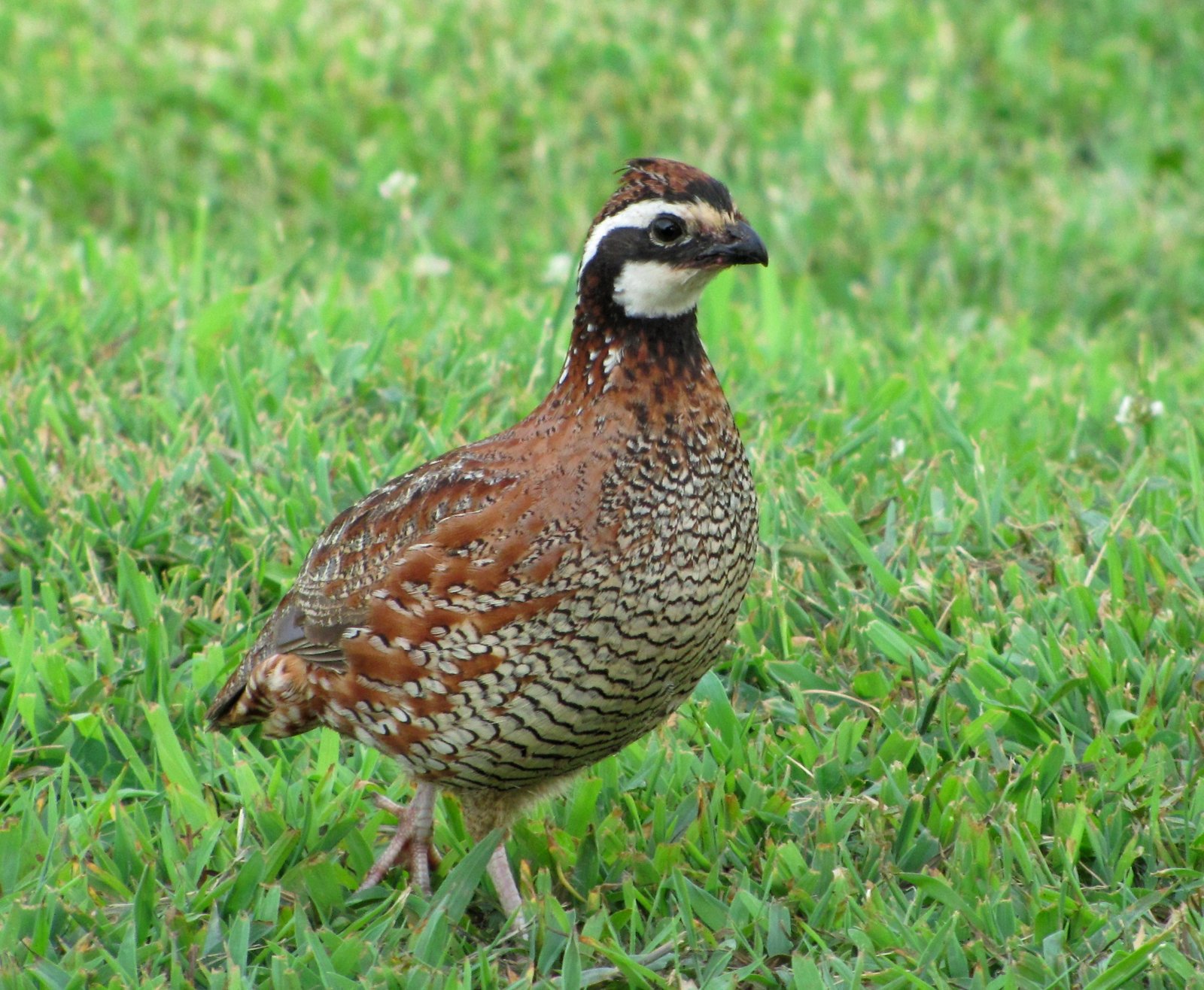
The Northern Bobwhite is the bobwhite of North America and has the southernmost part of its range in Mexico and western Guatemala. In the guide area the species varies strongly: from region to region the males range from white-throated to wholly black-headed or red-breasted. The name bobwhite comes from the whistled call.
Voice
The male gives a clear, rising whistled bob-WHITE or bob-bob-WHITE, mainly in the breeding season and often from a post or shrub. Scattered members of a covey find each other with a questioning koi-hee.
Recording: Valerie Heemstra — CC BY-NC-SA 4.0 · converted to mono · xeno-canto
Identification
22–27 cm; a small, round quail with a short tail and a short crest. The male of the northern forms has a white throat and supercilium with a black eyestripe and collar, rufous-brown upperparts and flanks and a white-and-black scaled belly. Towards the south the males become darker: in parts of Veracruz, Puebla and Oaxaca they have a wholly black head and throat or a black breast, in Chiapas and Guatemala a black throat with rufous underparts. The male of the 'Masked Bobwhite' (C. v. ridgwayi) of Sonora has a black head and plain rufous breast and belly. The female in all forms is browner, with a buff throat and supercilium and a scaled or streaked breast.
Confusion species
Yucatan Bobwhite Colinus nigrogularis on the Yucatán Peninsula and in the Mosquitia resembles the black-throated forms, but the male has a black throat with a white border and boldly white-and-black scaled underparts. Spot-bellied Bobwhite Colinus leucopogon lives further south, from El Salvador and Honduras, and has white spots on the belly. Banded Quail Philortyx fasciatus has a pointed dark crest and evenly black-barred white underparts.
Habitat
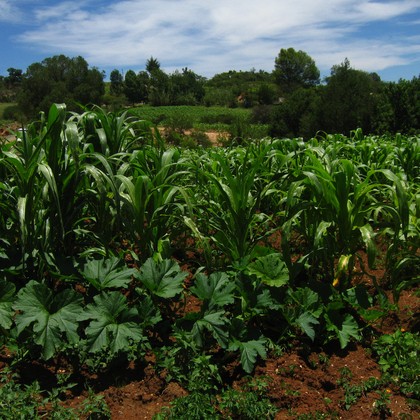
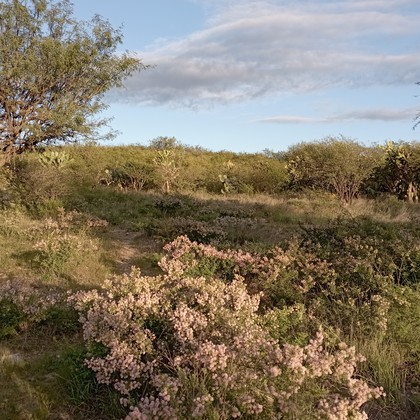
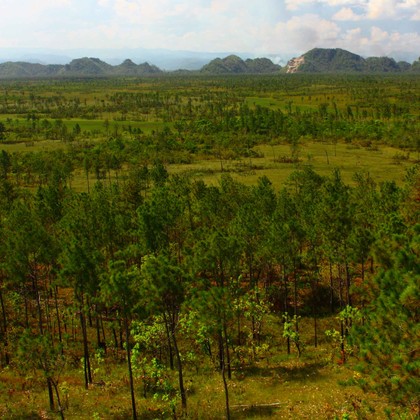
Open, varied country: grassland and savanna with shrubs, fields with hedges and rough margins, pasture, forest edges and open dry forest and thorn scrub, from sea level to about 2000 m. It lives in coveys outside the breeding season. It eats seeds, young shoots and, in summer, many insects. The nest is a scrape on the ground, often with a canopy of grass.
Where the bird is most at home, classified by the vegetation units of Mexico and Central America.



Range and movements
In the guide area in north-eastern Mexico (Coahuila, Nuevo León, Tamaulipas) and further south along the Gulf coast and inland through San Luis Potosí and Veracruz; in the centre and west from Jalisco and Guanajuato to Puebla, Guerrero and Oaxaca, and along the Pacific side of Chiapas into western Guatemala. The Masked Bobwhite lived in the grasslands of central Sonora. Outside the guide area in the eastern and central United States and on Cuba.
- Resident
- Summer visitor (c. Apr–Sep)
- Passage (Mar–Apr, Oct–Nov)
- dark = core range, pale = thinly spread
How and when to look
Best found in spring and summer, when the males call, in the farmland and pasture of Tamaulipas and Nuevo León. In autumn and winter coveys can be seen early in the morning along dirt roads, where they keep to the cover of rough vegetation and hedges.
Conservation status
Near Threatened. The species has declined steeply over much of its range through the loss of rough margins and the intensification of farming. The Masked Bobwhite in Sonora has all but disappeared in the wild; captive-breeding and release programmes are under way.
Scientific name
Colinus virginianus | (Linnaeus, 1758)
Linnaeus described the species in 1758 as Tetrao virginianus; because it was later moved to another genus, the author and year stand in brackets. The genus Colinus was introduced in 1820 by Goldfuss. Colinus derives from the Nahuatl word zōlin, 'quail'. virginianus means 'of Virginia': the type locality was first given as 'America' and was later restricted to that state. The specimen the first description was based on came from Virginia.