All species › Passerines › Tyrant flycatchers and allies › Mouse-colored Tyrannulet
Position in the tree Birds Aves › Birds with a flexible palate Neognathae › All other modern birds Neoaves › Landbirds Telluraves › Falcons, parrots and passerines Australaves › Falcons and passerines Eufalconimorphae › Parrots and passerines Psittacopasserae
Mouse-colored Tyrannulet | Nesotriccus murinus
Muisgrijze vliegenpikker | Tiranolete murino
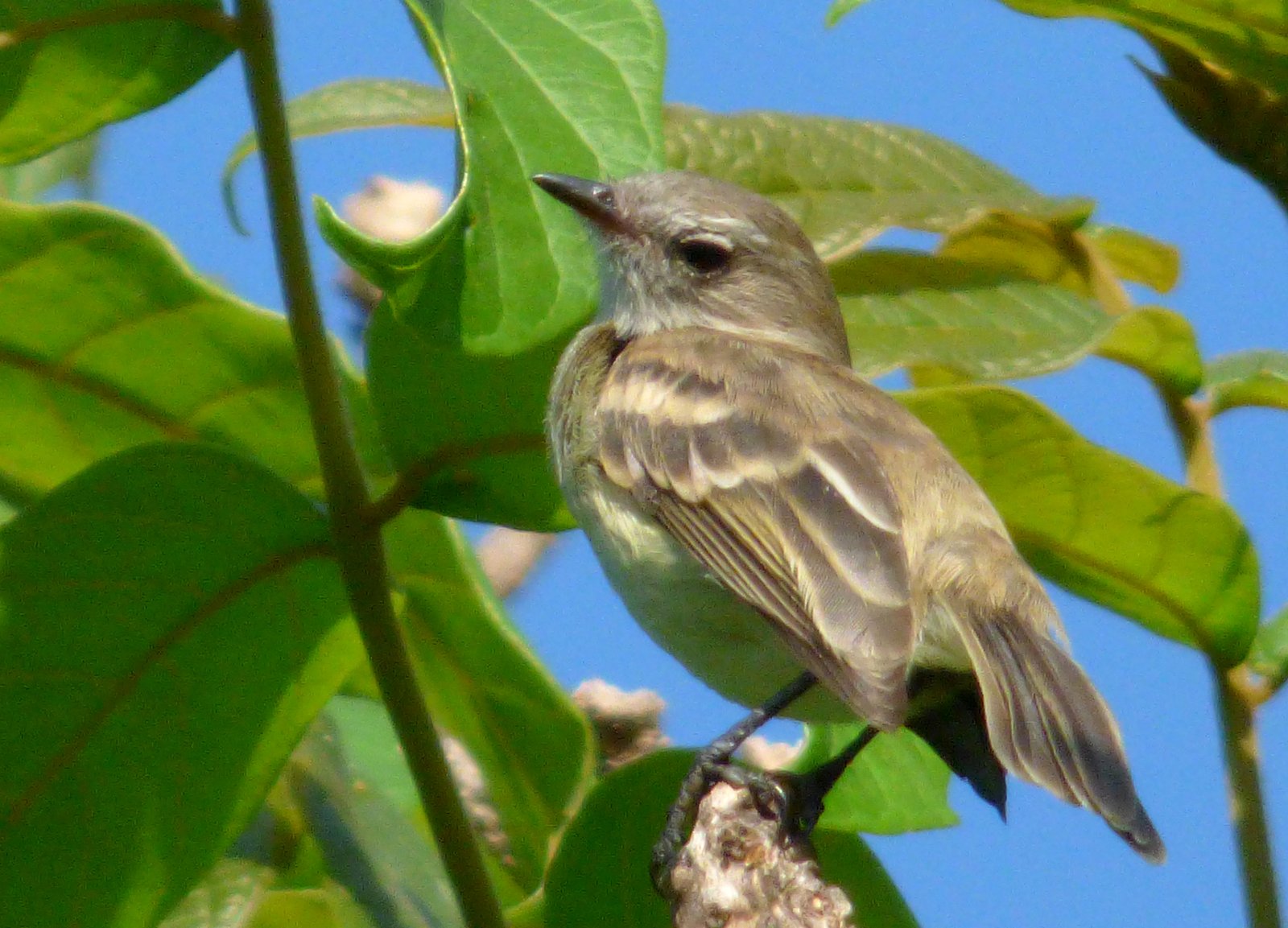
The Mouse-colored Tyrannulet is a small, dull grey-brown tyrant flycatcher of dry open country with shrubs and scattered trees. It has few striking features and is often heard first. In the guide area it occurs only in Panama, mainly in the dry lowlands on the Pacific slope.
Voice
A raspy, rather hurried series of notes often repeated at dawn; also short, dry calls.
Recording: Juan Freile — CC BY-NC-SA 4.0 · shortened to the first 60 s, mono · xeno-canto
Identification
12 cm, with a short dark bill with a pale base to the lower mandible. Upperparts dull grey-brown. A whitish supercilium with a darker line through the eye. Wings dark with two dull ochre-buff to whitish wing-bars. Throat whitish, breast greyish, belly dull yellowish. Male and female are alike.
Confusion species
Southern Beardless Tyrannulet Camptostoma obsoletum is smaller, with a small crest and a shorter tail, and often cocks its tail. Lesser Elaenia Elaenia chiriquensis and Yellow-bellied Elaenia Elaenia flavogaster are larger, with a white crown patch and, in Yellow-bellied Elaenia, a distinct crest. Empidonax flycatchers have a distinct eye-ring and perch more upright.
Habitat
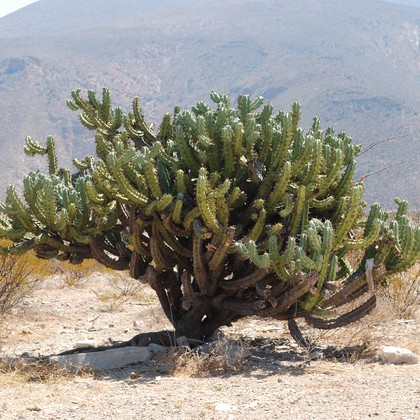
Dry open country with shrubs and scattered trees, scrub, dry secondary woodland, forest edges, savannas and pasture with trees, mainly in the lowlands. It forages low to mid-level among the foliage for insects and also eats small fruits.
Where the bird is most at home, classified by the vegetation units of Mexico and Central America.




Range and movements
In the guide area only in Panama, mainly in the lowlands of the Pacific slope in the west and centre of the country, east to about the Canal area. Outside the guide area widespread in South America, to northern Argentina.
- Resident
- dark = core range, pale = thinly spread
How and when to look
Most likely in the dry, open farmland with scrub on the Pacific side of Panama, for example on the Azuero Peninsula. The dull colours, the pale supercilium and the wing-bars together are the best clues.
Conservation status
Not threatened. Widespread and fairly common in suitable semi-open country; it is not declining through clearance, as it prefers open country.
Scientific name
Nesotriccus murinus | (Spix, 1825) (GBIF: Phaeomyias murina)
Spix described the species in 1825 as Platyrhynchus murinus; because it was later moved to another genus, the author and year stand in brackets. The genus Nesotriccus was introduced in 1895 by Townsend. Nesotriccus is Greek, from nēsos 'island' and trikkos, a small bird (used for tyrant flycatchers), after Cocos Island, home of the first species. murinus is Latin for 'of mice', here 'mouse-grey', after the drab plumage. The specimen the first description was based on came from Juazeiro on the Rio São Francisco, Bahia, Brazil.