All species › Birds of prey › Kites, Old World vultures, eagles and hawks › Mississippi Kite
Position in the tree Birds Aves › Birds with a flexible palate Neognathae › All other modern birds Neoaves › Landbirds Telluraves › Raptors, owls, kingfishers and woodpeckers Afroaves › Hawks and owls Hieraves
Mississippi Kite | Ictinia mississippiensis
Mississippiwouw | Milano de Misisipi
The Mississippi Kite is a grey kite with long, pointed wings that catches large insects such as dragonflies and cicadas in flight and eats them in the air. It breeds in the southern and central United States and winters in central South America. In the guide area it is mainly a passage migrant that moves in large flocks in autumn, often of thousands of birds, together with other raptors along the Gulf coast of Veracruz and through Central America.
Voice
Usually silent in the guide area. A high, whistled pee-teeew, the second note descending.
Recording: Brad Banner — CC BY-NC-SA 4.0 · converted to mono · xeno-canto
Identification
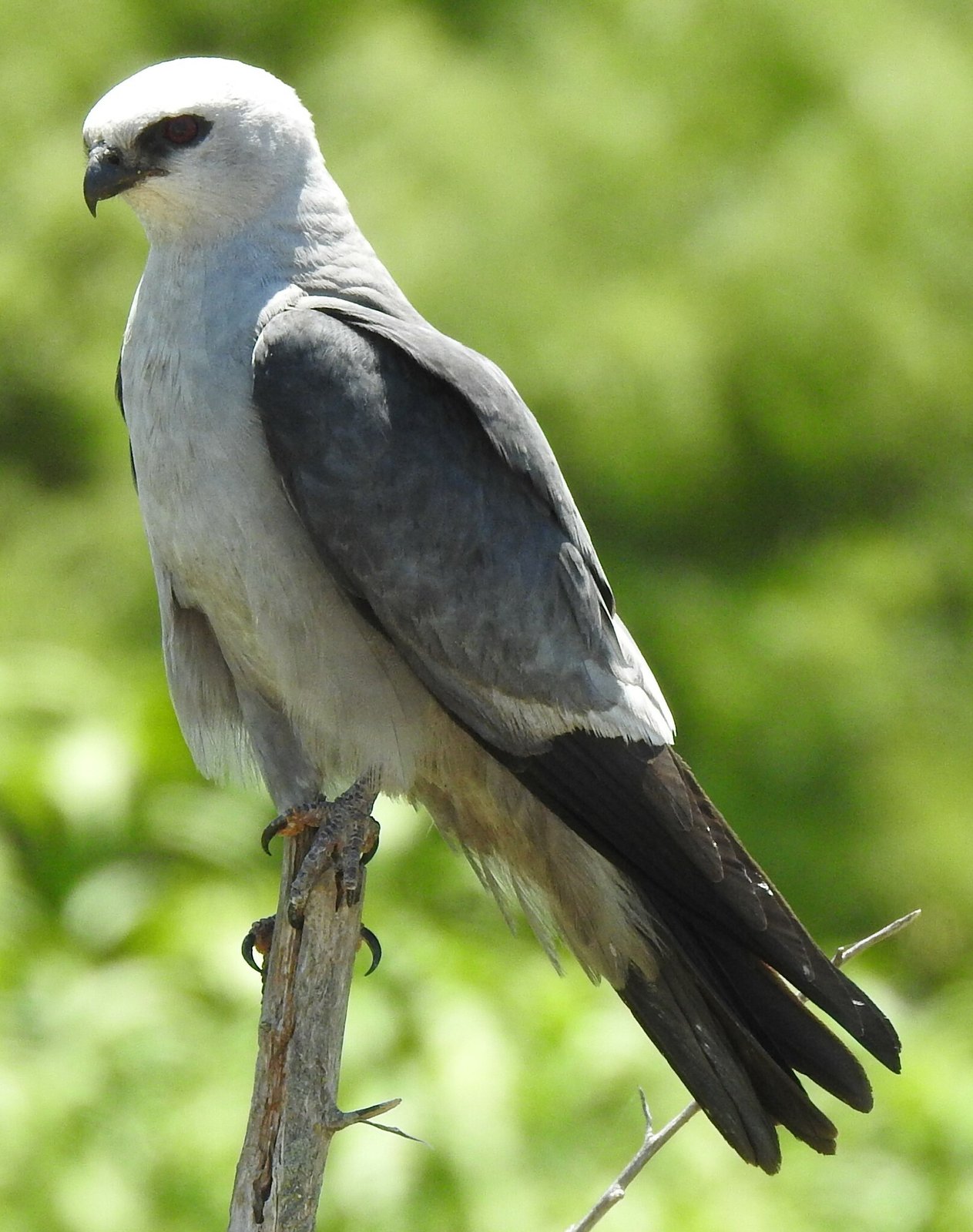
31–37 cm. Adults are grey, with a pale grey, almost white head and a plain black tail. From above a pale grey panel on the secondaries is visible. The eye is red, with a black patch around it. There is no rufous in the wing. The male has a paler head than the female. Young birds are white below with dense reddish-brown streaks, have dark upperparts and a tail with three narrow pale bands. Birds in their second calendar year have a grey body but still streaked underwings and a banded tail.
Confusion species
The Plumbeous Kite Ictinia plumbea has rufous wing patches, a white-banded tail and a darker head, and lacks the pale secondary panel. The Peregrine Falcon Falco peregrinus is bulkier, with a dark moustache and barred underparts. The Swallow-tailed Kite Elanoides forficatus is black and white with a deeply forked tail.
Habitat
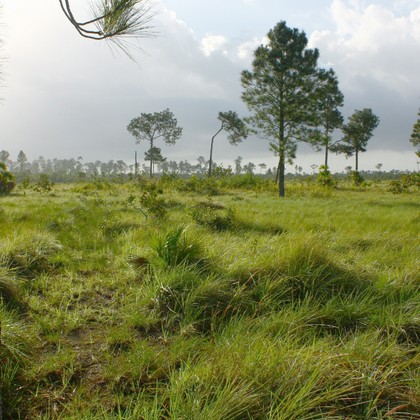
On migration over all kinds of open and semi-open country, from coastal plains, pasture and farmland to forest edges and hills, often high in the sky. It roosts at night in groups in tall trees. In Chihuahua in summer in riparian woodland along rivers.
Where the bird is most at home, classified by the vegetation units of Mexico and Central America.





Range and movements
In autumn, mainly from late August to October, it passes in large numbers along the Gulf coast of Tamaulipas and Veracruz and on through Tabasco, Chiapas, the Yucatán Peninsula and the Caribbean side of Central America to Panama. In spring, from March to May, it returns along the same route in smaller numbers. Scarce on the Pacific slope and in western Mexico. In summer birds are regularly seen in central Chihuahua, along the Río Conchos near Delicias and Meoqui; breeding there is possible but not confirmed. Outside the guide area it breeds in the southern and central United States and winters in central South America, mainly in Paraguay and northern Argentina.
- Passage (Mar–Apr, Oct–Nov)
- dark = core range, pale = thinly spread
How and when to look
From late August to early October tens of thousands of Mississippi Kites pass Cardel and Chichicaxtle in Veracruz on some days, together with Broad-winged Hawks, Swainson's Hawks and Turkey Vultures; the largest numbers come during the morning as thermals develop.
Conservation status
Not threatened. Numbers in North America have increased in recent decades and the breeding range has expanded.
Scientific name
Ictinia mississippiensis | (Wilson, 1811)
Wilson described the species in 1811 as Falco misisippiensis; because it was later moved to another genus, the author and year stand in brackets. The genus Ictinia was introduced in 1816 by Vieillot. Ictinia comes from Greek iktinos 'kite'. mississippiensis means 'of the Mississippi', after the type locality near Natchez on that river. The specimen the first description was based on came from near Natchez, Mississippi, USA.