All species › Birds of prey › Kites, Old World vultures, eagles and hawks › Crane Hawk
Position in the tree Birds Aves › Birds with a flexible palate Neognathae › All other modern birds Neoaves › Landbirds Telluraves › Raptors, owls, kingfishers and woodpeckers Afroaves › Hawks and owls Hieraves
Crane Hawk | Geranospiza caerulescens
Langpootkiekendief | Gavilán zancón
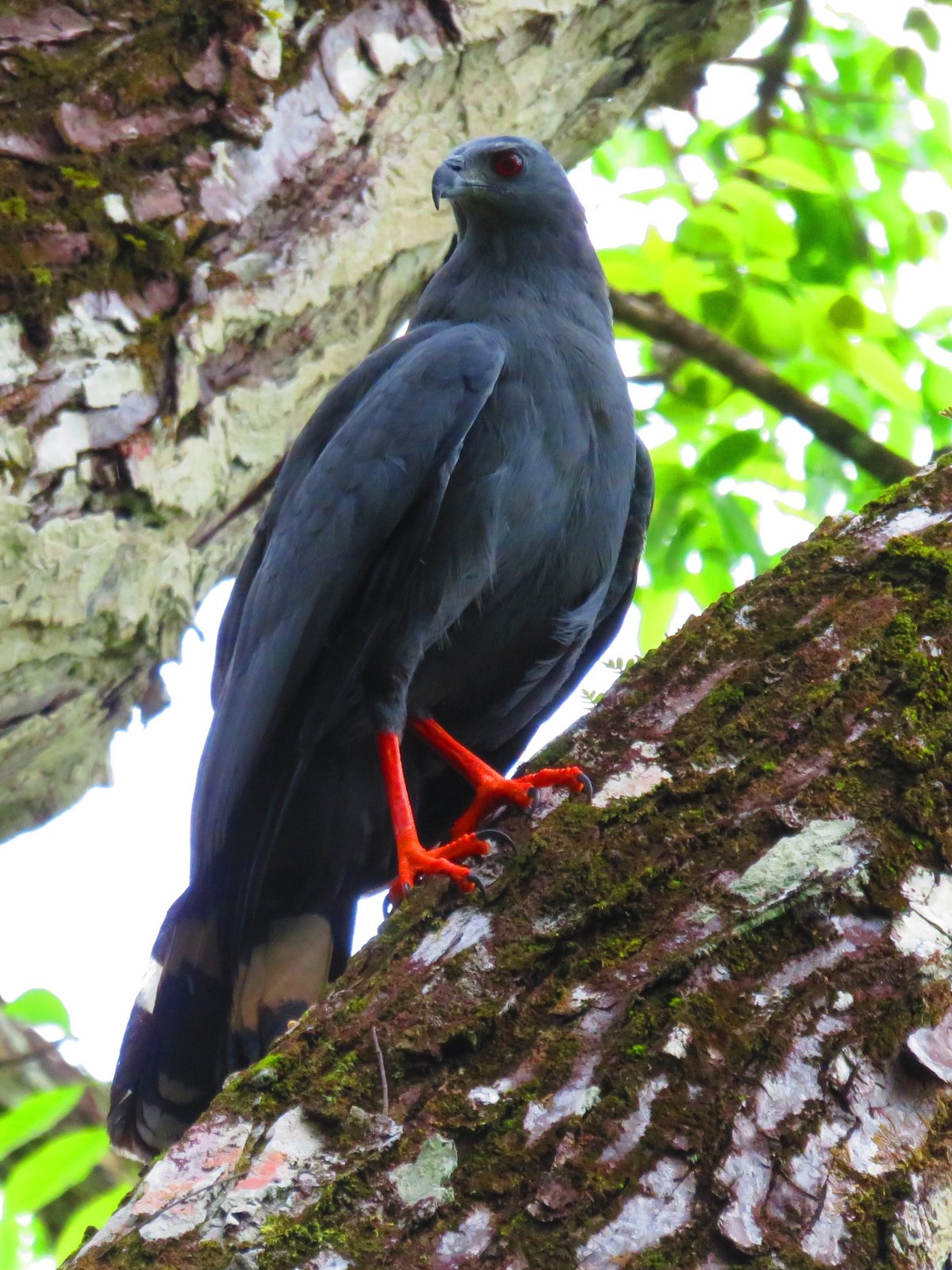
The Crane Hawk is a slender, grey to blackish-grey raptor with a small head and long, orange-red legs. The joint halfway down the leg can also bend backwards, allowing it to reach deep into tree holes, bromeliads and crevices to extract frogs, lizards, bats and nestlings. In the guide area it is a resident of the lowlands from Mexico to Panama.
Voice
A high, nasal, plaintive weeeoo or a series of whistled kwee-kwee-kwee notes, mainly around the nest.
Recording: Juan Freile — CC BY-NC-SA 4.0 · shortened to the first 60 s, mono · xeno-canto
Identification
43–54 cm, with a small head, fairly short, rounded wings and a long tail. In the north of the guide area adults are almost uniformly blackish grey; further south they are paler slate grey, with fine white barring on the belly and thighs. The tail is black with two broad white bands. The eye is red and the legs are long and orange-red. In flight a white crescent across the base of the primaries is visible from below. Young birds are browner, with white flecks on the face and paler, more barred underparts.
Confusion species
The Common Black Hawk Buteogallus anthracinus is bulkier, with broader wings, yellow legs, a yellow cere and a single broad white tail band. The Plumbeous Hawk Cryptoleucopteryx plumbea in Panama has a single white tail band and short orange legs. The Snail Kite Rostrhamus sociabilis has a white tail base and a thin, strongly hooked bill.
Habitat
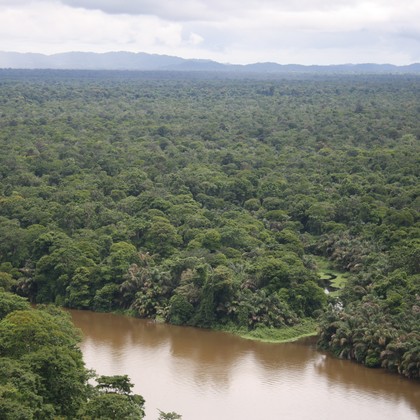
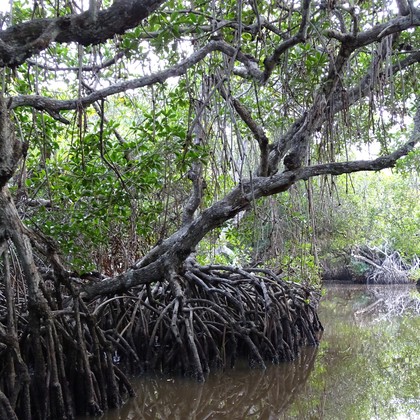
Gallery forest, seasonally flooded forest, swamp forest and mangroves, dry forest and the edges of humid lowland forest, also semi-open country with trees. It clambers and flaps through tree crowns and along trunks, probing holes, bromeliads and nests for prey.
Where the bird is most at home, classified by the vegetation units of Mexico and Central America.





Range and movements
Resident in the lowlands of Mexico, on the Pacific slope from southern Sonora and Sinaloa and on the Gulf slope from Tamaulipas southwards, including the Yucatán Peninsula, and further in Belize, Guatemala, El Salvador, Honduras, Nicaragua, Costa Rica and Panama. Absent from the high mountains. Outside the guide area in tropical South America to northern Argentina and Uruguay.
- Resident
- dark = core range, pale = thinly spread
How and when to look
In the mangroves and riverside forest around San Blas in Nayarit and in the dry forest of northern Yucatán, where birds clamber along tree trunks and probe holes with one foot.
Conservation status
Not threatened. It also occurs in fragmented forest and mangroves, but is sensitive to the loss of gallery and swamp forest.
Scientific name
Geranospiza caerulescens | (Vieillot, 1817)
Vieillot described the species in 1817 as Sparvius caerulescens; because it was later moved to another genus, the author and year stand in brackets. The genus Geranospiza was introduced in 1847 by Kaup. Geranospiza is Greek, from geranos 'crane' and spizias 'hawk', after the strikingly long legs. caerulescens is Latin for 'bluish', after the blue-grey plumage. The specimen the first description was based on came from Cayenne, French Guiana.