All species › Waterfowl › Ducks, swans and geese › Long-tailed Duck
Position in the tree Birds Aves › Birds with a flexible palate Neognathae › Fowl Galloanserae
Long-tailed Duck | Clangula hyemalis
IJseend | Havelda
The Long-tailed Duck is an Arctic sea duck and a vagrant in the guide area, not a regular winter visitor. The rare birds that turn up here are usually females or young birds, on the coast or on an inland lake in north-western Mexico.
Voice
Usually silent in winter; the male sometimes gives a yodelling, nasal ah-owl-ee.
Recording: Petter Westberg — CC BY-NC-SA 4.0 · converted to mono · xeno-canto
Identification
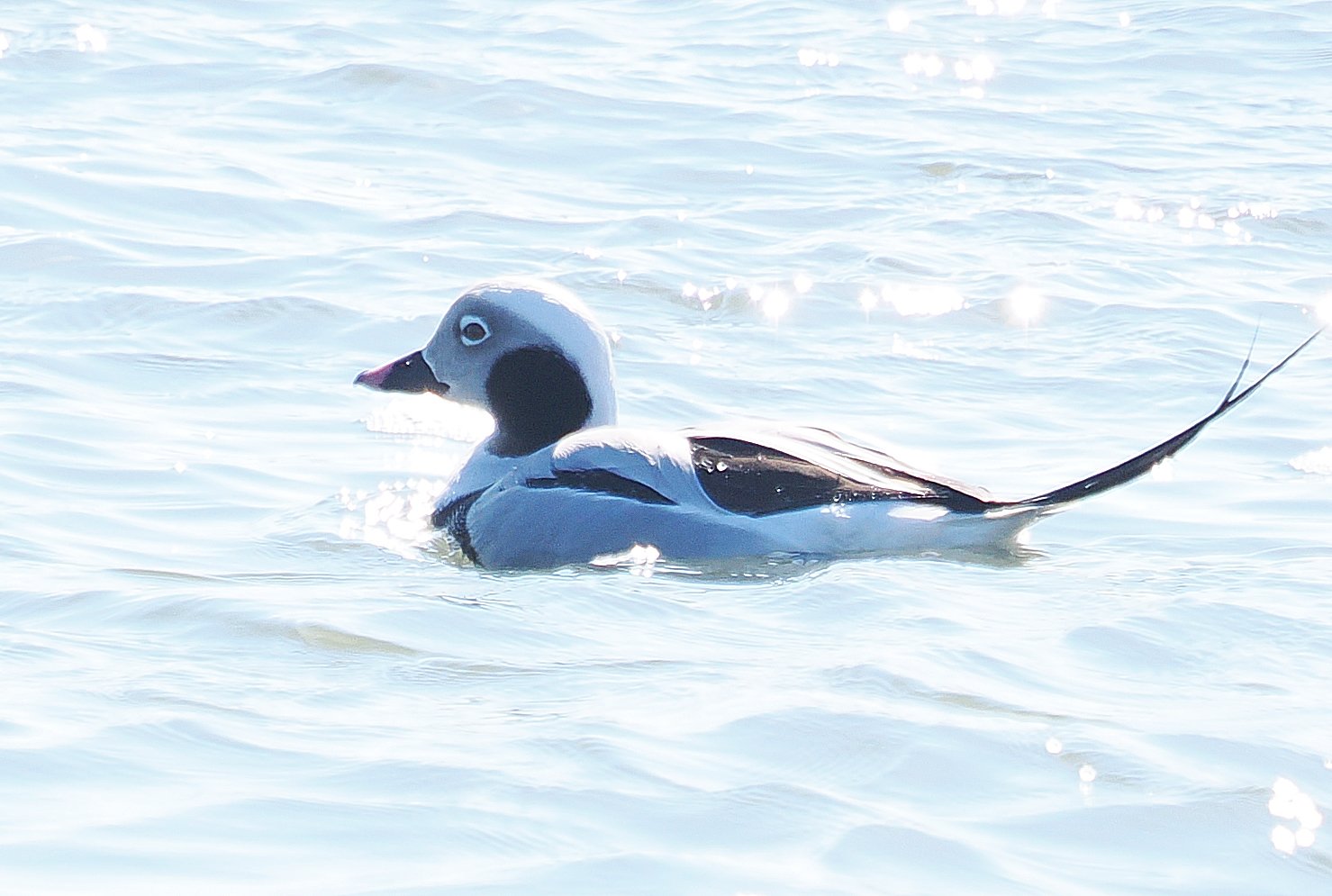
38–47 cm; the male also has two elongated, thin central tail feathers of 10–15 cm. Compact, with a small, round head and a short bill. The male in winter plumage is largely white, with a grey cheek, a black patch on the side of the neck, a broad blackish-brown breast band, dark wings and a pink band on the dark bill. Females and juveniles are brown and white, with a pale head, a dark crown and a dark cheek spot, and lack the long tail. In flight wholly dark wings with no wing patch. It dives often and for long periods.
Confusion species
Bufflehead Bucephala albeola has a white wing patch, and the female a white spot behind the eye rather than a dark cheek spot. Northern Pintail Anas acuta also has a long tail, but is a dabbling duck with a long neck.
Habitat
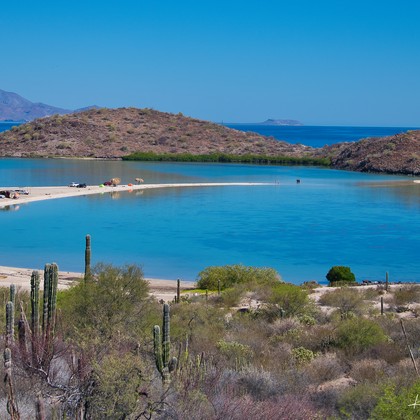
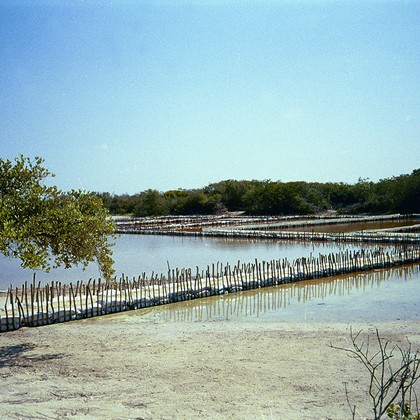
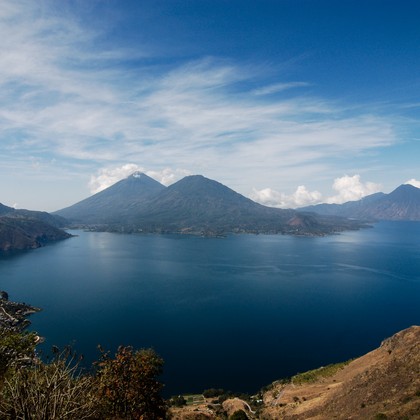
Sheltered bays, harbours and coastal lagoons; a few birds stayed for some time on an inland reservoir or lake.
Where the bird is most at home, classified by the vegetation units of Mexico and Central America.
Range and movements
A few records in north-western Mexico, mainly along the coast of Baja California and in the northern Gulf of California off Sonora; also a few birds inland, including in Durango and Chihuahua. Breeds around the North Pole and winters at sea in the northern Atlantic and Pacific, on the Pacific side of North America south to California.
How and when to look
A bird among scoters in the bays of northern Baja California, or a small diving duck staying alone on a plateau lake, is worth a second look.
Conservation status
Vulnerable globally, because of a steep decline of the wintering flocks, caused among other things by bycatch in fishing nets and oil pollution. In the guide area a vagrant.
Scientific name
Clangula hyemalis | (Linnaeus, 1758)
Linnaeus described the species in 1758 as Anas hyemalis; because it was later moved to another genus, the author and year stand in brackets. The genus Clangula was introduced in 1819 by Leach. Clangula is a Latin diminutive of clangere 'to resound', after the far-carrying call. hyemalis is Latin for 'of the winter'. The specimen the first description was based on came from northern Sweden.