All species › Passerines › Tyrant flycatchers and allies › Lesser Elaenia
Position in the tree Birds Aves › Birds with a flexible palate Neognathae › All other modern birds Neoaves › Landbirds Telluraves › Falcons, parrots and passerines Australaves › Falcons and passerines Eufalconimorphae › Parrots and passerines Psittacopasserae
Lesser Elaenia | Elaenia chiriquensis
Kleine elenia | Elenia menor
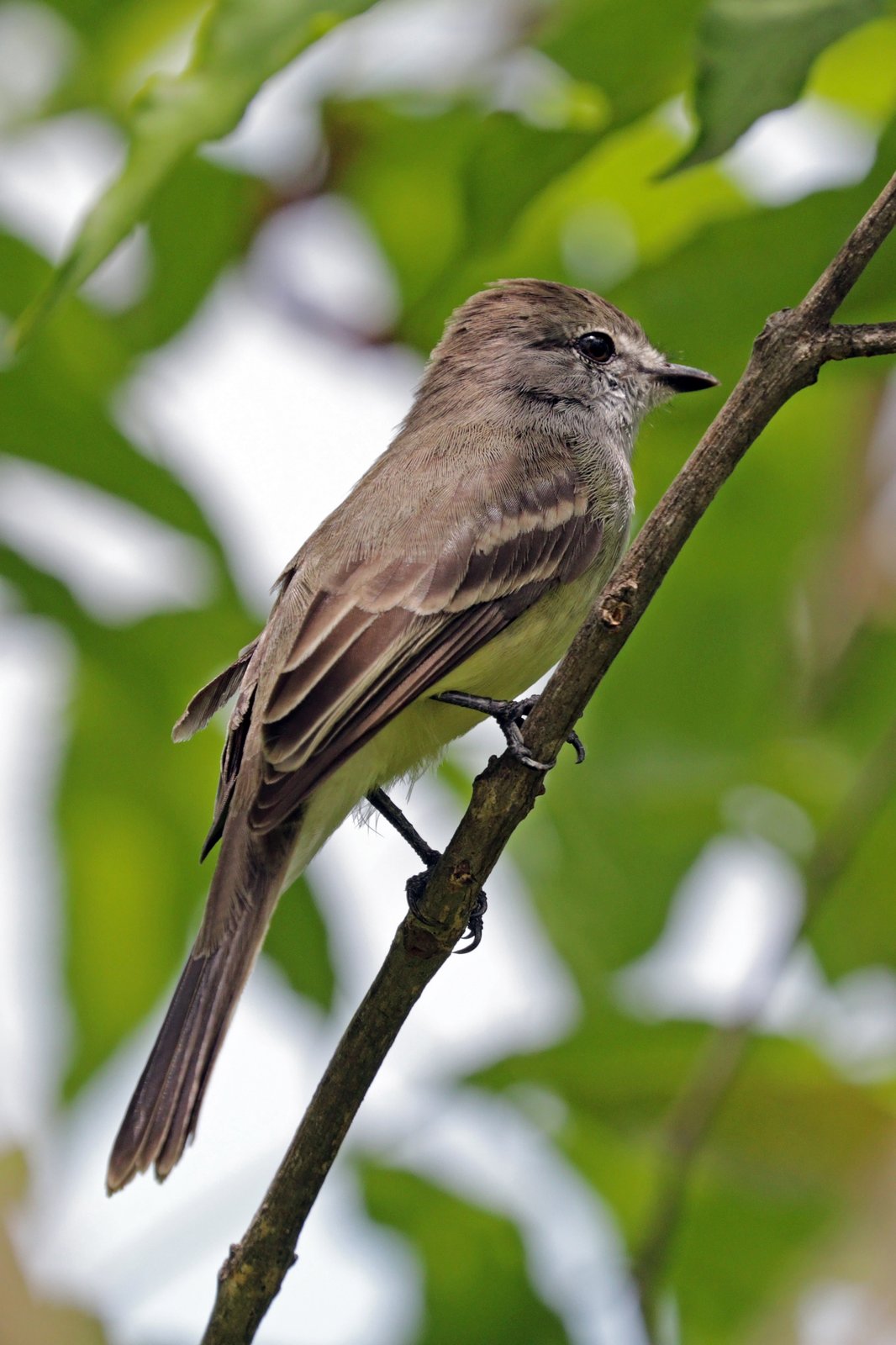
The Lesser Elaenia is a small, drab elaenia of open, grassy country with shrubs and scattered trees. It closely resembles the Yellow-bellied Elaenia but is smaller, with a rounder head and a much less obvious crest. In the guide area it occurs only in Costa Rica and Panama.
Voice
A short, two-syllabled chee-bur or jwee-boo, often repeated; softer and less harsh than that of Yellow-bellied Elaenia.
Recording: JAYRSON ARAUJO DE OLIVEIRA — CC BY-NC-SA 4.0 · converted to mono · xeno-canto
Identification
13–14 cm. Head rounded, with at most a low crest and a small white crown patch that is often hidden; narrow, indistinct whitish eye-ring. Upperparts greyish olive-brown. Wings dark with two whitish wing-bars. Throat greyish white, breast pale grey washed olive, belly dull pale yellow. Bill slender, dark with a pale base to the lower mandible. Male and female are alike.
Confusion species
Yellow-bellied Elaenia Elaenia flavogaster is larger, with a full, often parted crest, a larger white crown patch and a brighter yellow belly; its voice is harsher. Mountain Elaenia Elaenia frantzii lacks the white crown patch, is greener above and yellower below, and has a more distinct eye-ring. Voice is often the most reliable feature.
Habitat
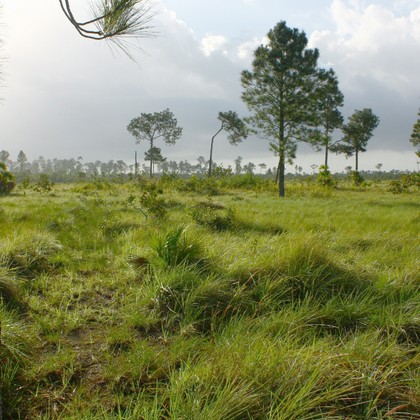
Open and semi-open country with grass, shrubs and scattered trees, such as savanna, pastures, rough edges and young scrub, locally also gardens. It eats small fruits and berries as well as insects.
Where the bird is most at home, classified by the vegetation units of Mexico and Central America.



Range and movements
In the guide area in Costa Rica, mainly in the south and centre of the country, and in Panama, mainly in the west and on the Pacific slope. Outside the guide area over much of South America; there the southern populations move north outside the breeding season.
- Resident
- dark = core range, pale = thinly spread
How and when to look
Search grassy open country with scattered shrubs in southern Costa Rica and western Panama. As it so closely resembles Yellow-bellied Elaenia, voice is the best clue.
Conservation status
Not threatened. Widespread; locally fairly common in the guide area, but probably often overlooked because of its similarity to Yellow-bellied Elaenia.
Scientific name
Elaenia chiriquensis | Lawrence, 1865
Lawrence described the species in 1865 and placed it straight away in the genus where it still stands. The genus Elaenia was introduced in 1836 by Sundevall. Elaenia comes from Greek elaineos 'oily, olive-coloured', after the olive-green plumage. chiriquensis refers to Chiriquí in western Panama, where the type was collected. The specimen the first description was based on came from near David, Chiriquí, Panama.