All species › Tubenoses › Northern storm petrels › Least Storm Petrel
Position in the tree Birds Aves › Birds with a flexible palate Neognathae › All other modern birds Neoaves › Birds of the elements Elementaves › Tropicbirds and waterbirds Phaethoquornithes › Core waterbirds Aequornithes
Least Storm Petrel | Hydrobates microsoma
Dwergstormvogeltje | Paíño mínimo
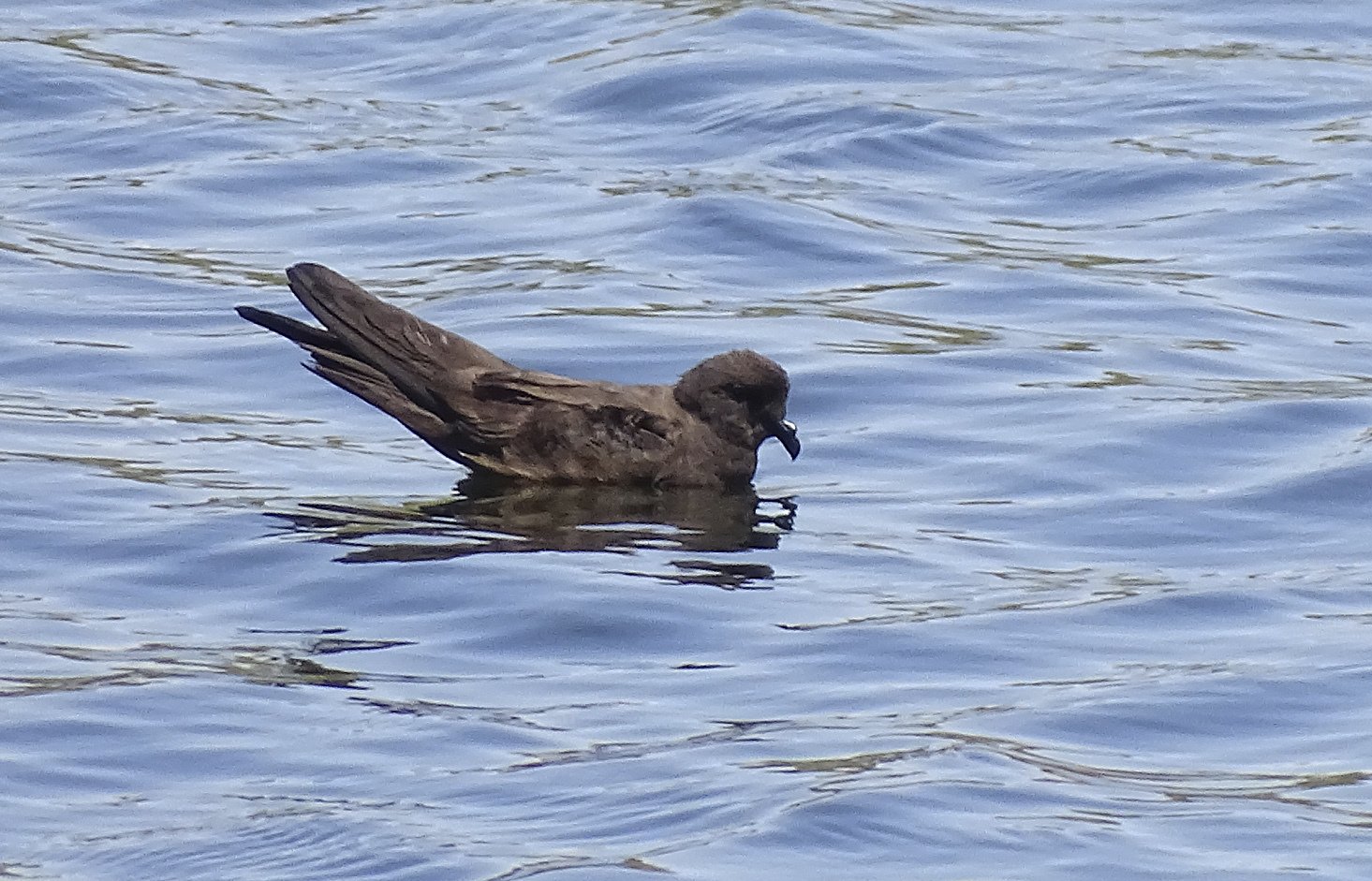
The Least Storm Petrel is the smallest storm petrel in the guide area: an all-dark bird barely larger than a swallow and the only dark species with a short, wedge-shaped tail. Almost the entire world population breeds on islands in the Gulf of California and off the Pacific coast of Baja California. Outside the breeding season it moves south along the Pacific coast, often in flocks together with the Black Storm Petrel.
Voice
Silent at sea. At the colony, which is visited only at night, a fast, high, rattling twitter comes from the rock crevices.
No recording with a suitable Creative Commons licence is available for this species yet.
Identification
13–15 cm. A very small, compact storm petrel with short wings and a short, wedge-shaped or rounded tail. The plumage is entirely sooty black, without a pale rump; the pale band across the upperwing is weak and often barely visible. Male, female and young birds are alike. Flies fast and low over the water with deep, hurried beats, recalling a bat.
Confusion species
The Black Storm Petrel Hydrobates melania is much larger, with a long, deeply forked tail and slow, deep wingbeats. The Ashy Storm Petrel Hydrobates homochroa, which occurs only in the far north-west, is larger and greyer brown and has a forked tail. Dark-rumped Leach's Storm-Petrels Hydrobates leucorhous and Townsend's Storm Petrels Hydrobates socorroensis are larger, with a forked tail and longer, angled wings. In good views the wedge-shaped tail together with the tiny size is decisive.
Habitat
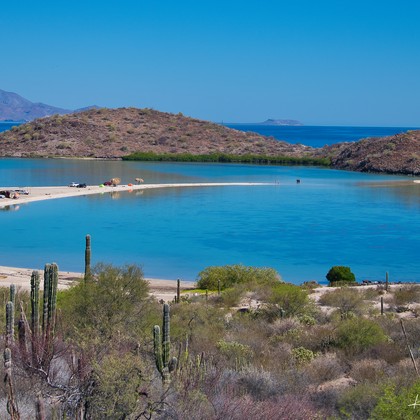
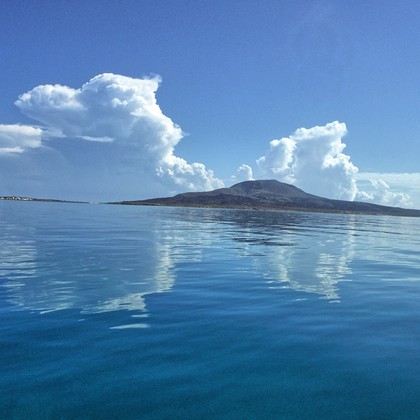
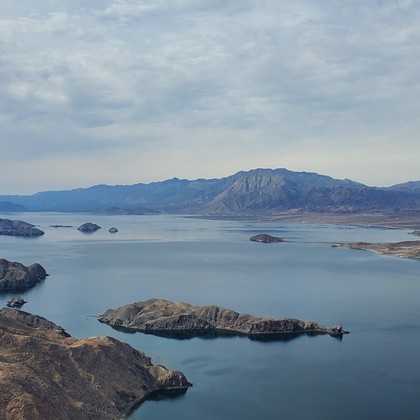
Warm coastal waters and the continental shelf, in the Gulf of California often close inshore; outside the breeding season also further out to sea. Takes small crustaceans and fish larvae from the surface in flight. Rests at sea in flocks, often mixed with Black Storm Petrels. Breeds in crevices between boulders and in rubble slopes on small, dry islands.
Where the bird is most at home, classified by the vegetation units of Mexico and Central America.
Range and movements
Breeds on the San Benito Islands off the Pacific coast of Baja California and on many islands in the Gulf of California, with the largest colonies on Isla Partida. After the breeding season some birds wander north to off southern California in some years; most move south along the Pacific coast of Mexico and Central America. In winter mainly off southern Mexico, Guatemala, El Salvador and in the Gulf of Panama, and further south to off Colombia and Ecuador. Tropical storms can carry birds far inland. The species does not occur on the Atlantic side of the guide area.
- Resident
- Summer visitor (c. Apr–Sep)
- Winter visitor (c. Oct–Mar)
- Passage (Mar–Apr, Oct–Nov)
- dark = core range, pale = thinly spread
How and when to look
In summer and early autumn on boat trips in the Gulf of California, often in resting flocks on the water together with Black Storm Petrels. In winter it can be seen on boat trips off Oaxaca and Guatemala and in the Gulf of Panama. Look for the tiny size, the wedge-shaped tail and the fast, low, skimming flight.
Conservation status
Not threatened. Almost the entire population depends on a limited number of islands, which makes the species vulnerable to introduced cats and rats; these predators have been removed from several islands in the Gulf of California. Reliable numbers are lacking.
Scientific name
Hydrobates microsoma | (Coues, 1864) (GBIF: Oceanodroma microsoma)
Coues described the species in 1864 as Halocyptena microsoma; because it was later moved to another genus, the author and year stand in brackets. The genus Hydrobates was introduced in 1822 by Boie. Hydrobates is Greek, from hudro- 'water' and batēs 'walker': 'water walker'. microsoma is Greek, from mikros 'small' and sōma 'body', after its very small size. The specimen the first description was based on came from San José del Cabo, Baja California Sur, Mexico.