All species › Pigeons and doves › Doves and pigeons › Inca Dove
Position in the tree Birds Aves › Birds with a flexible palate Neognathae › All other modern birds Neoaves › Doves, turacos and allies Columbaves › Doves and sandgrouse Columbimorphae
Inca Dove | Columbina inca
Incaduif | Tórtola cola larga
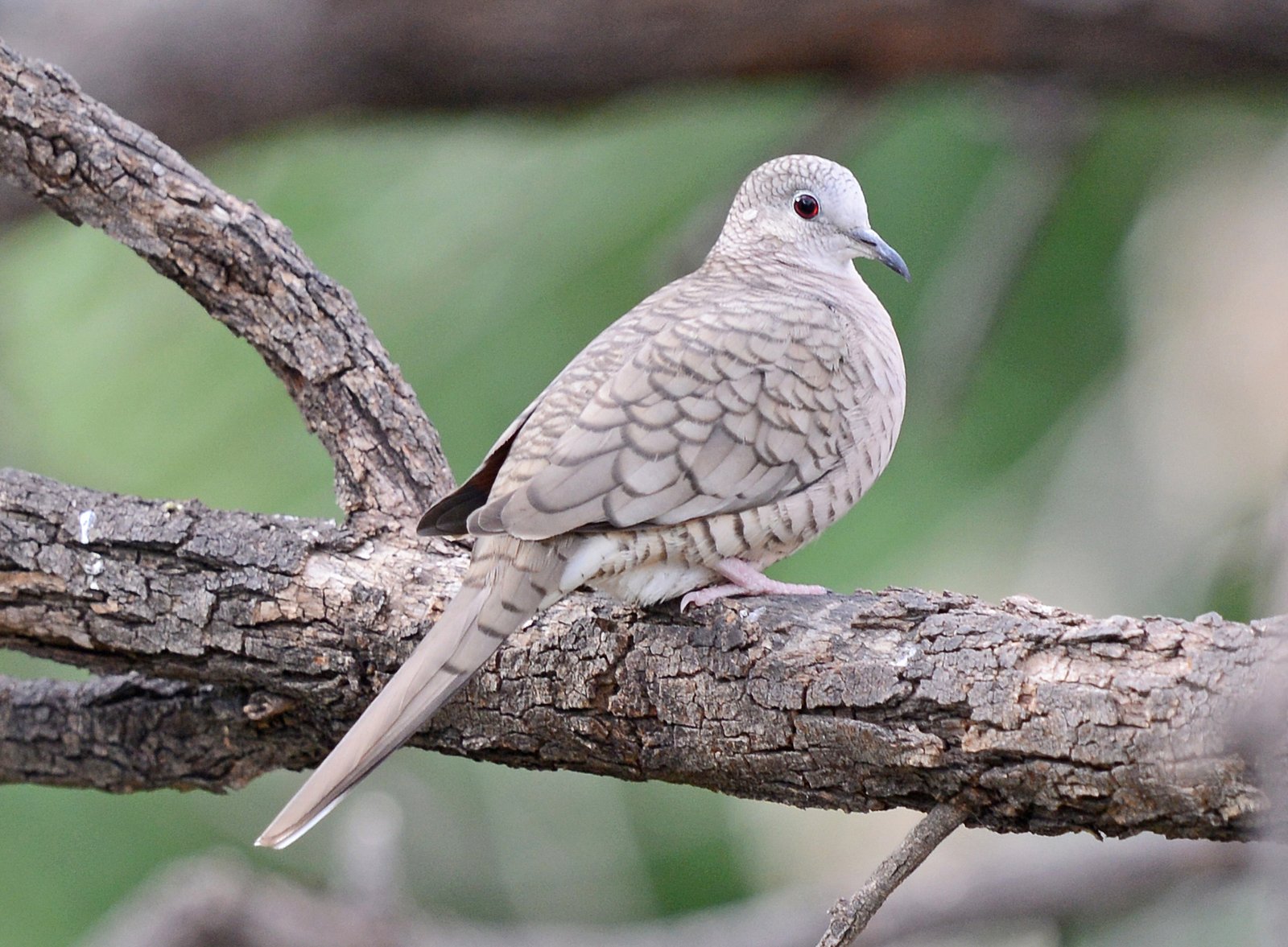
The Inca Dove is a small, slender ground dove with a long tail and scaly plumage, a familiar bird of villages, yards and town parks in the dry part of the guide area. Despite its name it has nothing to do with the Andes: the species ranges from the southern United States to north-western Costa Rica. It has spread along with people and lives almost anywhere with water, bare ground and seed.
Voice
The call is a monotonously repeated two-note coo-poo or no-hope, stressed on the first syllable, often for hours from a roof, a wire or a branch. Also a soft, guttural cooing in display. On take-off the wings give a dry rattle.
Recording: Manuel Grosselet — CC BY-NC-SA 4.0 · converted to mono · xeno-canto
Identification
19–23 cm, slender, with a long, narrow tail making up almost half the length. The plumage is grey-brown to sandy, paler and pinkish-tinged on the head and breast, and scaled almost everywhere by dark feather edges. The tail has broad white sides that show on take-off and landing. In flight the primaries flash chestnut. The eye is red, the bill dark and the legs pink. The male is slightly paler and pinker on the head and breast than the female; juveniles are duller and less clearly scaled. The wings make a dry, rattling sound on take-off.
Confusion species
Common Ground Dove Columbina passerina is also scaled, but only on the head, neck and breast; it is stockier, with a short dark tail without white sides, black spots on the wing and a reddish bill base. Ruddy Ground Dove Columbina talpacoti is unscaled and shorter-tailed. Mourning Dove Zenaida macroura also has a long tail with white, but is much larger and unscaled, with a black cheek spot and no chestnut in the wing.
Habitat
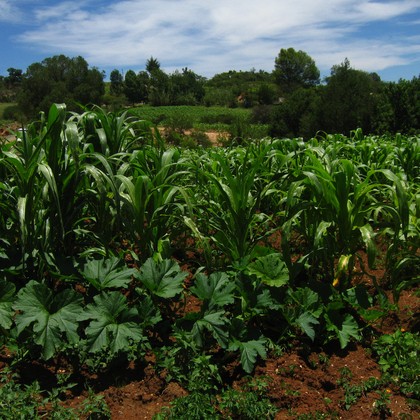
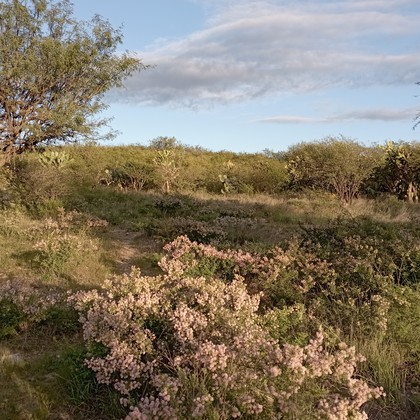
Villages, towns, gardens, parks, yards, corrals, fields and pasture, as well as dry scrub, thorn forest and semi-desert, especially near water and human settlement; from sea level to about 2500 m. It searches bare ground on foot for small seeds, usually in pairs or small groups. In cold weather birds sometimes huddle in a pyramid two or three layers high. The nest is a small platform of twigs in a shrub, a tree or on a building.
Where the bird is most at home, classified by the vegetation units of Mexico and Central America.




Range and movements
Most of Mexico, from Sonora, Chihuahua, Coahuila and Tamaulipas south to Oaxaca and Chiapas, with its stronghold in the dry interior and along the Pacific coast; largely absent from the humid south-eastern lowlands and the Yucatán Peninsula. Further in Guatemala, El Salvador, Honduras and Nicaragua, mainly on the Pacific side and in dry interior valleys, and in north-western Costa Rica. Outside the guide area in the south-western United States, from California to Texas.
- Resident
- dark = core range, pale = thinly spread
How and when to look
In northern and central Mexico and in the dry Pacific lowlands of Central America the species can be found in almost every village and town square. The repeated coo-poo usually gives the birds away before they are seen. A flushing bird with a long, white-edged tail and chestnut wings is almost certainly an Inca Dove.
Conservation status
Not threatened. The species is common and benefits from human settlement, agriculture and irrigation. Over the last century its range has expanded both north into the United States and south into Central America.
Scientific name
Columbina inca | (Lesson, 1847)
Lesson described the species in 1847 as Chamaepelia inca; because it was later moved to another genus, the author and year stand in brackets. The genus Columbina was introduced in 1825 by Spix. Columbina is Latin for 'little dove', a diminutive of columba 'dove'. inca refers to the Incas of Peru, although the species does not occur there; why Lesson chose this name for a Mexican bird is unclear. The specimen the first description was based on came from Mexico.