All species › Waders, gulls and terns › Skimmers, noddies, terns and gulls › Iceland Gull
Position in the tree Birds Aves › Birds with a flexible palate Neognathae › All other modern birds Neoaves › Birds of the elements Elementaves › Cranes and waders Gruimorphae
Iceland Gull | Larus glaucoides
Kleine burgemeester | Gaviota polar
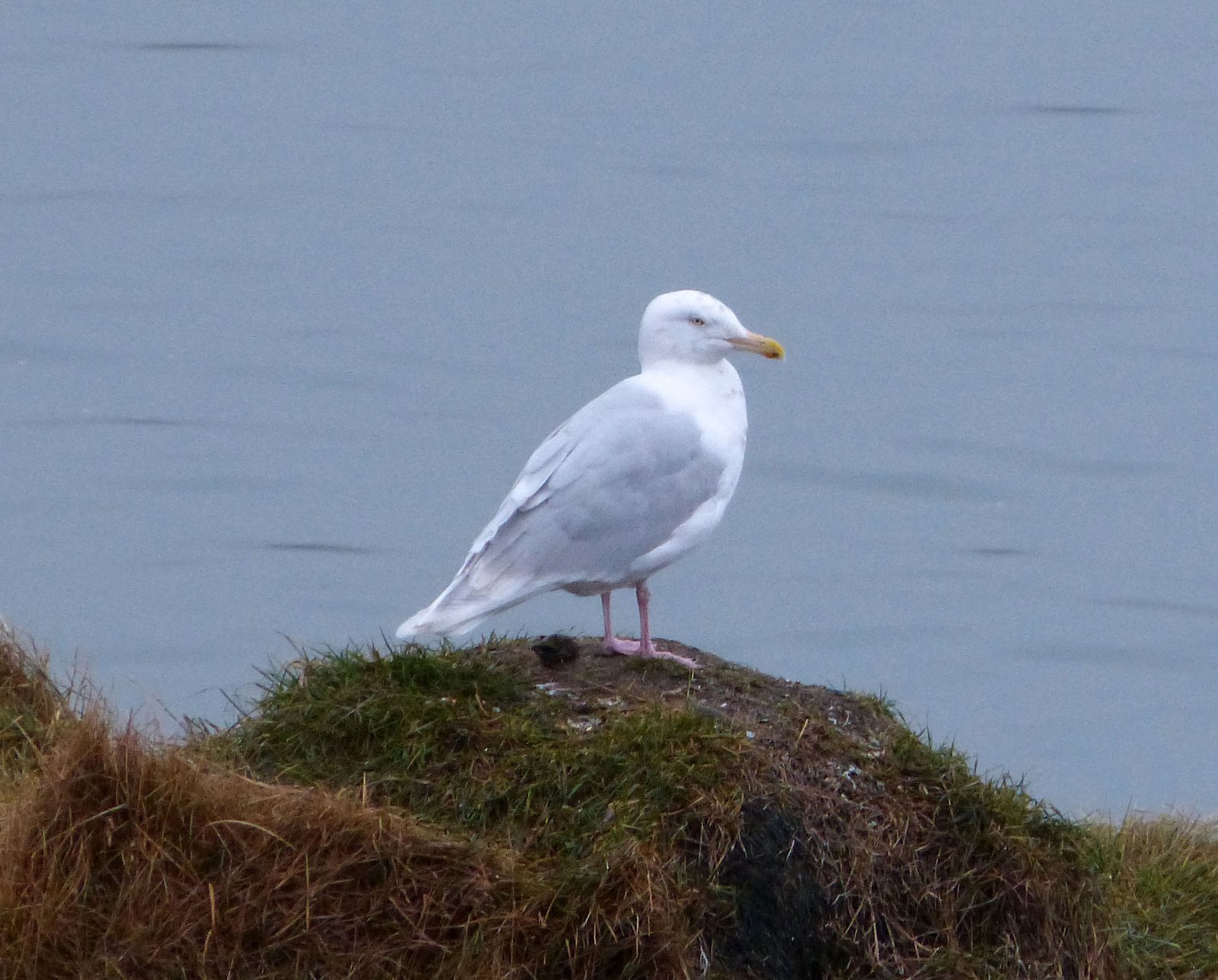
Since the merger with Thayer's Gull, Iceland Gull comprises three forms: the pale nominate form from Greenland, the form kumlieni from north-eastern Canada and the darker form thayeri from the Canadian Arctic. In the guide area the species is a scarce winter visitor, almost always of the form thayeri, mainly in the northern Gulf of California.
Voice
A high, shrill kyow and laughing series, higher than those of American Herring Gull; in winter calls little.
Recording: Frank Roos — CC BY-NC-SA 4.0 · converted to mono · xeno-canto
Identification
52–60 cm, a medium-sized to large gull with a round head, a fairly short yellow bill with a red spot, pink legs and a pale to dark eye. Adults of the form thayeri have a pale grey mantle and wingtips with grey-black outer webs and much white; from below the wingtip looks almost entirely pale. In winter the head and neck are mottled brown. Juveniles are uniformly pale brown and scaled, with pale inner webs to the primaries that look translucent in flight.
Confusion species
American Herring Gull Larus smithsonianus is larger, with a more angular head, a heavier bill and black wingtips that are dark from below as well. Glaucous-winged Gull Larus glaucescens is larger and heavier, with a thick bill and grey wingtips without black. California Gull Larus californicus has greenish-yellow legs, a darker mantle and a black and a red spot on the bill.
Habitat
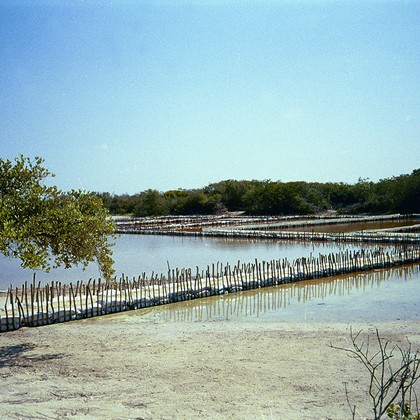
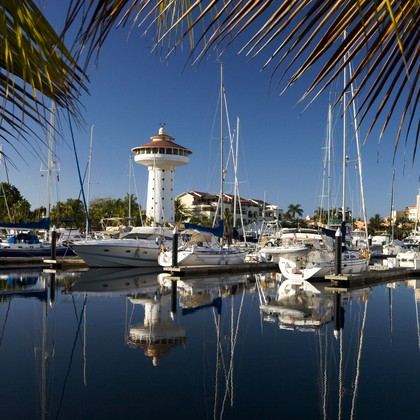
Beaches, lagoons, harbours and rubbish dumps, usually among flocks of other large gulls.
Where the bird is most at home, classified by the vegetation units of Mexico and Central America.


Range and movements
In winter scarce along the coasts of Baja California and Sonora, mainly in the northern Gulf of California, and rare further south to Baja California Sur and Nayarit. Rare on the Gulf coast, mainly in Tamaulipas, with an occasional record further south, including in Belize. Outside the guide area the species breeds in northern and north-eastern Canada and on Greenland, and winters along the coasts of North America, on the Great Lakes and in north-western Europe.
- Resident
- Winter visitor (c. Oct–Mar)
- Passage (Mar–Apr, Oct–Nov)
- dark = core range, pale = thinly spread
How and when to look
Flocks of large gulls in the northern Gulf of California, such as at Puerto Peñasco, offer the best chance in winter. The round head, short bill and wingtips that are pale from below are the best features.
Conservation status
Not threatened globally. The population is large but poorly known because of the remote breeding range. In the guide area a scarce winter visitor with no breeding population.
Scientific name
Larus glaucoides | Meyer, 1822
Meyer described the species in 1822 and placed it straight away in the genus where it still stands. The genus Larus was introduced in 1758 by Linnaeus. Larus is Latin, from Ancient Greek laros, and appears to have referred to a gull or another large seabird. glaucoides means 'resembling Larus glaucus', an old name for the glaucous gull; the suffix -oides is Ancient Greek for 'resembling'. The specimen the first description was based on came from Iceland.