All species › Grebes › Grebes › Horned Grebe
Position in the tree Birds Aves › Birds with a flexible palate Neognathae › All other modern birds Neoaves › Flamingos and grebes Mirandornithes
Horned Grebe | Podiceps auritus
Kuifduiker | Zampullín cuellirrojo
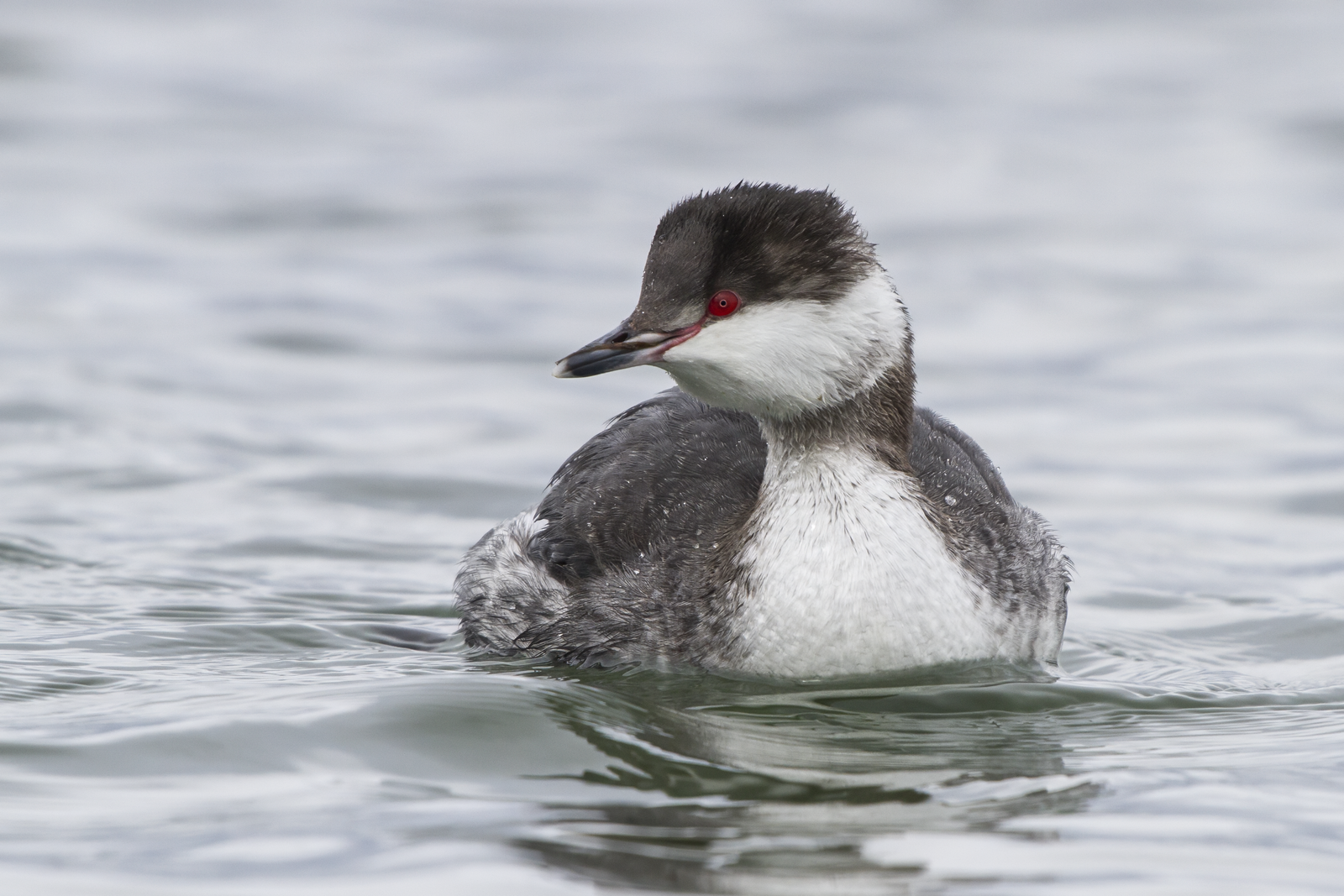
The Horned Grebe is a compact grebe of northern lakes that occurs in the guide area only as a scarce winter visitor to the far north-west of Mexico. In winter plumage it is crisply black and white; the breeding plumage with golden 'horns' is seen here almost only shortly before departure in spring.
Voice
Almost silent in winter. On the breeding grounds a series of hoarse, squeaky and chattering notes and a squealing trill.
Recording: Alan Dalton — CC BY-NC-SA 4.0 · shortened to the first 60 s, mono · xeno-canto
Identification
31–38 cm, compact, with a rather flat crown, a short, straight bill with a pale tip and a red eye. In winter plumage blackish-grey on crown, hindneck and back, sharply demarcated from white cheeks, throat and foreneck; the black cap ends at eye level and a small pale spot in front of the eye links eye and bill. In breeding plumage a black head with broad golden-yellow tufts behind the eye and a rufous neck and flanks. In flight white patches on the inner wing and a small white patch on the leading edge of the wing.
Confusion species
Eared Grebe Podiceps nigricollis has a steeper forehead and a higher, peaked crown, a thinner bill that looks slightly upturned and lacks a pale tip and, in winter plumage, a darker, less sharply defined cheek with a white patch behind it and a grey neck. Pied-billed Grebe Podilymbus podiceps is brown with a thick bill and a dark eye.
Habitat
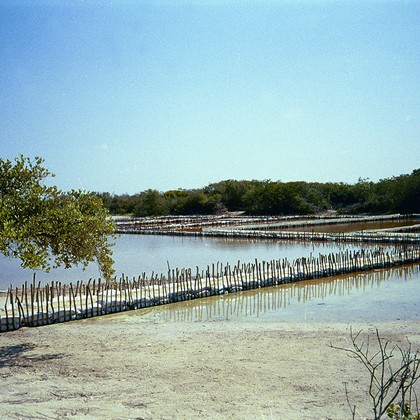
In the guide area mainly sheltered coastal bays, harbours and lagoons, scarcely also larger lakes and reservoirs inland. It eats fish, crustaceans and other invertebrates, caught by diving. Breeds on small lakes and pools in northern North America and Eurasia.
Where the bird is most at home, classified by the vegetation units of Mexico and Central America.


Range and movements
Scarce winter visitor along the Pacific coast of Baja California and in the northern Gulf of California, in Baja California and Sonora; rare inland in northern Mexico, such as in Chihuahua, Coahuila and Nuevo León. Exceptional further south in the guide area. Breeds in Alaska, Canada and the northern United States and further in Iceland, Scotland, Scandinavia and Russia; winters mainly along the coasts of North America and Eurasia.
- Winter visitor (c. Oct–Mar)
- Passage (Mar–Apr, Oct–Nov)
- dark = core range, pale = thinly spread
How and when to look
The best chance is between November and March in the bays and harbours of north-western Baja California, among flocks of Eared Grebes. The flat crown, the sharp border between black cap and white cheek and the pale bill tip separate it from the far more numerous Eared Grebe.
Conservation status
Vulnerable. The species is declining worldwide, mainly through the loss and degradation of small breeding lakes in North America and Europe. In the guide area only a small number of birds winter, with no clear trend.
Scientific name
Podiceps auritus | (Linnaeus, 1758)
Linnaeus described the species in 1758 as Colymbus auritus; because it was later moved to another genus, the author and year stand in brackets. The genus Podiceps was introduced in 1787 by Latham. Podiceps is Latin, from podex, genitive podicis, 'rear end', and pes 'foot', after the legs set far back on the body. auritus is Latin for 'eared', from auris 'ear', after the golden tufts behind the eye in breeding plumage. The specimen the first description was based on came from Sweden.