All species › Pelicans, herons and ibises › Ibises and spoonbills › Green Ibis
Position in the tree Birds Aves › Birds with a flexible palate Neognathae › All other modern birds Neoaves › Birds of the elements Elementaves › Tropicbirds and waterbirds Phaethoquornithes › Core waterbirds Aequornithes
Green Ibis | Mesembrinibis cayennensis
Groene ibis | Ibis verde
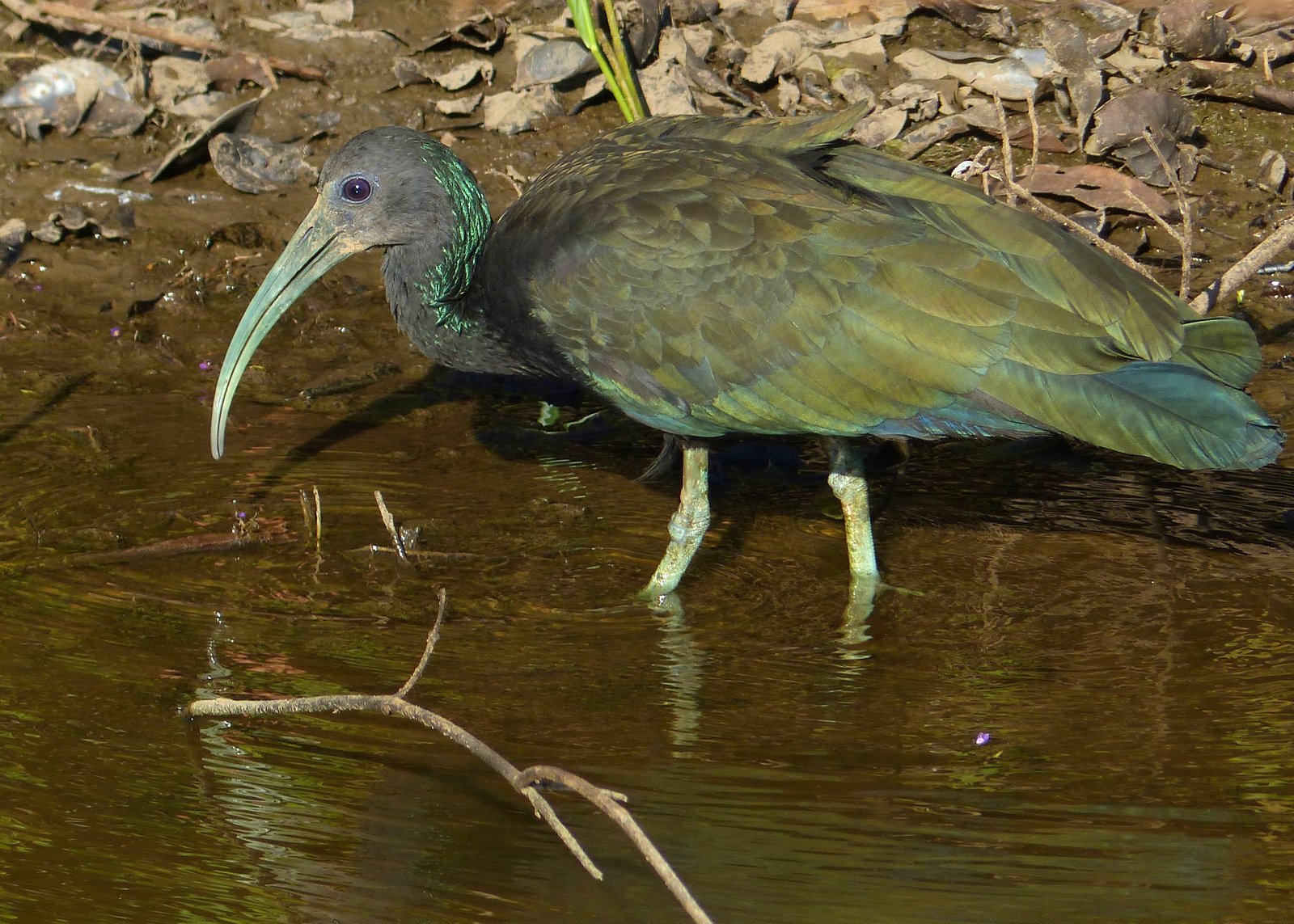
The Green Ibis is a stocky, dark ibis of wooded swamps and riverbanks in the humid lowlands. In the guide area it lives in the south-east, from Honduras to Panama. It is most often heard at dusk, when it gives a loud, rolling call.
Voice
A loud, rolling, far-carrying call, such as kloo-kloo-kloo-kloo or korokoro, mainly at dawn and dusk, also in flight and from the roost. Also softer, guttural sounds.
Recording: JAYRSON ARAUJO DE OLIVEIRA — CC BY-NC-SA 4.0 · converted to mono · xeno-canto
Identification
48–58 cm. A fairly small, compact ibis with short legs, a broad, rounded tail and a medium-long, decurved bill. From a distance the plumage looks black, but in good light it has a dark green to bronze gloss, with a more strongly green-glossed, somewhat shaggy hindneck. The bare facial skin is blue-grey, the bill greenish to grey-green, and the short legs are green-grey. The sexes are alike; juveniles are duller. It flies with the neck outstretched, on stiff, shallow beats alternating with short glides, usually low between the trees.
Confusion species
Glossy Ibis Plegadis falcinellus is slimmer, with longer legs and neck, a chestnut tone on the body and shoulders and a longer bill; it lives in open marshes and often flies in flocks. Young American White Ibises Eudocimus albus have a white belly and rump. Limpkin Aramus guarauna is larger, brown with white spots and longer-legged. Young Rufescent Tiger Herons Tigrisoma lineatum are barred brown and buff and have a straight bill.
Habitat
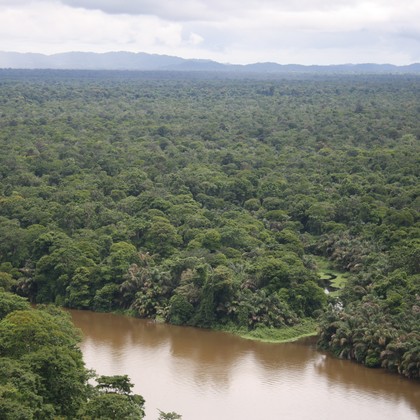
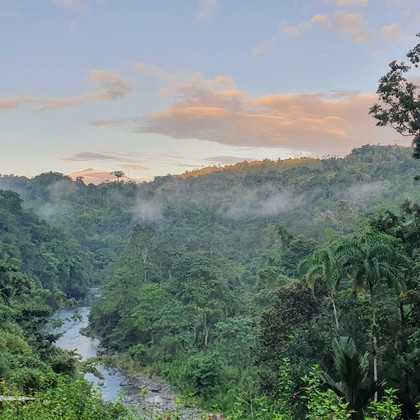
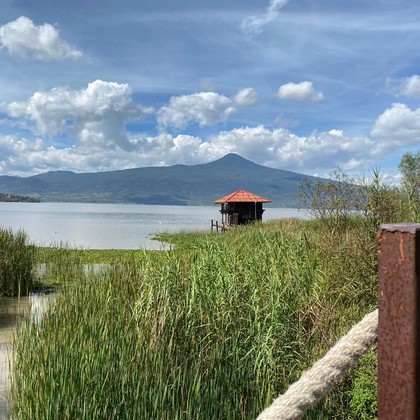
Swamp forest, floodplain forest, wooded banks of rivers, streams, lakes and oxbows, palm swamps and wet clearings in humid lowland forest; also at pools in pastures at the forest edge. It forages alone, in pairs or in small groups in mud and shallow water for invertebrates. During the day it often rests in trees. The nest is a platform of sticks in a tree, usually over water.
Where the bird is most at home, classified by the vegetation units of Mexico and Central America.


Range and movements
Mainly on the Caribbean side: from eastern Honduras through Nicaragua and the northern and Caribbean lowlands of Costa Rica to Panama, where it also occurs on the Pacific side in the east, including Darién. Rare to scarce and local, but it has expanded since the late twentieth century. Outside the guide area in northern and central South America, east of the Andes to north-eastern Argentina, and on the Pacific side of Colombia.
- Resident
- dark = core range, pale = thinly spread
How and when to look
In Costa Rica at Caño Negro, along the rivers of the Sarapiquí area and at Tortuguero, often from a boat; in eastern Panama, for example around Lake Bayano and in Darién. The loud call at dusk often gives the birds away before they are seen. During the day they sometimes sit quietly in a tree on the bank.
Conservation status
Not threatened. Scarce and local in the guide area, but it has spread northwards in recent decades. The species depends on wooded swamps and riverbanks and locally suffers from deforestation and drainage.
Scientific name
Mesembrinibis cayennensis | (Gmelin, 1789)
Gmelin described the species in 1789 as Tantalus cayennensis; because it was later moved to another genus, the author and year stand in brackets. The genus Mesembrinibis was introduced in 1930 by Peters. Mesembrinibis is Greek, from mesēmbrinos 'southern' (literally 'of midday') and ibis: 'southern ibis'. cayennensis refers to Cayenne in French Guiana, the type locality. The specimen the first description was based on came from Cayenne, French Guiana.