All species › Kingfishers, bee-eaters and rollers › Kingfishers › Green-and-rufous Kingfisher
Position in the tree Birds Aves › Birds with a flexible palate Neognathae › All other modern birds Neoaves › Landbirds Telluraves › Raptors, owls, kingfishers and woodpeckers Afroaves › Mousebirds, rollers and woodpeckers Coraciimorphae › Trogons and cavity nesters Cavitaves › Hornbills, kingfishers and woodpeckers Picocoraciae › Kingfishers, bee-eaters and woodpeckers Picodynastornithes
Green-and-rufous Kingfisher | Chloroceryle inda
Groen-bruine ijsvogel | Martín pescador verdirrufo
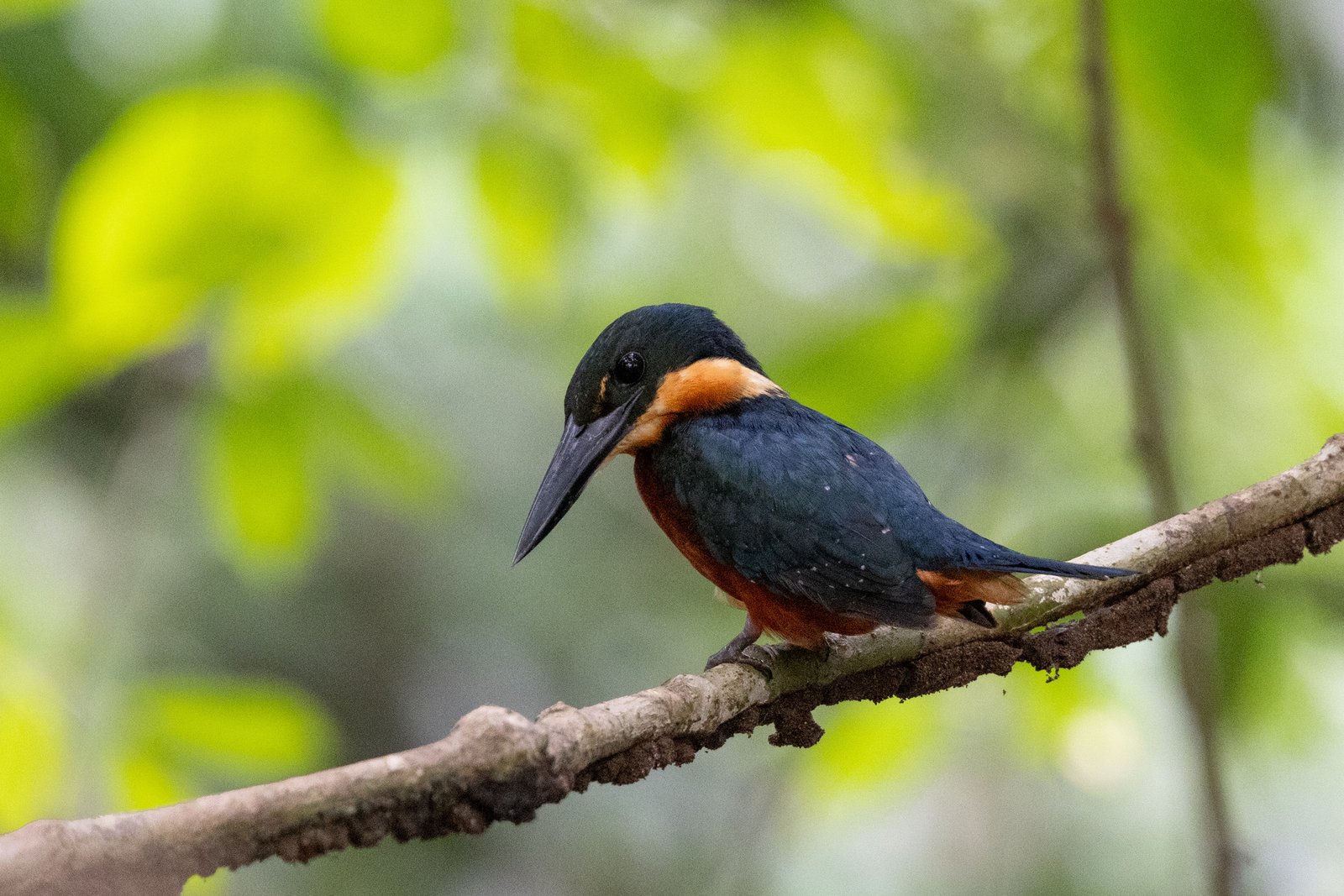
The Green-and-rufous Kingfisher is a medium-sized, dark green kingfisher with entirely rufous underparts, which in the guide area occurs only in the Caribbean lowlands of south-eastern Nicaragua, Costa Rica and Panama. It lives hidden along dark forest streams and in swamp forest and is one of the least often seen kingfishers of the region.
Voice
A soft chak or chet and a fast, rising series of sharp notes; usually silent.
Recording: JAYRSON ARAUJO DE OLIVEIRA — CC BY-NC-SA 4.0 · shortened to the first 60 s, mono · xeno-canto
Identification
22–24 cm, with a long, black bill and a short crest. The upperparts are dark glossy green, with small pale yellow spots and narrow bars on the wings and tail. The whole underside, from throat to undertail coverts, is deep rufous, slightly paler on the throat and neck sides. The female has a scaly green-and-white band across the breast. Young birds resemble the female, with pale spots on the crown and wings.
Confusion species
American Pygmy Kingfisher Chloroceryle aenea has a similar pattern but is much smaller and has a white belly. Amazon Kingfisher Chloroceryle amazona and Green Kingfisher Chloroceryle americana have a white throat and belly.
Habitat
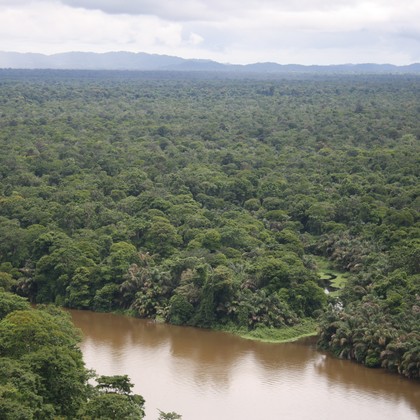
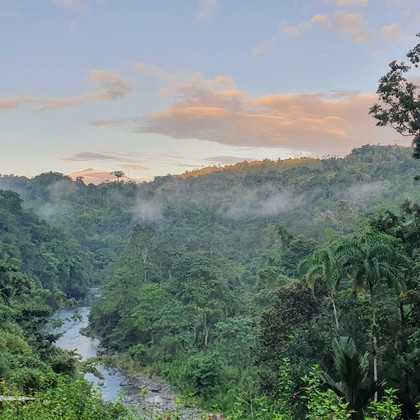
Shady, slow streams, creeks and pools in humid lowland forest, swamp forest and flooded forest, also inside mangroves; rarely above 300 m. It perches low on a branch under the canopy over dark water and dives for small fish and aquatic insects. It nests in a tunnel in a bank.
Where the bird is most at home, classified by the vegetation units of Mexico and Central America.




Range and movements
Caribbean lowlands of south-eastern Nicaragua and Costa Rica, and in Panama, where it occurs mainly on the Caribbean slope and in the east to Darién. Outside the guide area in northern and western Colombia, western Ecuador and the Amazon Basin to Bolivia and Brazil.
- Resident
- dark = core range, pale = thinly spread
How and when to look
Along the side channels of Tortuguero in Costa Rica and along forest streams in the lowlands of Panama, such as around the Chagres River. The bird often sits so low and still in the shade that it is only noticed when it flies off with a soft chak.
Conservation status
Not threatened. Scarce and local in the guide area; dependent on undisturbed lowland forest along water.
Scientific name
Chloroceryle inda | (Linnaeus, 1766)
Linnaeus described the species in 1766 as Alcedo inda; because it was later moved to another genus, the author and year stand in brackets. The genus Chloroceryle was introduced in 1848 by Kaup. Chloroceryle combines Greek khlōros 'green' with the genus Ceryle: 'green Ceryle', after the green upperparts. inda is Latin for 'Indian': Linnaeus gave 'India occidental' (the West Indies), but the bird actually came from Guiana. The specimen the first description was based on came from the Guianas (originally given in error as 'West Indies').