All species › Waders, gulls and terns › Skimmers, noddies, terns and gulls › Forster's Tern
Position in the tree Birds Aves › Birds with a flexible palate Neognathae › All other modern birds Neoaves › Birds of the elements Elementaves › Cranes and waders Gruimorphae
Forster's Tern | Sterna forsteri
Forsters stern | Charrán de Forster
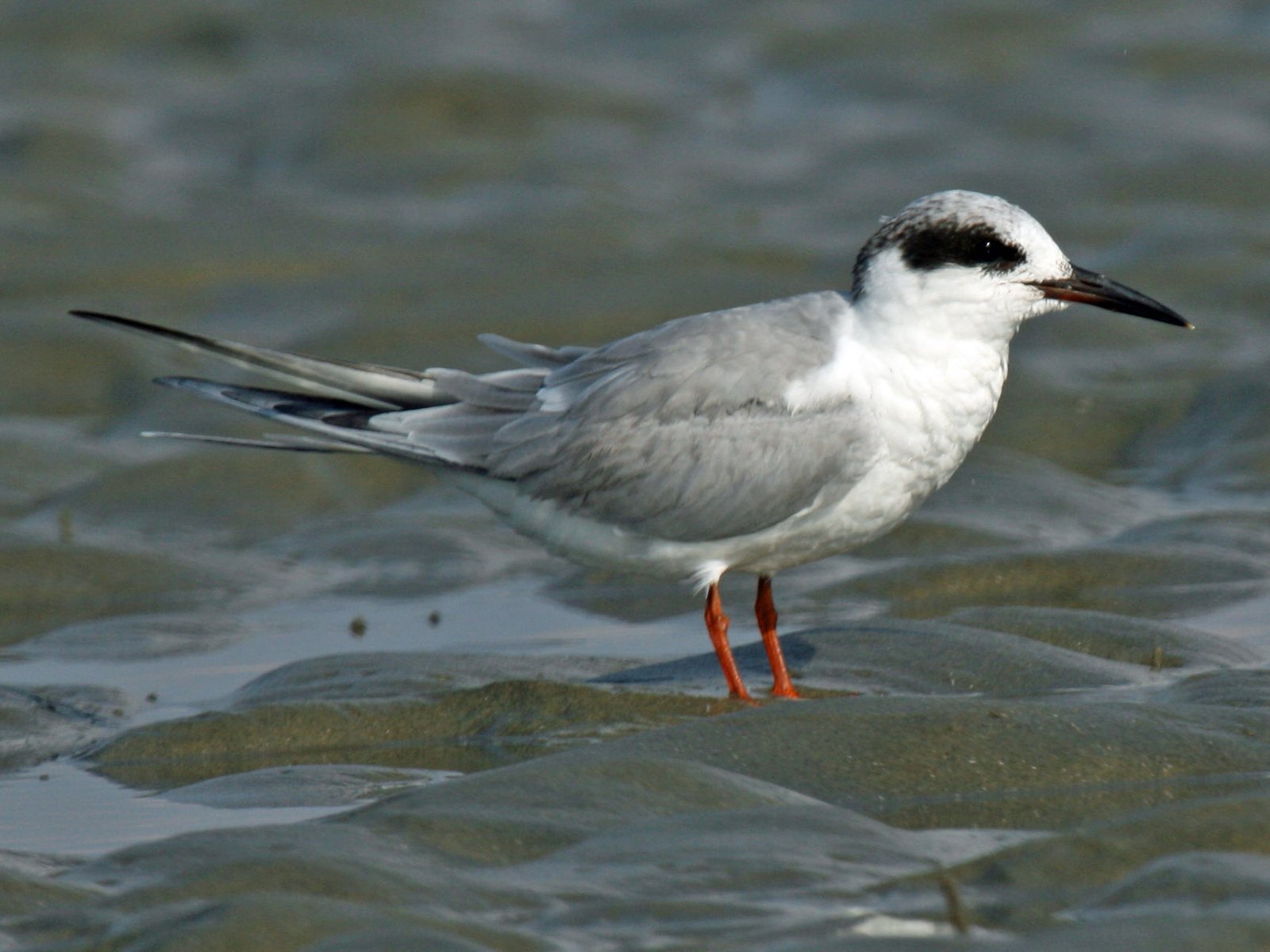
Forster's Tern is a medium-sized tern of North American marshes and coasts. In the guide area it is mainly a winter visitor, common along the coasts and lagoons of Mexico and scarcer further south. In non-breeding plumage it is the tern with an isolated black eye patch on a white head.
Voice
A low, nasal, descending kyarr or kerr, lower and harsher than that of Common Tern; when threatened a hoarse zaar.
Recording: Valerie Heemstra — CC BY-NC-SA 4.0 · converted to mono · xeno-canto
Identification
33–36 cm, slender, with a long, deeply forked tail, fairly long legs and a thin bill. In breeding plumage a full black cap, an orange bill with a black tip and orange-red legs; the upper surface of the primaries is silvery white, paler than the back. In non-breeding plumage, in which birds usually appear here, the head is white with a rounded black patch through and behind the eye, and the bill is black; the hindcrown is white or pale greyish. The upperparts are pale grey, the rump white and the tail grey with white outer edges. First-year birds resemble non-breeding adults, with darker primaries and a shorter tail.
Confusion species
Common Tern Sterna hirundo in non-breeding plumage has a black band from the eye round the hindcrown rather than an isolated eye patch, a dark wedge in the primaries, a dark carpal bar and shorter legs. Gull-billed Tern Gelochelidon nilotica also shows a dark eye patch in winter but is stockier, with a thick, short black bill, a shorter tail and black legs. Sandwich Tern Thalasseus sandvicensis and Elegant Tern Thalasseus elegans are larger and have a shaggy crest.
Habitat
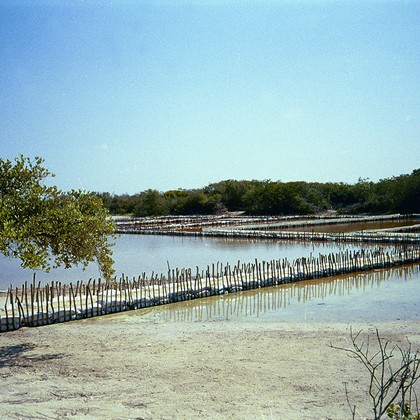
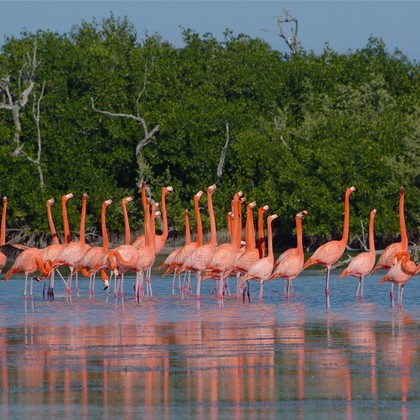
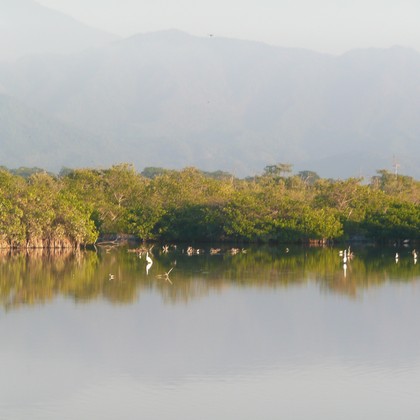
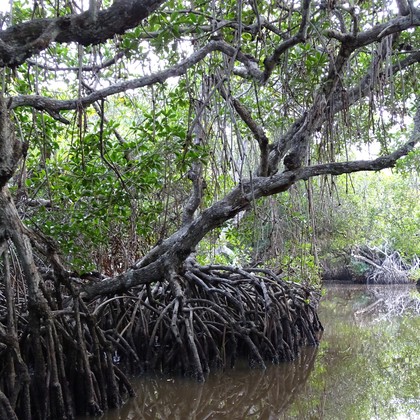
Sheltered, shallow waters: lagoons, salt pans, shallow bays, mudflats, mangrove creeks and estuaries, and also lakes, reservoirs and ponds inland. It hunts by hovering and plunge-diving for fish, and also takes insects over the water. It rests on posts, buoys and sandbars.
Where the bird is most at home, classified by the vegetation units of Mexico and Central America.


Range and movements
In winter along the Pacific coast from Baja California and Sonora to Guatemala and El Salvador, and along the Gulf coast from Tamaulipas to the Yucatán Peninsula and Belize; further south, to Costa Rica and Panama, scarce. Also on lakes and reservoirs in the north and on the central plateau of Mexico, where the species also breeds near Mexico City. Outside the guide area it breeds in the prairie marshes of Canada and the United States and along the Atlantic and Gulf coasts, and also winters in the southern United States.
- Winter visitor (c. Oct–Mar)
- dark = core range, pale = thinly spread
How and when to look
Lagoons, salt pans and estuaries along the Mexican coasts in winter offer the best chance, often with small groups on posts and sandbars. The isolated black eye patch on a white head identifies the species most quickly; a bird with a black band joining the eye patch to the hindcrown is more likely a Common Tern.
Conservation status
Not threatened. The population is fairly stable, but on the breeding grounds the species depends on marshes, which are declining through drainage and changing water levels.
Scientific name
Sterna forsteri | Nuttall, 1834
Nuttall described the species in 1834 and placed it straight away in the genus where it still stands. The genus Sterna was introduced in 1758 by Linnaeus. Sterna goes back to Old English stearn, which appears in the poem The Seafarer; the Frisians used a related word for terns. forsteri honours the German naturalist Johann Reinhold Forster (1729–1798), who sailed with Cook on his second voyage. The specimen the first description was based on came from the Saskatchewan River, Canada.