All species › Swifts › Hummingbirds › Fiery-throated Hummingbird
Position in the tree Birds Aves › Birds with a flexible palate Neognathae › All other modern birds Neoaves › Birds of the elements Elementaves › Nightjars and swifts Strisores
Fiery-throated Hummingbird | Panterpe insignis
Irazúkolibrie | Colibrí garganta de fuego
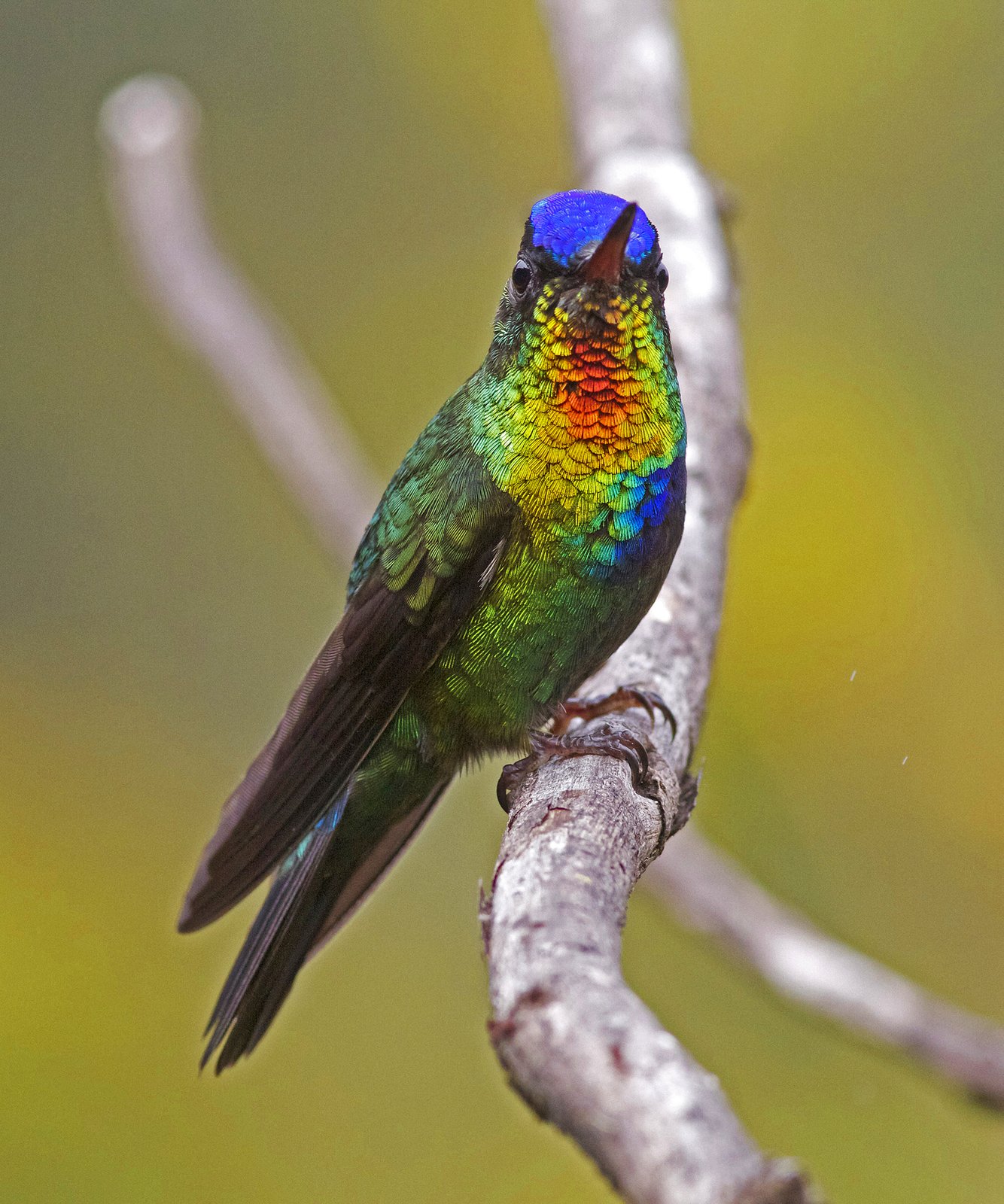
The Fiery-throated Hummingbird lives only in the high mountains of Costa Rica and western Panama. From the side it looks dark, but from the front a fiery red to golden throat and a blue breast patch light up. It fiercely defends flowering shrubs against other hummingbirds.
Voice
High, thin, squeaky tseek calls, and in chases a fast, buzzing twitter.
Recording: Kent Livezey — CC BY-NC-SA 4.0 · converted to mono · xeno-canto
Identification
10–11 cm, with a straight black bill. Both sexes are dark green, with a blue crown, a white spot behind the eye and a blue-black tail. The throat is golden to orange-red in the centre, turning green towards the edges; below it is a violet-blue breast patch. Depending on the light, throat and breast can also look dark. The female has slightly smaller glittering patches.
Confusion species
Talamanca Hummingbird Eugenes spectabilis is much larger, with a longer bill and a blue-green throat. White-throated Mountaingem Lampornis castaneoventris has a white stripe behind the eye and lacks the fiery throat. Volcano Hummingbird Selasphorus flammula is much smaller, with rufous in the tail. Purple-throated Mountaingem Lampornis calolaemus has a purple throat and a white eyestripe.
Habitat
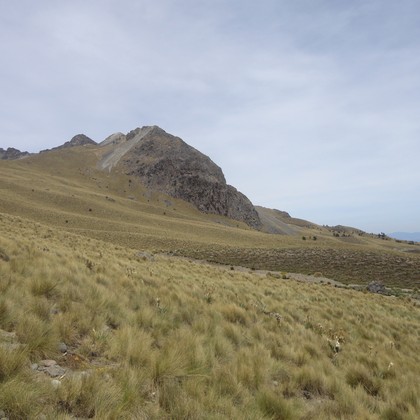
Oak forest and highland rainforest rich in epiphytes, forest edges, scrub, páramo edges and gardens in the high mountains, at about 1400 to 3200 m, mostly above 2000 m. It feeds at flowers of ericaceous shrubs and epiphytes and also uses holes made in flowers by flowerpiercers. Outside the breeding season some birds move down to lower elevations.
Where the bird is most at home, classified by the vegetation units of Mexico and Central America.



Range and movements
Endemic to the guide area. In the highlands of Costa Rica, in the Cordillera de Tilarán, the Cordillera Central and the Cordillera de Talamanca, and in western Panama in Chiriquí and adjacent Bocas del Toro.
- Resident
- dark = core range, pale = thinly spread
How and when to look
On the slopes of Irazú and Poás volcanoes, along the Pan-American Highway near Cerro de la Muerte and at the feeders in the San Gerardo de Dota valley in Costa Rica; in Panama on Barú volcano.
Conservation status
Not threatened. Common in suitable habitat. The range is small, but lies largely within protected areas.
Scientific name
Panterpe insignis | Cabanis & Heine, 1860
Cabanis & Heine described the species in 1860 and placed it straight away in the genus where it still stands. He introduced the genus Panterpe in that same work. Panterpe is Greek, from pan 'all' and terpō 'to delight': 'all-delighting'. insignis is Latin for 'remarkable, distinguished', from in and signum 'mark', after the fiery throat. The specimen the first description was based on came from Costa Rica.