All species › Passerines › New World warblers › Crescent-chested Warbler
Position in the tree Birds Aves › Birds with a flexible palate Neognathae › All other modern birds Neoaves › Landbirds Telluraves › Falcons, parrots and passerines Australaves › Falcons and passerines Eufalconimorphae › Parrots and passerines Psittacopasserae
Crescent-chested Warbler | Oreothlypis superciliosa
Sikkelborstzanger | Parula ceja blanca
The Crescent-chested Warbler is a small warbler of the montane forests of Mexico and northern Central America, with a grey head, a broad white supercilium and a chestnut crescent on the yellow breast. It searches the canopy for insects and often travels with mixed flocks.
Voice
The song is a dry, buzzy trill on one pitch, bzzzzzz, reminiscent of an insect. The call is a soft tsip.
Recording: Matthew L. Brady — CC BY-NC-SA 4.0 · shortened to the first 60 s, mono · xeno-canto
Identification
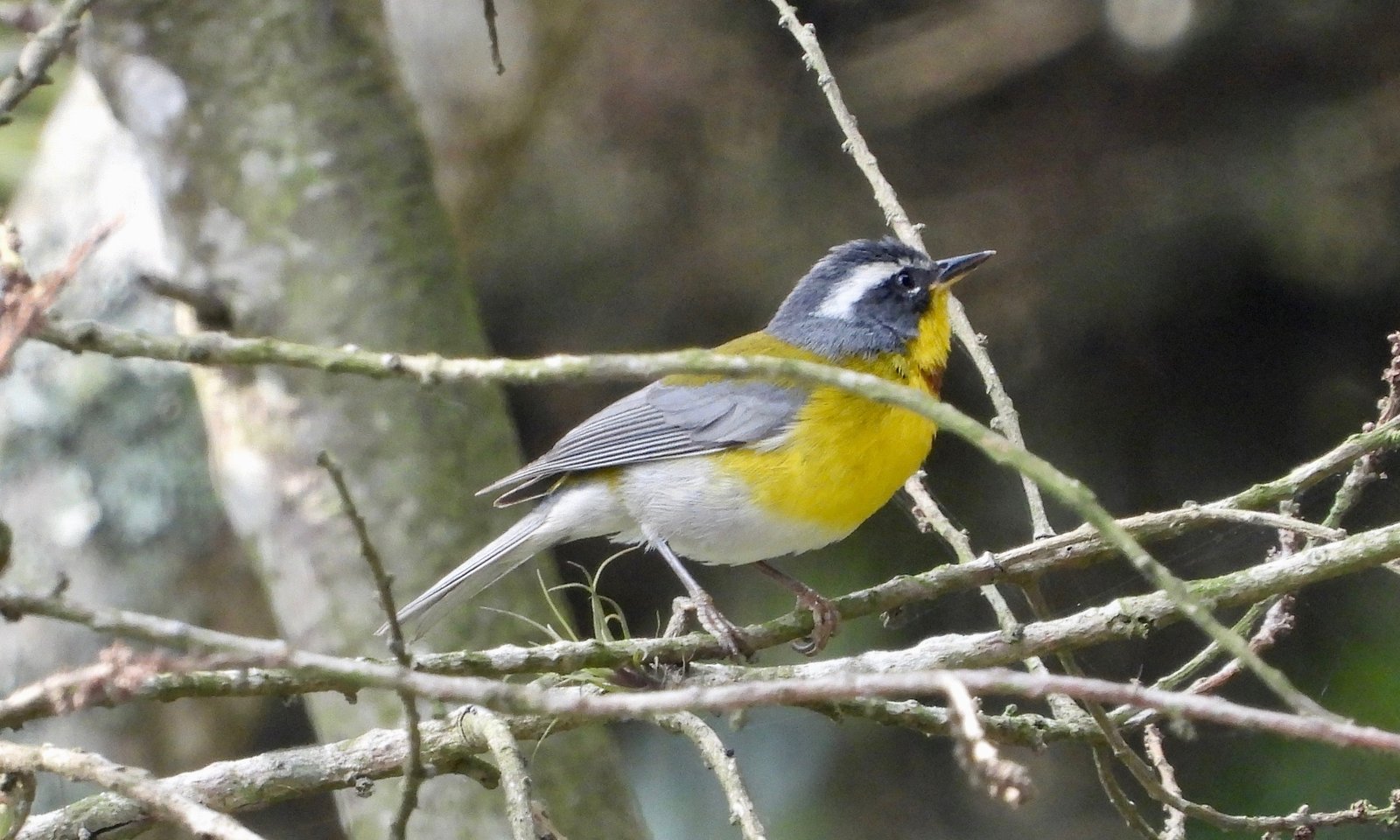
11–12 cm. Crown and nape blue-grey, with a broad white supercilium above a dark eyeline. Back olive-green. Throat and breast yellow, with a chestnut, crescent-shaped patch on the upper breast that is smaller or faint in females and young birds. Belly and undertail coverts white. Wings and tail grey, without wingbars.
Confusion species
Tropical Parula Setophaga pitiayumi also has a yellow throat and breast, but lacks the white supercilium and has two white wingbars and an olive-green back patch on blue-grey upperparts. Golden-browed Warbler Basileuterus belli has a yellow supercilium, rufous crown and cheeks and entirely yellow underparts.
Habitat
Pine-oak forest, oak forest and cloud forest in the mountains, mainly from about 1200 to 3000 m, also forest edges and mature secondary forest. It searches foliage, moss and epiphytes in the middle and upper levels for insects and spiders.
Where the bird is most at home, classified by the vegetation units of Mexico and Central America.



Range and movements
Endemic to the guide area. In Mexico in the Sierra Madre Occidental, Sierra Madre Oriental, Trans-Mexican Volcanic Belt and the mountains of Guerrero, Oaxaca and Chiapas; further south in the highlands of Guatemala, El Salvador and Honduras to northern and central Nicaragua.
- Resident
- dark = core range, pale = thinly spread
How and when to look
Common in mixed flocks in the pine-oak forests around San Cristóbal de las Casas in Chiapas and in the Guatemalan highlands. The buzzy trill is usually heard first.
Conservation status
Not threatened (LC). Fairly common in montane forest; locally declining through logging.
Scientific name
Oreothlypis superciliosa | (Hartlaub, 1844)
Hartlaub described the species in 1844 as Conirostrum superciliosum; because it was later moved to another genus, the author and year stand in brackets. The genus Oreothlypis was introduced in 1884 by Ridgway. Oreothlypis is Greek, from oros 'mountain' and thlupis, an unidentified small bird, here a warbler: 'mountain warbler', after the type locality on Irazú volcano. superciliosa is Latin for 'eyebrowed', from supercilium 'eyebrow', after the prominent white supercilium. The specimen the first description was based on came from Guatemala.