All species › Nightjars › Nightjars and nighthawks › Common Nighthawk
Position in the tree Birds Aves › Birds with a flexible palate Neognathae › All other modern birds Neoaves › Birds of the elements Elementaves › Nightjars and swifts Strisores
Common Nighthawk | Chordeiles minor
Amerikaanse nachtzwaluw | Chotacabras zumbón
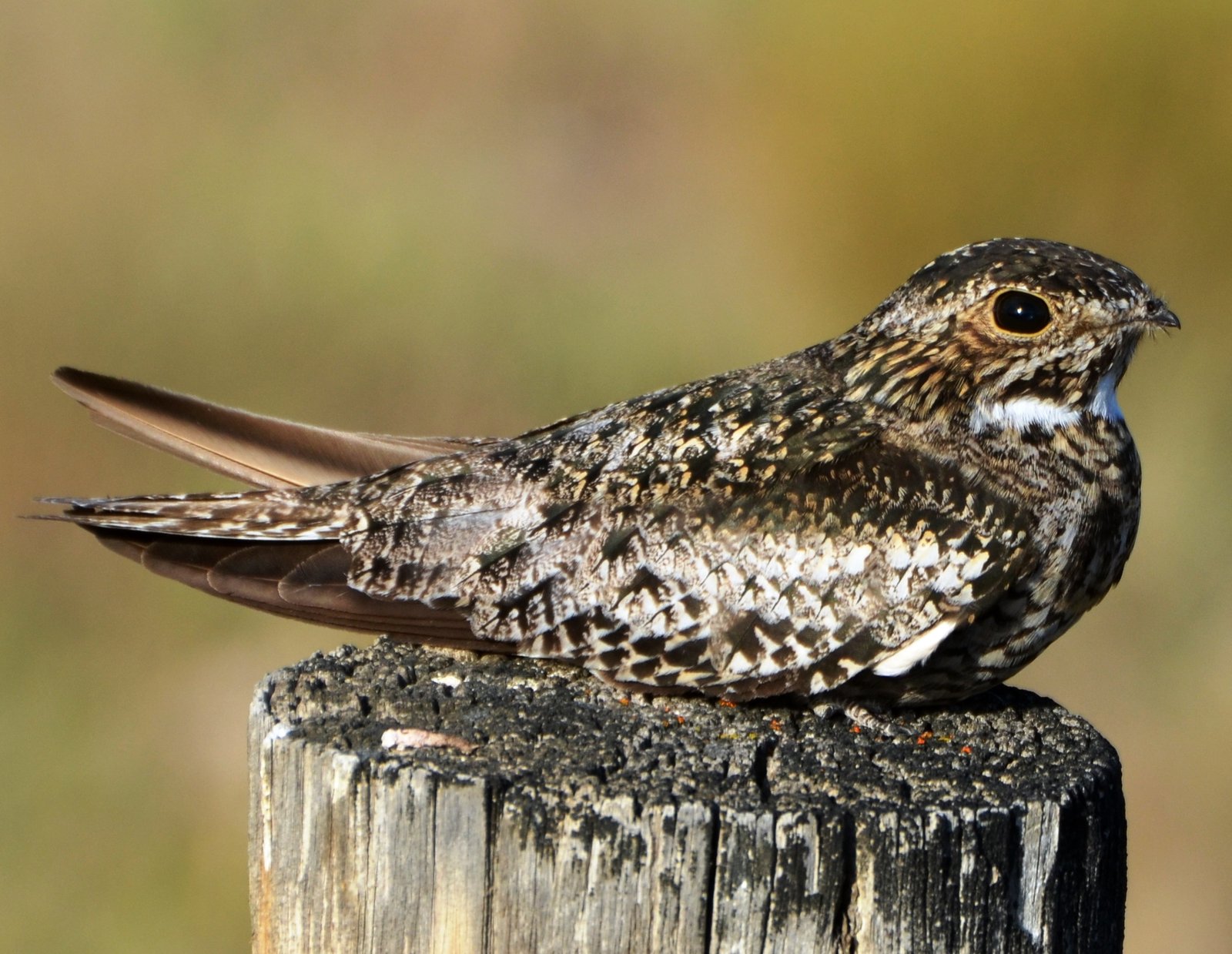
The Common Nighthawk is a slender nightjar with long, pointed wings that breeds from Canada to Central America and winters in South America. The guide area lies on its migration route: in spring and autumn large numbers pass through, sometimes in flocks of hundreds. It also breeds locally in the guide area, especially in northern Mexico and in Central American savannas. It hunts flying insects at dusk, and also by day, high in the air.
Voice
The call is a nasal, buzzy peent or bzzeert, given in flight. In display the male dives steeply, the air rushing through the primaries producing a low, booming sound. Often silent on migration.
Recording: Trent R. Stanley — CC BY-NC-SA 4.0 · shortened to the first 60 s, mono · xeno-canto
Identification
22–25 cm, with long, pointed wings that extend beyond the tail on a perched bird, and a forked tail. The plumage is dark grey-brown, heavily marked with black, grey and white; the underparts are white to buff with dense dark barring. A conspicuous white band crosses the primaries halfway between the bend of the wing and the wingtip. The male has a white throat patch and a white band near the tail tip; the female has a buff throat and no tail band. Birds breeding in Central America are on average paler and smaller than northern birds.
Confusion species
The Lesser Nighthawk Chordeiles acutipennis is smaller and paler, with the wing band closer to the tip, buff spots in the primaries and a more rounded wingtip; it usually flies low. The Antillean Nighthawk Chordeiles gundlachii, a vagrant, can be separated in the field almost only by its call. The Short-tailed Nighthawk Lurocalis semitorquatus has no wing band and a short tail.
Habitat
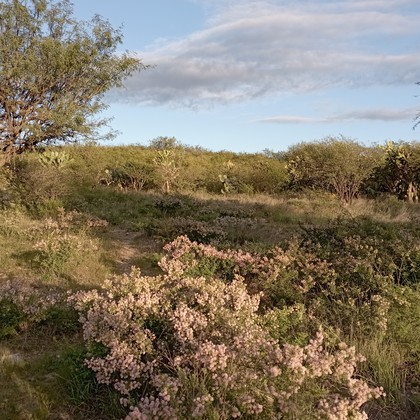
Open country: grasslands, pine savanna, open pine-oak forest, semi-desert, pastures, beaches and coastal plains, and villages and towns with flat roofs; on migration over almost any landscape, including forest and water. It hunts flying insects at dusk and sometimes by day, often high in the air. By day it rests on a branch, a post or on the ground. The egg is laid without a nest on bare ground, gravel or a flat roof.
Where the bird is most at home, classified by the vegetation units of Mexico and Central America.






Range and movements
Breeds in northern Mexico, mainly on the plateaus and in the mountains of Chihuahua, Durango, Coahuila, Nuevo León and Tamaulipas, and further south scattered and local, including pine savannas in Belize, Guatemala, Honduras and Nicaragua and open lowlands in Costa Rica and Panama. A passage migrant throughout the guide area, especially along the coasts and on the Caribbean side; spring migration falls in April and May, autumn migration from August to October. Almost absent in winter. Outside the guide area it breeds in Canada and the United States; it winters in South America, as far as Argentina.
- Summer visitor (c. Apr–Sep)
- dark = core range, pale = thinly spread
How and when to look
Autumn evenings in September along the Caribbean and Gulf coasts, for example in Veracruz, Belize and northern Costa Rica, offer a chance of migrating flocks. In the breeding season displaying males with their booming dives can be heard over open ground on the plateaus of northern Mexico. Silent birds cannot always be separated with certainty from the Lesser Nighthawk; the position of the wing band is the best feature.
Conservation status
Not threatened, but numbers in North America have declined in recent decades, probably owing to fewer flying insects and loss of breeding habitat. Little is known about the breeding birds in the guide area.
Scientific name
Chordeiles minor | (Forster, 1771)
Forster described the species in 1771 as Caprimulgus minor; because it was later moved to another genus, the author and year stand in brackets. The genus Chordeiles was introduced in 1832 by Swainson. Chordeiles is Greek, from khoreia 'dance' and deilē 'evening', after the dancing hunting flights at dusk. minor is Latin for 'smaller', distinguishing it from the larger nightjars it was first compared with. The specimen the first description was based on came from South Carolina (designated later).