All species › Cuckoos › Cuckoos › Cocos Cuckoo
Position in the tree Birds Aves › Birds with a flexible palate Neognathae › All other modern birds Neoaves › Doves, turacos and allies Columbaves › Bustards, turacos and cuckoos Otidimorphae
Cocos Cuckoo | Coccyzus ferrugineus
Cocoskoekoek | Cuclillo de la Isla del Coco
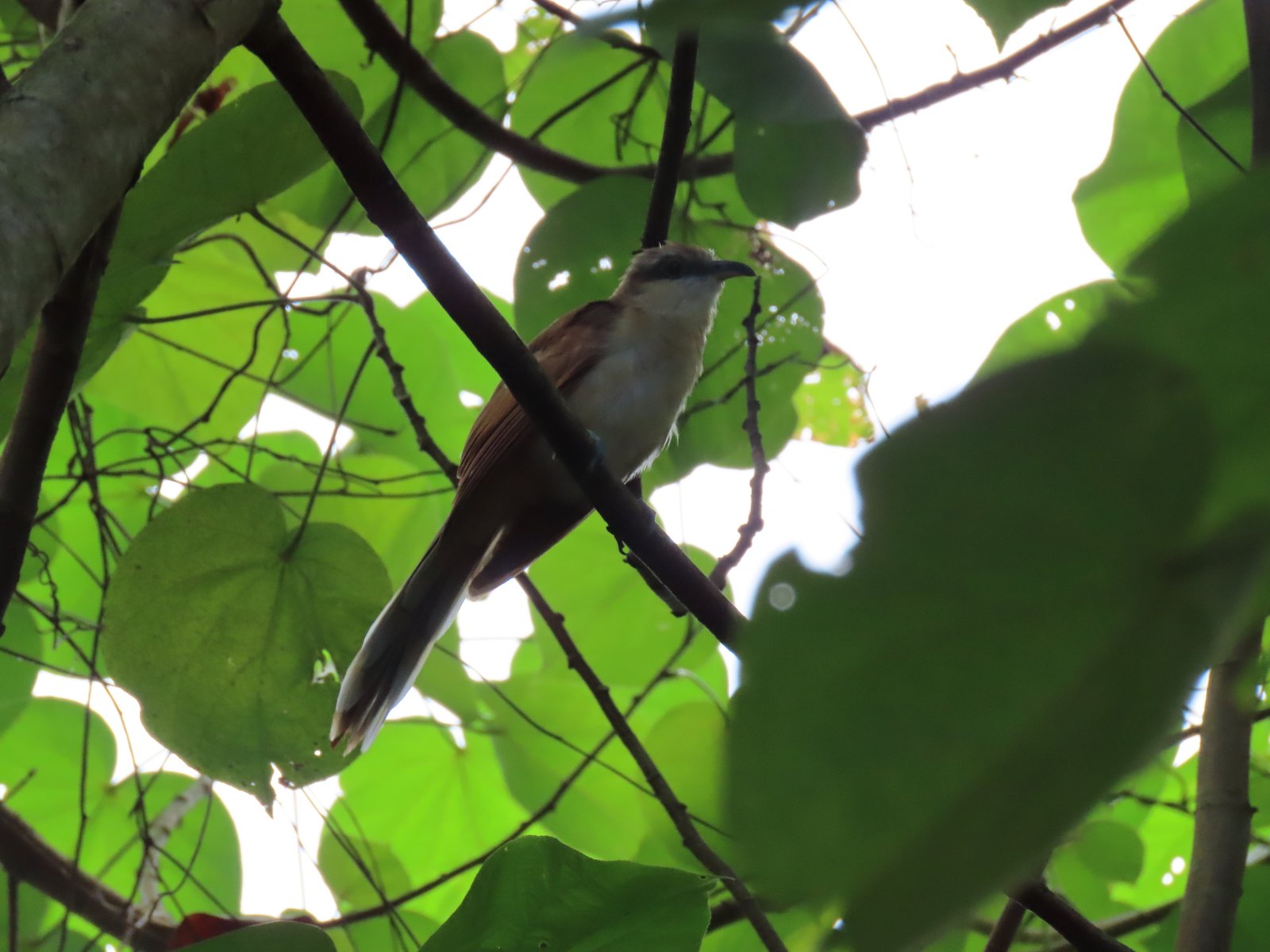
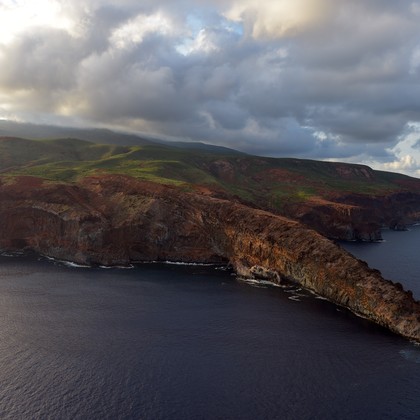
The Cocos Cuckoo occurs only on Isla del Coco, a volcanic island in the Pacific Ocean more than 500 km south-west of the Costa Rican mainland. It is one of the few land birds endemic to the island. It is closely related to Mangrove Cuckoo, but larger and warmer in colour.
Voice
A series of guttural, nasal notes recalling the call of Mangrove Cuckoo; also single clucking calls.
No recording with a suitable Creative Commons licence is available for this species yet.
Identification
32–34 cm, more than half of it tail. The bill is slightly decurved, with a black upper mandible and a yellow lower mandible with a dark tip. The crown and nape are grey, the back and wing coverts brown. A dark mask runs through the eye and ear coverts. The underparts are warm cinnamon to buff. The primaries are largely rufous, which gives a clear patch in flight. From below the tail is black with large white tips. The sexes are alike.
Confusion species
No other cuckoo is resident on the island. On migration Yellow-billed Cuckoo Coccyzus americanus and Black-billed Cuckoo Coccyzus erythropthalmus may land there; both are white below and lack the dark mask. Mangrove Cuckoo Coccyzus minor of the mainland has a plain brown wing without a rufous patch.
Habitat
Humid forest across the whole island, from the coast to the highest summits, especially in dense undergrowth and forest edge; also in the low Hibiscus woods around the bays. Feeds on caterpillars and other large insects, spiders and small lizards, searched for slowly among the foliage.
Where the bird is most at home, classified by the vegetation units of Mexico and Central America.


Range and movements
Only on Isla del Coco (Costa Rica), in the Pacific Ocean. It occurs nowhere else, including on the mainland of the guide area.
- Resident
- dark = core range, pale = thinly spread
How and when to look
The island can only be reached by boat, with a crossing of more than a day from Puntarenas, and is visited mainly by divers. Landing is only allowed with park rangers, around Wafer Bay and Chatham Bay. The bird can usually be found along the trails behind those bays; it often sits still and can be watched at close range.
Conservation status
Vulnerable. Its entire range covers one small island. Introduced rats, cats, pigs and deer damage the undergrowth and threaten nests. The island is protected as a national park, but control of the introduced animals is difficult.
Scientific name
Coccyzus ferrugineus | Gould, 1843
Gould described the species in 1843 and placed it straight away in the genus where it still stands. The genus Coccyzus was introduced in 1816 by Vieillot. Coccyzus is Greek, from kokkuzō 'to cry cuckoo', after the cuckoo's call. ferrugineus is Latin for 'rust-coloured', after the rufous upperparts. The specimen the first description was based on came from Cocos Island, Costa Rica.