All species › Passerines › Tityras, becards and allies › Cinereous Becard
Position in the tree Birds Aves › Birds with a flexible palate Neognathae › All other modern birds Neoaves › Landbirds Telluraves › Falcons, parrots and passerines Australaves › Falcons and passerines Eufalconimorphae › Parrots and passerines Psittacopasserae
Cinereous Becard | Pachyramphus rufus
Grijze bekarde | Cabezón cinéreo
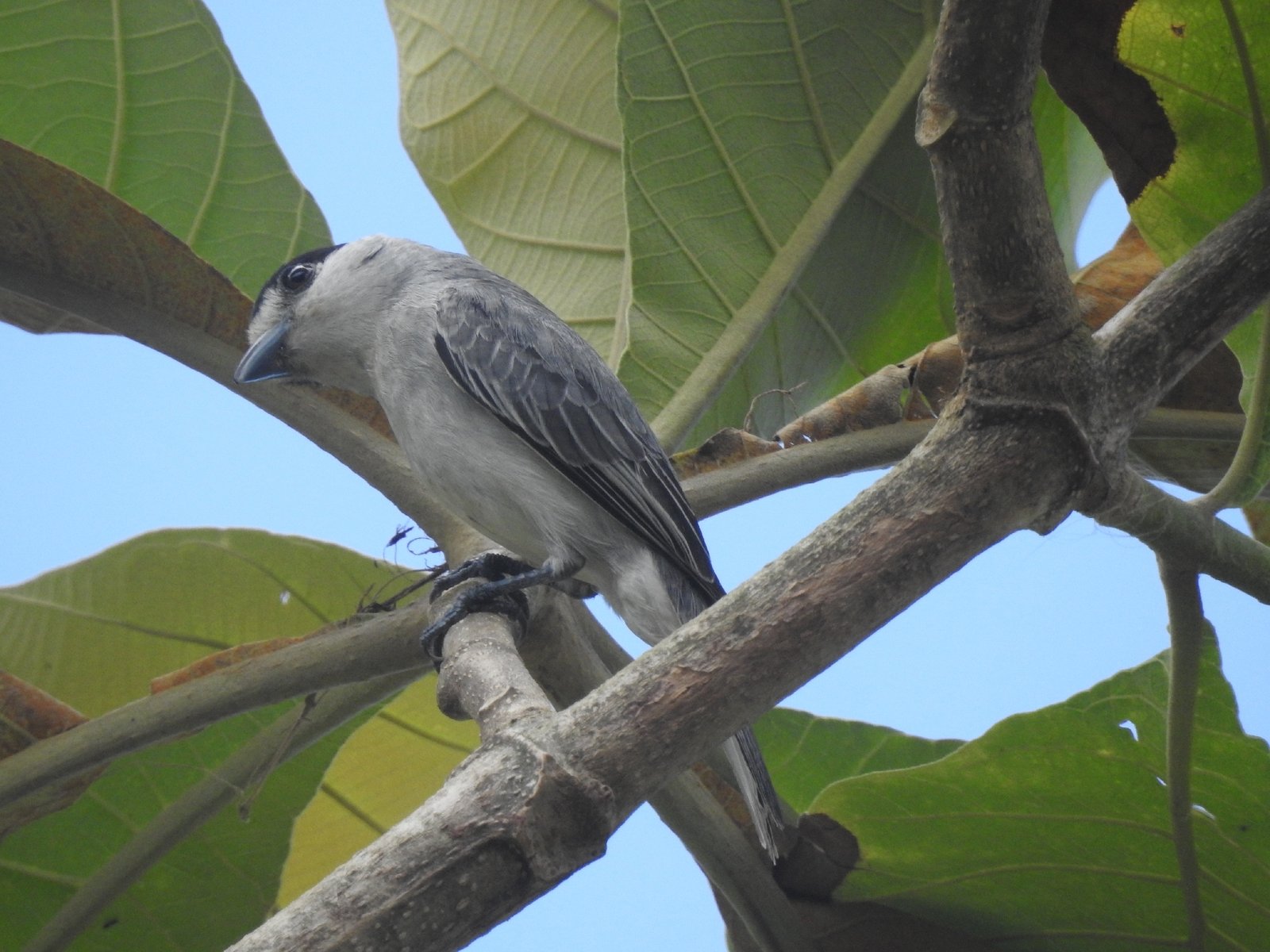
The Cinereous Becard is a becard of semi-open lowlands in South America that in the guide area occurs only in Panama. The male is pale grey with a black cap, the female mostly rufous. In Panama it is scarce and local.
Voice
A short series of soft, clear whistled notes.
Recording: JAYRSON ARAUJO DE OLIVEIRA — CC BY-NC-SA 4.0 · converted to mono · xeno-canto
Identification
14 cm. Male pale grey on back and nape with a black crown and whitish lores; underparts pale grey to white. Wings dark grey with pale edges to the coverts and flight feathers. The female is rufous to cinnamon above, with paler, buffy underparts and pale lores.
Confusion species
The male White-winged Becard Pachyramphus polychopterus is much darker, black to dark grey with prominent white wing bars. The male Black-and-white Becard Pachyramphus albogriseus lives in the mountains and has a black-and-white wing pattern. The female closely resembles Cinnamon Becard Pachyramphus cinnamomeus, which has a dark lore with a pale line above it.
Habitat
Semi-open lowlands with scattered trees, forest edges, open woodland, secondary growth and plantations, often near water. It eats insects and small fruit, which it picks from foliage in the canopy.
Where the bird is most at home, classified by the vegetation units of Mexico and Central America.



Range and movements
Central and eastern Panama. Outside the guide area in northern South America, south to Amazonia.
- Resident
- dark = core range, pale = thinly spread
How and when to look
A pale grey becard with a black cap in semi-open lowlands in Panama deserves attention; compare carefully with the White-winged Becard, which is much commoner there.
Conservation status
Not threatened. Scarce and local in Panama; widespread outside the guide area.
Scientific name
Pachyramphus rufus | (Boddaert, 1783)
Boddaert described the species in 1783 as Muscicapa rufa; because it was later moved to another genus, the author and year stand in brackets. The genus Pachyramphus was introduced in 1840 by Gray. Pachyramphus is Greek, from pakhus 'thick' and rhamphos 'bill', after the stout, broad bill. rufus is Latin for 'rufous, reddish', after the rufous plumage of the female. The specimen the first description was based on came from Cayenne, French Guiana.