All species › Pelicans, herons and ibises › Herons, egrets and bitterns › Cattle Egret
Position in the tree Birds Aves › Birds with a flexible palate Neognathae › All other modern birds Neoaves › Birds of the elements Elementaves › Tropicbirds and waterbirds Phaethoquornithes › Core waterbirds Aequornithes
Cattle Egret | Ardea ibis
Koereiger | Garcilla bueyera
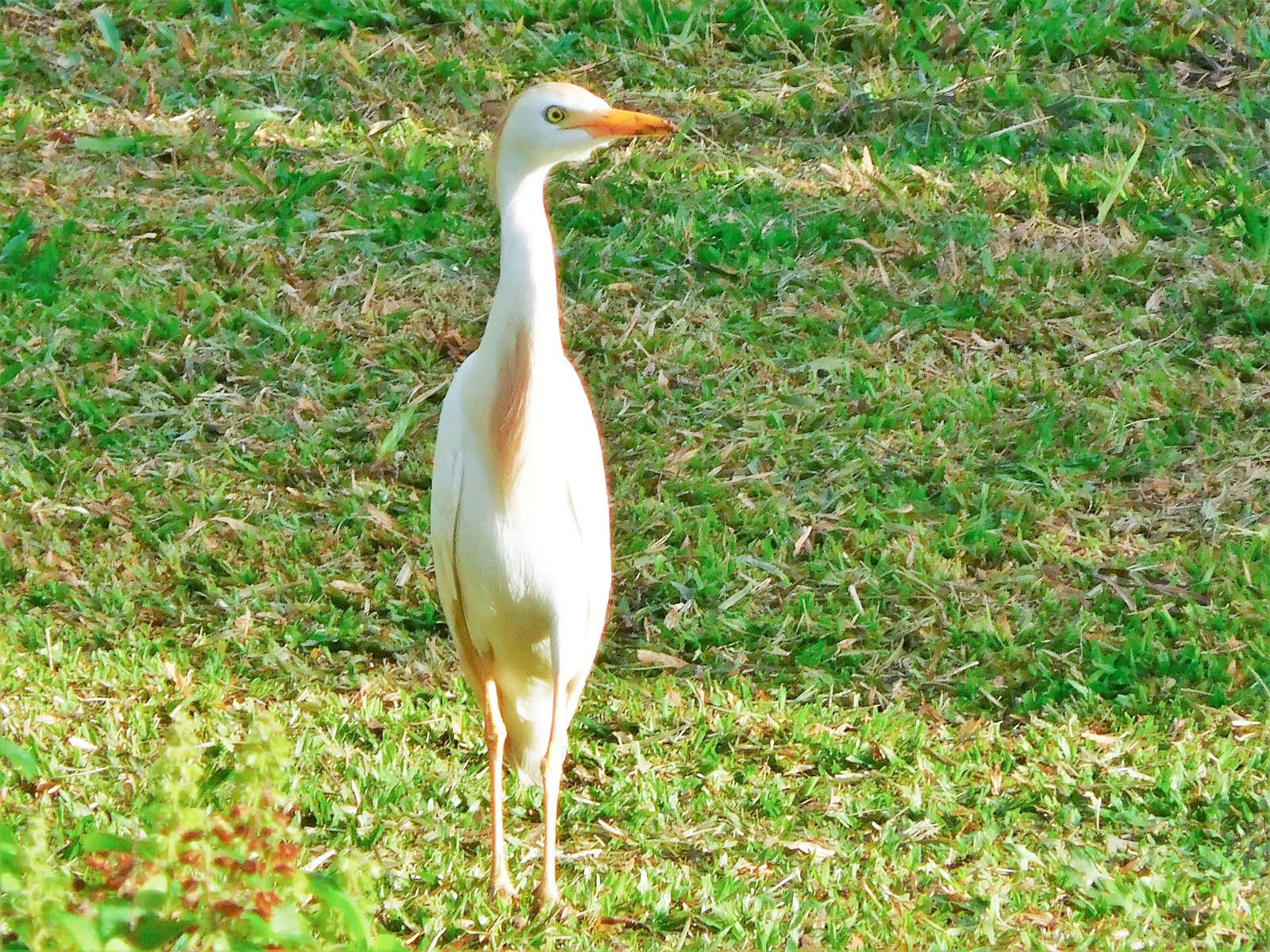
The Cattle Egret is a small, stocky white heron that feeds mainly on dry land, among grazing cattle, behind tractors and on verges and lawns. Originally a bird of Africa and southern Europe, it reached the Americas on its own: the first record dates from 1877 on the border of Guyana and Suriname. It appeared in the guide area only around the middle of the twentieth century, and within a few decades it had spread throughout the area. Today it is the most numerous heron in many regions.
Voice
Usually silent away from the colony. At breeding sites and roosts a dry, throaty rick-rack and other short croaks.
Recording: Paul Coiffard — CC BY-NC-SA 4.0 · converted to mono · xeno-canto
Identification
46–56 cm, stocky, with a short, thick neck, a rounded head with a feathered 'chin' below the bill and rather short legs. Outside the breeding season all white, with a short, thick yellow bill and yellowish to dark legs. In breeding plumage the crown, breast and back have an orange-buff wash and the bill, lores and legs briefly turn reddish to orange. Juveniles are white with a dark bill that soon turns yellow. It flies with quick beats and the neck drawn in, often in lines to the roost in the evening.
Confusion species
Snowy Egret Egretta thula is slimmer and longer-necked, with a thin black bill and yellow feet. Young Little Blue Herons Egretta caerulea are white, but slim, with a longer, greyish bill with a dark tip. Great Egret Ardea alba is much larger, with a long neck and black legs.
Habitat
Pasture and ranch land, savanna, fields, rice fields, verges, sports fields, lawns and rubbish dumps; less at the edges of marshes and ponds. From the lowlands into the highlands, wherever cattle graze. It eats mainly grasshoppers and other insects flushed by cattle or machinery, also frogs, lizards and ticks from cattle. It roosts and breeds in colonies, often with other herons, in mangroves, swamp forest or trees on islets and in towns; the nest is a platform of twigs.
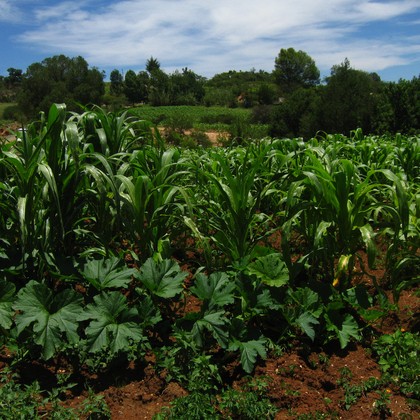
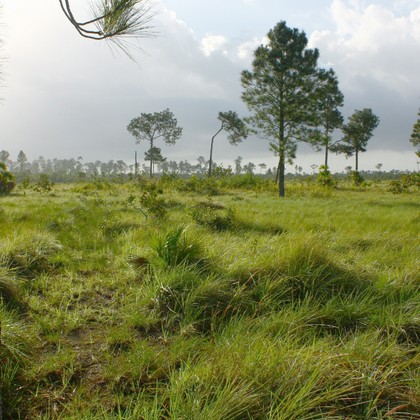
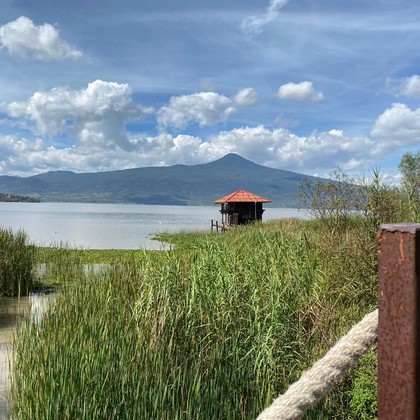
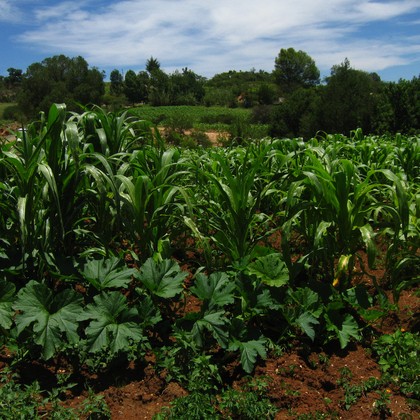
Where the bird is most at home, classified by the vegetation units of Mexico and Central America.


Range and movements
Through almost the whole guide area, from northern Mexico, including Baja California, to Panama, both in the lowlands of both coasts and on the plateaus and in mountain valleys with cattle ranching. Most numerous in regions with extensive pasture. After the breeding season birds wander, and in the northern winter birds from North America join them. Outside the guide area in the Americas from southern Canada to Argentina, and in Africa, south-western Europe and the Middle East; Eastern Cattle Egret Ardea coromanda of Asia and Australia is treated as a separate species.
- Resident
- dark = core range, pale = thinly spread
How and when to look
Almost anywhere in the countryside near grazing cattle and behind tractors. Towards sunset groups arrive in lines at the communal roost in mangroves or in trees near water, where hundreds of birds may gather.
Conservation status
Not threatened. Very common in the guide area; the species benefits from the conversion of forest to pasture. Colonies near airports are locally a risk to air traffic.
Scientific name
Ardea ibis | Linnaeus, 1758 (GBIF: Bubulcus ibis)
Linnaeus described the species in 1758 and placed it straight away in the genus where it still stands. He introduced the genus Ardea in that same work. Ardea is the Latin word for 'heron'. ibis is a Latin and Greek word that originally referred to the sacred ibis and was applied to this egret in error. The specimen the first description was based on came from Egypt.