All species › Pelicans, herons and ibises › Herons, egrets and bitterns › Capped Heron
Position in the tree Birds Aves › Birds with a flexible palate Neognathae › All other modern birds Neoaves › Birds of the elements Elementaves › Tropicbirds and waterbirds Phaethoquornithes › Core waterbirds Aequornithes
Capped Heron | Pilherodius pileatus
Kapreiger | Garza capirotada
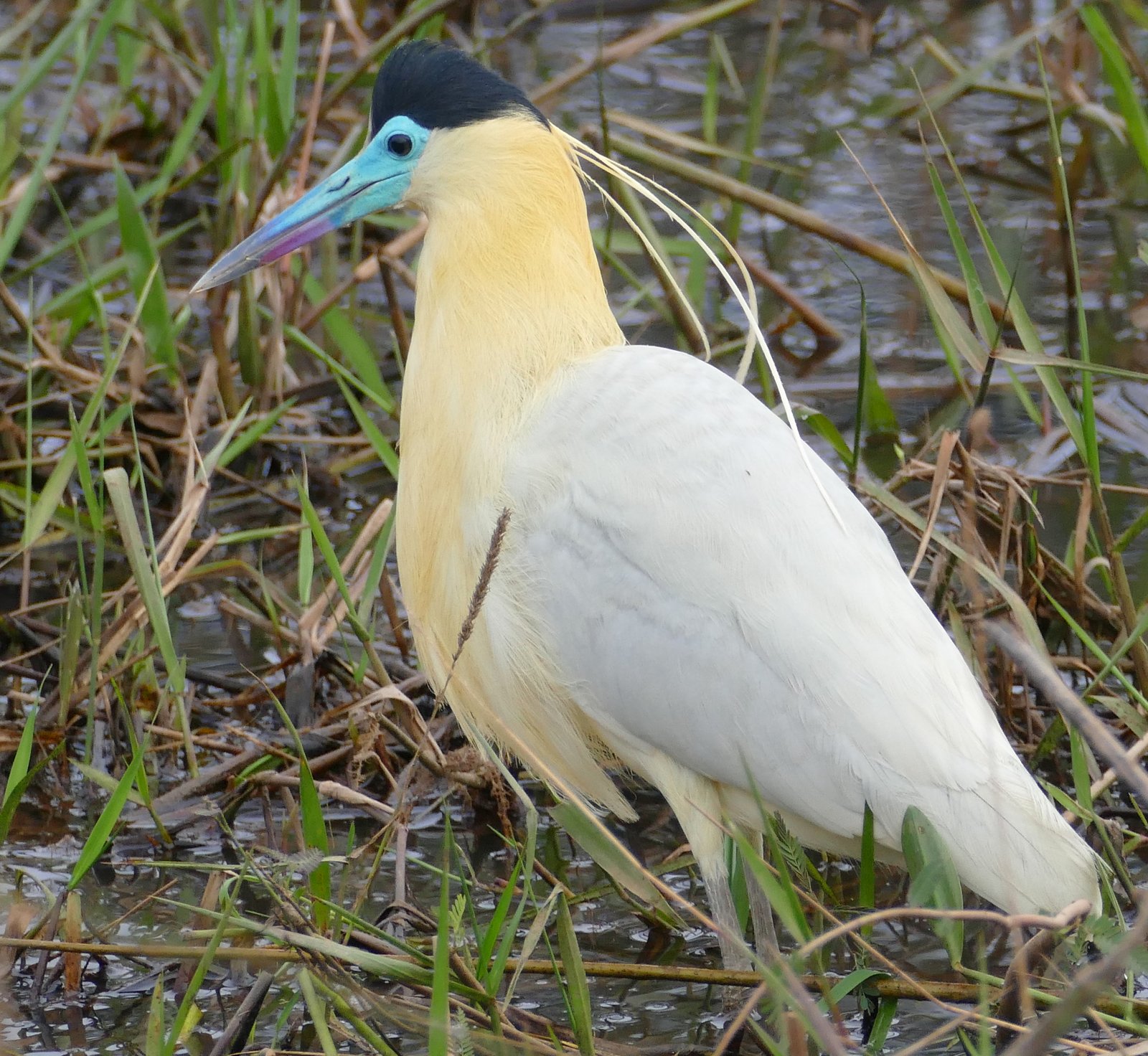
The Capped Heron is a medium-sized white heron with a black cap, long white nape plumes and a bright blue bill and facial skin. It lives singly or in pairs along streams, ponds and marshes in and near forest, and does not breed in colonies. In the guide area it is a local resident of the lowlands of central and eastern Panama.
Voice
Usually silent. When disturbed and in flight sometimes a soft, short, repeated croak.
Recording: Jerome Fischer — CC BY-NC-SA 4.0 · converted to mono · xeno-canto
Identification
51–59 cm. A rather stocky heron with a medium-length neck and short, bluish-grey legs. The plumage is white, with a black crown and two or three long, narrow white nape plumes. In adults the neck, breast and belly have a light creamy-yellow to ochre wash. The bill and the bare skin of the lores and face are bright cobalt blue. Juveniles have a greyer crown and shorter nape plumes. The sexes are alike.
Confusion species
Snowy Egret Egretta thula is slimmer, with a black bill, black legs with yellow feet and no black cap. Great Egret Ardea alba is much larger, with a long neck and a yellow bill. Cattle Egret Ardea ibis has a short yellow bill and lacks the black cap. Young Little Blue Herons Egretta caerulea are white, with dark wingtips and a grey-blue bill with a black tip. The combination of a blue bill, blue facial skin and a black cap is shown by no other white heron in the guide area.
Habitat
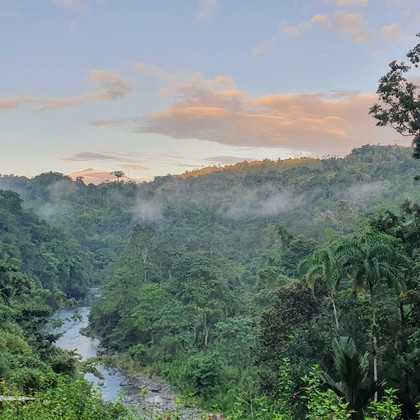
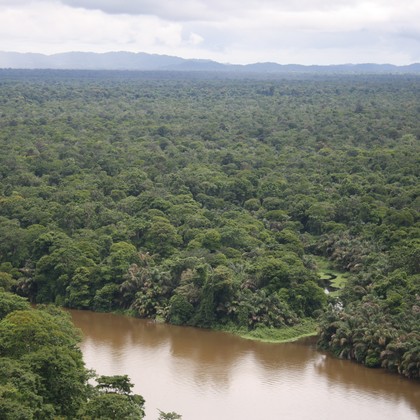
Streams, narrow rivers, ponds, pools and marshes in or near lowland forest, also flooded pastures and forest edges; almost always near fresh water. It hunts alone, standing patiently or walking slowly in shallow water, for fish, frogs and large insects. It breeds singly, not in colonies, in trees or shrubs near water.
Where the bird is most at home, classified by the vegetation units of Mexico and Central America.



Range and movements
In the guide area only in Panama: in the lowlands of the Canal Area and Colón province, east through the area around Chepo and the Bayano valley to Darién, where the species is most widespread. Outside the guide area in northern and western Colombia and in tropical South America east of the Andes, south to Bolivia, Paraguay and southern Brazil.
- Resident
- dark = core range, pale = thinly spread
How and when to look
In the Canal Area the species is regularly seen at the Ammo Dump ponds near Gamboa and along Pipeline Road; in Darién along rivers and pools near Yaviza and along the Río Tuquesa. It often stands still in the shade on a bank and then gives itself away by its white colour.
Conservation status
Not threatened. In the guide area scarce and local, restricted to central and eastern Panama, and sensitive to deforestation and drainage of lowland wetlands.
Scientific name
Pilherodius pileatus | (Boddaert, 1783)
Boddaert described the species in 1783 as Ardea pileata; because it was later moved to another genus, the author and year stand in brackets. The genus Pilherodius was introduced in 1853 by Reichenbach. Pilherodius combines Latin pileus 'cap' with Greek erōdios 'heron': 'capped heron', after the black crown. pileatus is Latin for 'capped', after the black crown. The specimen the first description was based on came from Cayenne, French Guiana.