All species › Waterfowl › Ducks, swans and geese › Canada Goose
Position in the tree Birds Aves › Birds with a flexible palate Neognathae › Fowl Galloanserae
Canada Goose | Branta canadensis
Grote Canadese gans | Barnacla canadiense grande
The Canada Goose is one of the best-known birds in North America, but reaches the guide area only at its northern edge. In northern Mexico it is a scarce winter visitor to fields and lakes, often among Snow Geese and Greater White-fronted Geese; numbers are much smaller than in the past.
Voice
A loud nasal a-honk, mainly in flight; flocks keep up a continuous honking.
Recording: Stanislas Wroza — CC BY-NC-SA 4.0 · converted to mono · xeno-canto
Identification
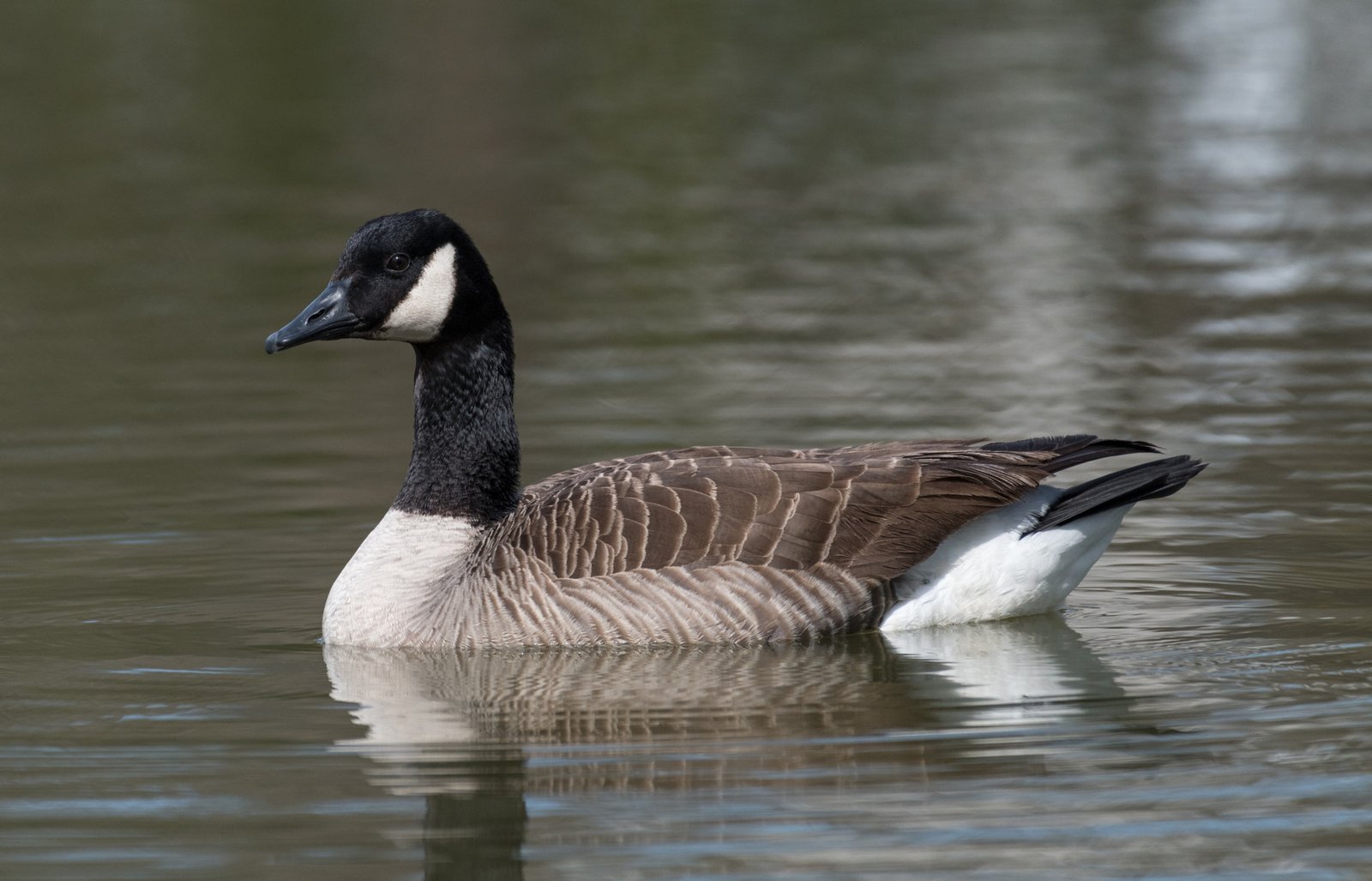
76–110 cm; size varies greatly between subspecies. Head and long neck are black, with a broad white band from the throat across the cheeks. Body and wings are grey-brown with pale feather edges, the breast paler. Belly, undertail and a band above the black tail are white. Bill and legs are black. The sexes are alike. It flies with slow, powerful wingbeats, often in V-formation or in a line.
Confusion species
Cackling Goose Branta hutchinsii, formerly treated as the same species, is smaller, with a shorter neck, a rounder head and a short, stubby bill; at a distance size alone is not always reliable. Brant Branta bernicla is smaller and darker, with a white necklace instead of a cheek patch. Feral or hybrid domestic geese can show aberrant patterns.
Habitat
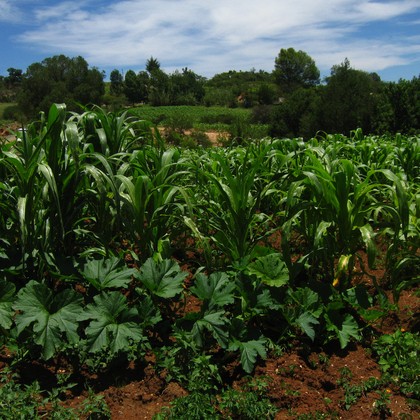
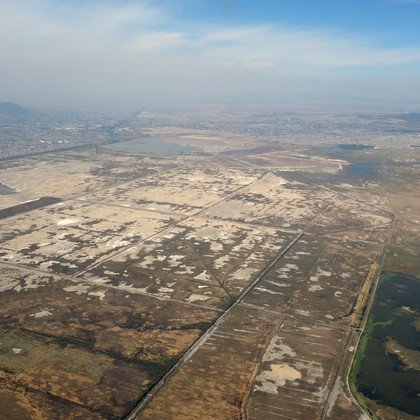
Maize and grain stubble, pastures, lakes, reservoirs and shallow lagoons on the plateau. It roosts on open water and feeds by day on the surrounding fields.
Where the bird is most at home, classified by the vegetation units of Mexico and Central America.



Range and movements
Winters in small numbers in northern Mexico, mainly in Chihuahua, Sonora, Baja California, Coahuila, Nuevo León and Tamaulipas; further south, including Durango and Baja California Sur, rare. Breeds in Canada, Alaska and much of the United States, where many populations stay all year; introduced in Europe and New Zealand, among other places.
- Winter visitor (c. Oct–Mar)
- dark = core range, pale = thinly spread
How and when to look
In winter among other geese on the fields and lakes of Chihuahua, such as around Laguna de Babícora and Laguna de Bustillos; the black neck with the white cheek patch stands out at once in the white flocks of Snow Geese.
Conservation status
Not threatened globally. In the guide area a scarce winter visitor; because many populations in the United States migrate less far than they used to, fewer birds reach Mexico.
Scientific name
Branta canadensis | (Linnaeus, 1758)
Linnaeus described the species in 1758 as Anas canadensis; because it was later moved to another genus, the author and year stand in brackets. The genus Branta was introduced in 1769 by Scopoli. Branta is a Latinised form of Old Norse brandgás, 'burnt goose', that is, black goose. canadensis is New Latin for 'from Canada', after the North American breeding range. The specimen the first description was based on came from Quebec City, Canada.