All species › Waterfowl › Ducks, swans and geese › Cackling Goose
Position in the tree Birds Aves › Birds with a flexible palate Neognathae › Fowl Galloanserae
Cackling Goose | Branta hutchinsii
Kleine Canadese gans | Barnacla canadiense chica
The Cackling Goose is an Arctic breeding bird that was only split from Canada Goose as a separate species in 2004. In the guide area it is a rare winter visitor to northern Mexico, usually as a single bird or small group among other geese.
Voice
Higher and faster than in Canada Goose: a shrill, cackling lik-lik or yelk, which gives the species its English name.
Recording: Greg Irving — CC BY-NC-SA 4.0 · converted to mono · xeno-canto
Identification
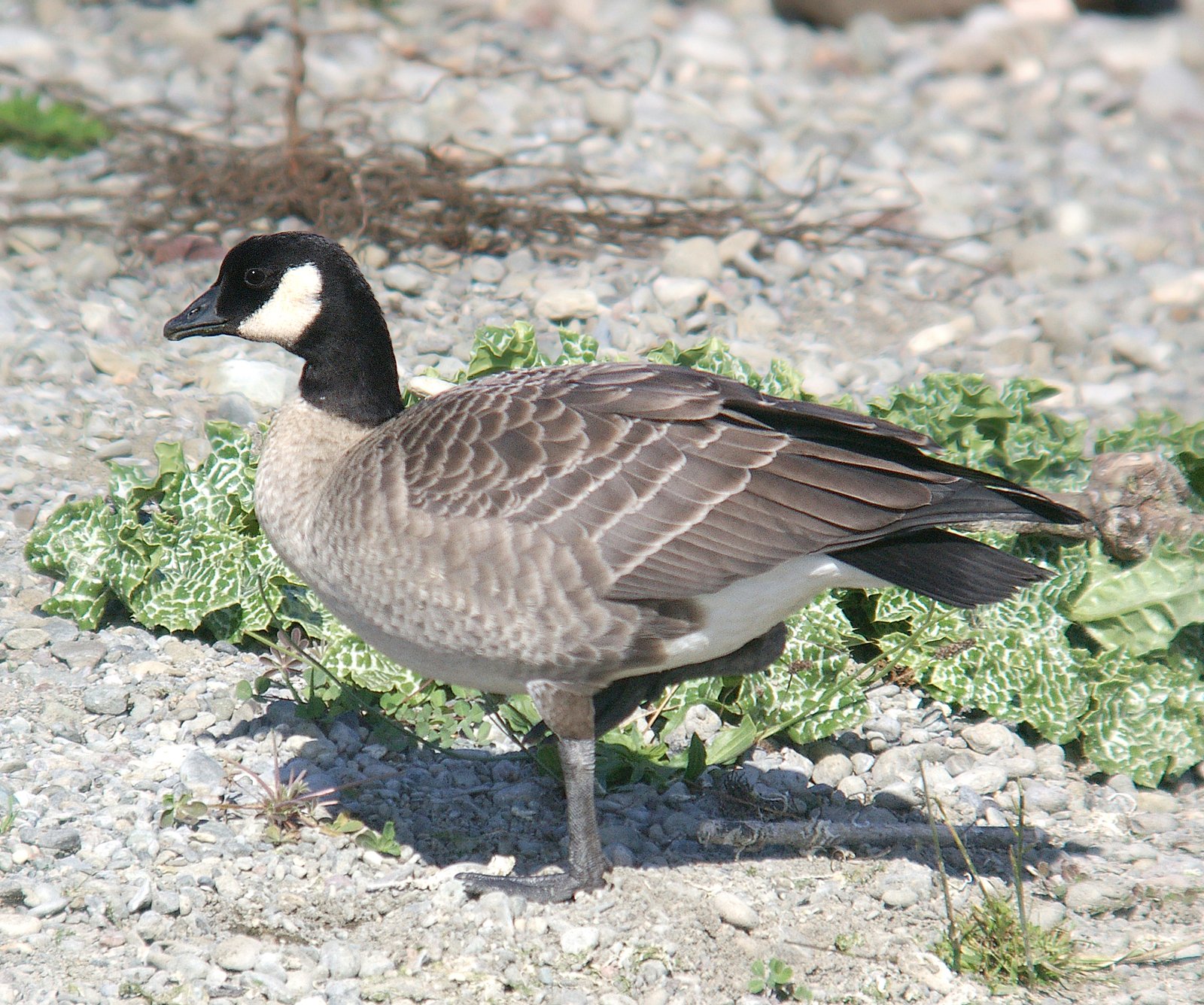
55–76 cm; the smallest subspecies are barely larger than a Mallard. Patterned like Canada Goose: black head and neck with a white cheek patch, a grey-brown body and a white undertail. It differs in its short, stubby, triangular bill, its round, high-crowned head, its short neck and its relatively long wings. The breast varies by subspecies from pale grey-brown to dark purplish-brown; some birds have a narrow white collar at the base of the black neck. It flies with quicker wingbeats than Canada Goose.
Confusion species
Canada Goose Branta canadensis is larger, with a longer neck, a longer, wedge-shaped bill and a flatter head; its small subspecies closely resemble large Cackling Geese, and not every bird can be identified with certainty. Brant Branta bernicla has a white necklace and no cheek patch.
Habitat
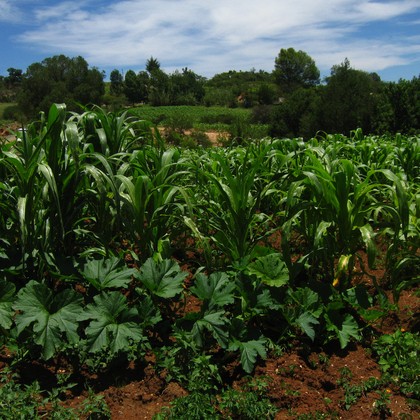
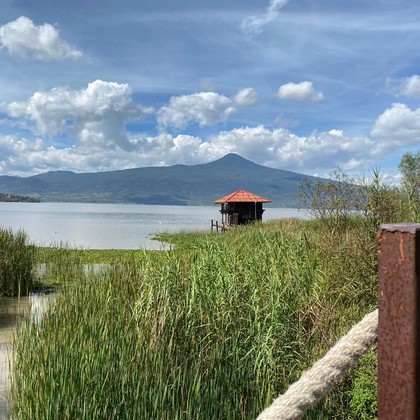
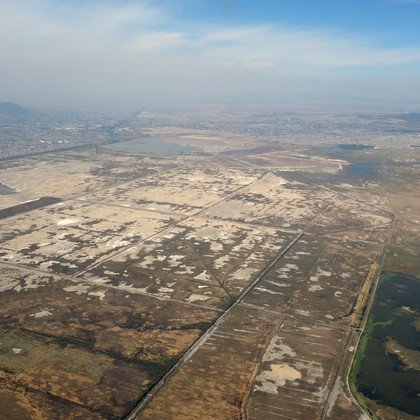
Fields, pastures, lakes and shallow lagoons, often together with other geese; in Baja California also in coastal lagoons.
Where the bird is most at home, classified by the vegetation units of Mexico and Central America.

Range and movements
A rare winter visitor to northern Mexico, mainly in Baja California, Sonora and Chihuahua; also scattered records further south, including Baja California Sur. Breeds on the tundra of Alaska and northern Canada and winters mostly in the United States, mainly in the Central Valley of California, Oregon, Texas and Oklahoma.
- Winter visitor (c. Oct–Mar)
- dark = core range, pale = thinly spread
How and when to look
In winter it pays to scan flocks of Snow Geese, Greater White-fronted Geese and Canada Geese on the fields of Chihuahua and northern Baja California for a small goose with a short bill and a high, round head.
Conservation status
Not threatened globally. In the guide area a rare winter visitor in small numbers.
Scientific name
Branta hutchinsii | (Richardson, 1832)
Richardson described the species in 1832 as Anser Hutchinsii; because it was later moved to another genus, the author and year stand in brackets. The genus Branta was introduced in 1769 by Scopoli. Branta is a Latinised form of Old Norse brandgás, 'burnt goose', that is, black goose. hutchinsii honours Thomas Hutchins, an English surgeon employed by the Hudson's Bay Company, who made natural history observations around Hudson Bay. The specimen the first description was based on came from Melville Peninsula, Canada.