All species › Passerines › Swallows › Brown-chested Martin
Position in the tree Birds Aves › Birds with a flexible palate Neognathae › All other modern birds Neoaves › Landbirds Telluraves › Falcons, parrots and passerines Australaves › Falcons and passerines Eufalconimorphae › Parrots and passerines Psittacopasserae
Brown-chested Martin | Progne tapera
Bruinborstzwaluw | Golondrina parda
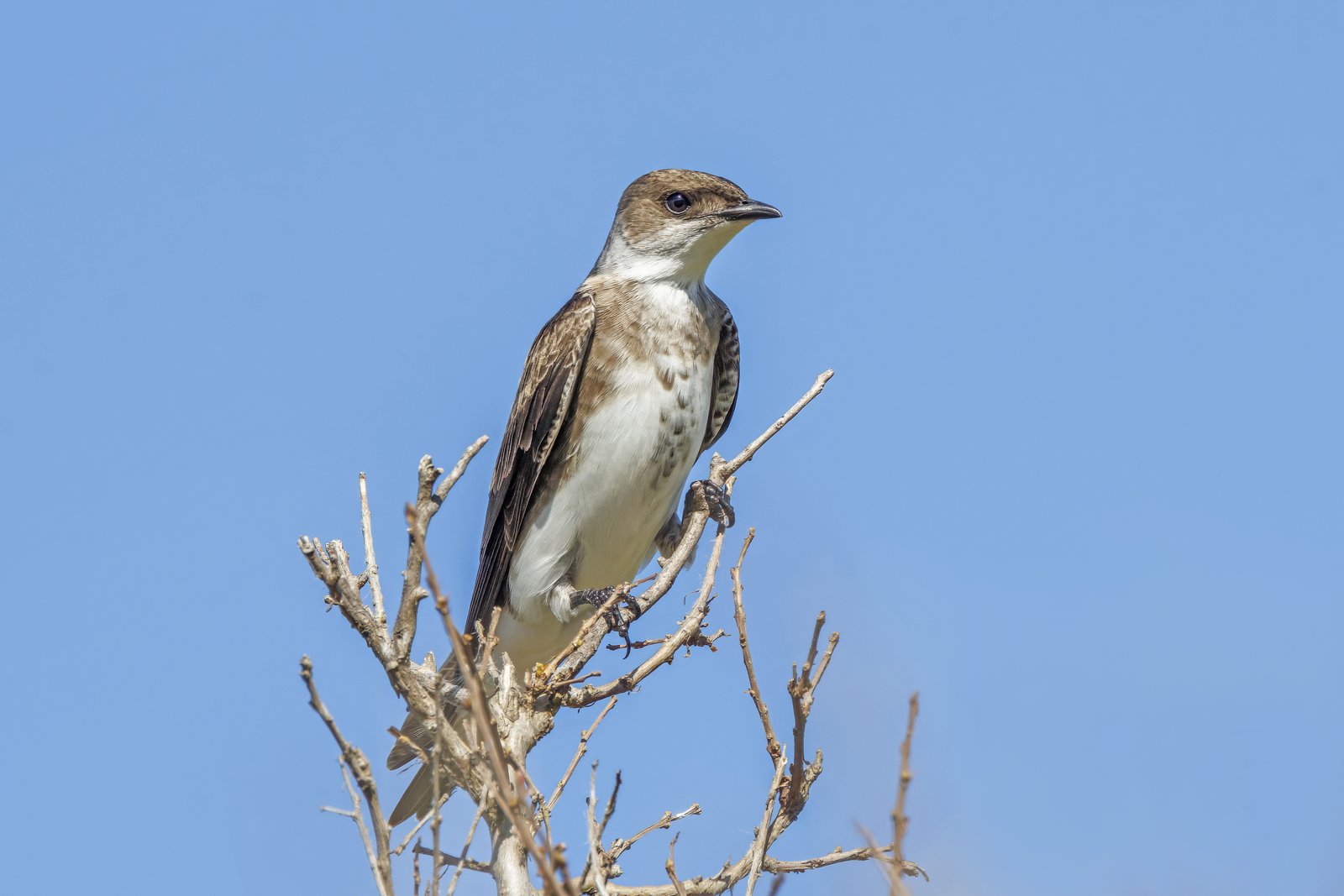
The Brown-chested Martin is a large, dull grey-brown swallow with white underparts and a brown breast band. The birds that reach the guide area come from southern South America and spend the austral winter mainly in Panama. It hunts low over open, often wet country and likes to perch on wires and bare branches.
Voice
Rather quiet in the guide area; calls are short, harsh twittering notes.
Recording: JAYRSON ARAUJO DE OLIVEIRA — CC BY-NC-SA 4.0 · converted to mono · xeno-canto
Identification
16–18 cm. Upperparts plain grey-brown without gloss, wings and tail slightly darker; the tail is only shallowly forked. Throat and belly white, with a broad, diffuse grey-brown breast band. Birds from the south of the range, which reach the guide area, have a line of dark spots down the centre of the belly below the band. In flight the white undertail coverts sometimes protrude on either side of the tail.
Confusion species
Bank Swallow Riparia riparia has a similar pattern but is much smaller, with a narrower, sharper breast band. Female Grey-breasted Martin Progne chalybea has blue gloss on the upperparts and a grey-brown throat without a breast band. Northern Rough-winged Swallow Stelgidopteryx serripennis is smaller and has a plain brownish throat and breast.
Habitat
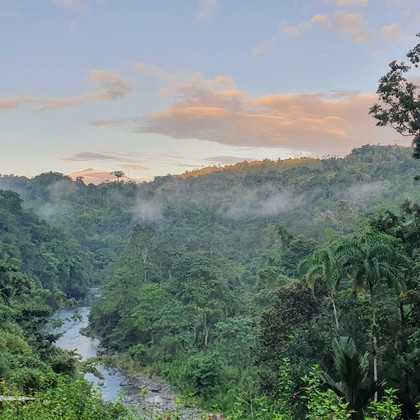
Open lowland country, often near water: savannas, pastures, marshy grassland, riverbanks and lakes. It hunts flying insects in the air. In South America it nests in cavities, including old ovenbird nests.
Where the bird is most at home, classified by the vegetation units of Mexico and Central America.




Range and movements
In the guide area mainly in the lowlands of Panama, where it occurs as a non-breeding visitor from southern South America; further north, in Costa Rica and beyond, rare to exceptional. Outside the guide area in much of South America east of the Andes.
- Winter visitor (c. Oct–Mar)
- dark = core range, pale = thinly spread
How and when to look
The best chance is in Panama from June to August, over open pastures and wet grassland in the lowlands, often among other swallows on wires.
Conservation status
Not threatened. Widespread in South America; no threats are known in the guide area.
Scientific name
Progne tapera | (Linnaeus, 1766)
Linnaeus described the species in 1766 as Hirundo Tapera; because it was later moved to another genus, the author and year stand in brackets. The genus Progne was introduced in 1826 by Boie. Progne (also Procne) is the daughter of King Pandion of Athens in Greek myth, who was turned into a swallow; in Latin also a word for 'swallow'. tapera comes from the Tupí name Taperá, 'home-living (bird)', for a kind of swallow, via Marcgrave (1648). The specimen the first description was based on came from America (later restricted to Pernambuco, Brazil).