All species › Birds of prey › Kites, Old World vultures, eagles and hawks › Broad-winged Hawk
Position in the tree Birds Aves › Birds with a flexible palate Neognathae › All other modern birds Neoaves › Landbirds Telluraves › Raptors, owls, kingfishers and woodpeckers Afroaves › Hawks and owls Hieraves
Broad-winged Hawk | Buteo platypterus
Breedvleugelbuizerd | Aguililla ala ancha
The Broad-winged Hawk is a small, stocky buzzard with broad, pointed wings and a tail with broad black-and-white bands. It breeds in the deciduous forests of eastern North America and migrates south in large flocks. In the guide area it is a winter visitor and passage migrant: in September and October and again in March and April hundreds of thousands of birds pass through Veracruz and Panama, and in winter it hunts from a perch at forest edges from southern Mexico to Panama.
Voice
A high, thin, drawn-out whistle pee-teeee, with a short first note; often heard in winter too.
Recording: Denis Dujardin — CC BY-NC-SA 4.0 · converted to mono · xeno-canto
Identification
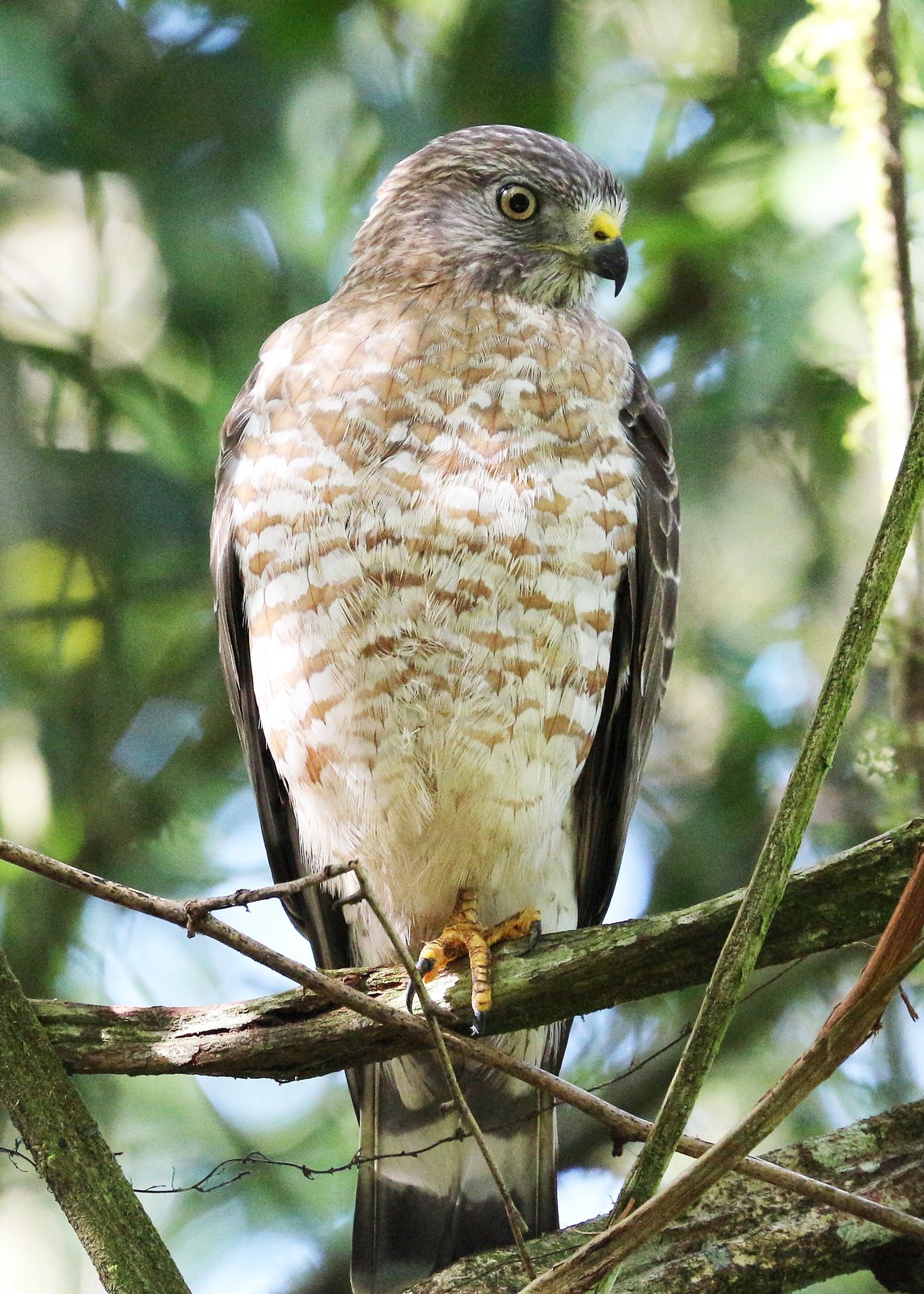
34–44 cm, with short, broad wings with a pointed tip and a fairly short tail. Adults are dark brown above, with a brown head, a white throat with a dark moustachial stripe and rufous-barred breast and belly. The tail is black with two broad white bands, the upper one often partly hidden. In flight the underwings are whitish and almost unmarked, with a broad dark trailing edge and dark wingtips. Young birds are white to buffish below with dark streaks, mainly on the flanks, and have a brown tail with many narrow dark bands. Male and female are alike; the female is slightly larger.
Confusion species
The Red-shouldered Hawk Buteo lineatus has rufous shoulders, narrower white tail bands and in flight a pale crescent at the base of the primaries. The Roadside Hawk Rupornis magnirostris has a pale eye, a plain greyish-brown breast and often rufous in the primaries, and lacks the dark trailing edge to the wing. The pale morph of the Short-tailed Hawk Buteo brachyurus is unstreaked white below, with a dark hood. Young Grey Hawks Buteo plagiatus and Grey-lined Hawks Buteo nitidus have a more striking head pattern with a dark eye-stripe and a white rump. On migration it often flies together with the larger Swainson's Hawk Buteo swainsoni, which has longer, narrower wings with dark flight feathers, and with the Turkey Vulture Cathartes aura.
Habitat
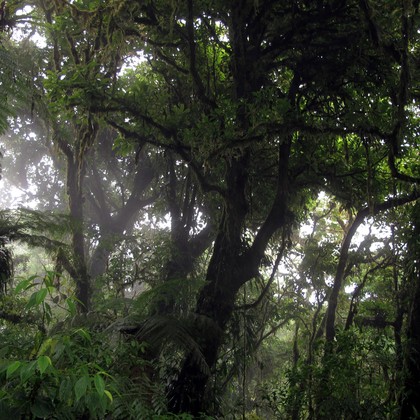
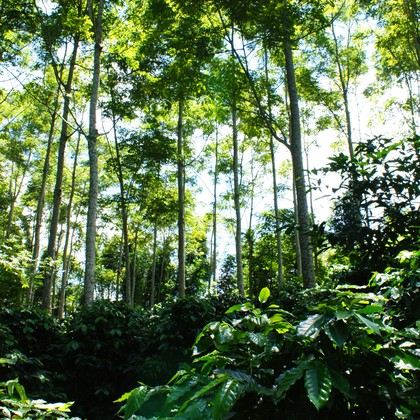
In winter humid forest, forest edges and clearings, secondary forest, shade coffee and semi-open country with trees, mainly in the foothills and lower mountains up to about 2000 m, but also in the lowlands. It hunts from a perch below or at the edge of the canopy for lizards, frogs, large insects and small mammals. On migration over any landscape, in flocks that circle up on thermals and then glide on.
Where the bird is most at home, classified by the vegetation units of Mexico and Central America.





Range and movements
Winters from southern Mexico, where it occurs in small numbers in Veracruz, Oaxaca and Chiapas, through Guatemala, Belize, El Salvador, Honduras and Nicaragua to Costa Rica and Panama, where it is commonest; most birds continue to northwestern South America. Autumn migration follows the Gulf coast of Tamaulipas and Veracruz and then the lowlands and foothills of Central America, peaking in late September in Veracruz and in October in Panama; in March and April the return passage follows the same route. From May to August a few birds, mainly immatures, remain in the guide area; no breeding is known there. Outside the guide area it breeds in the eastern and central United States and southern Canada, with resident birds on Cuba, Puerto Rico and some of the Lesser Antilles.
- Winter visitor (c. Oct–Mar)
- dark = core range, pale = thinly spread
How and when to look
In late September and early October hundreds of thousands of Broad-winged Hawks sometimes pass over the coastal plain of Veracruz, near Cardel and Chichicaxtle, in a single day, in circling flocks. In Panama the migration can be followed in October and March from Cerro Ancón in Panama City. In winter it often sits quietly on a branch at a forest edge or along a forest track.
Conservation status
Not threatened. More than a million birds are counted near Veracruz every autumn; the migration route and the wintering grounds are sensitive to forest loss.
Scientific name
Buteo platypterus | (Vieillot, 1823)
Vieillot described the species in 1823 as Sparvius Platypterus; because it was later moved to another genus, the author and year stand in brackets. The genus Buteo was introduced in 1799 by De Lacépède. Buteo is the Latin word for a buzzard. platypterus is Greek, from platus 'broad' and pteron 'wing', after the broad wings. The specimen the first description was based on came from Schuylkill River, Pennsylvania (USA).