All species › Swifts › Hummingbirds › Broad-tailed Hummingbird
Position in the tree Birds Aves › Birds with a flexible palate Neognathae › All other modern birds Neoaves › Birds of the elements Elementaves › Nightjars and swifts Strisores
Broad-tailed Hummingbird | Selasphorus platycercus
Breedstaartkolibrie | Zumbador cola ancha
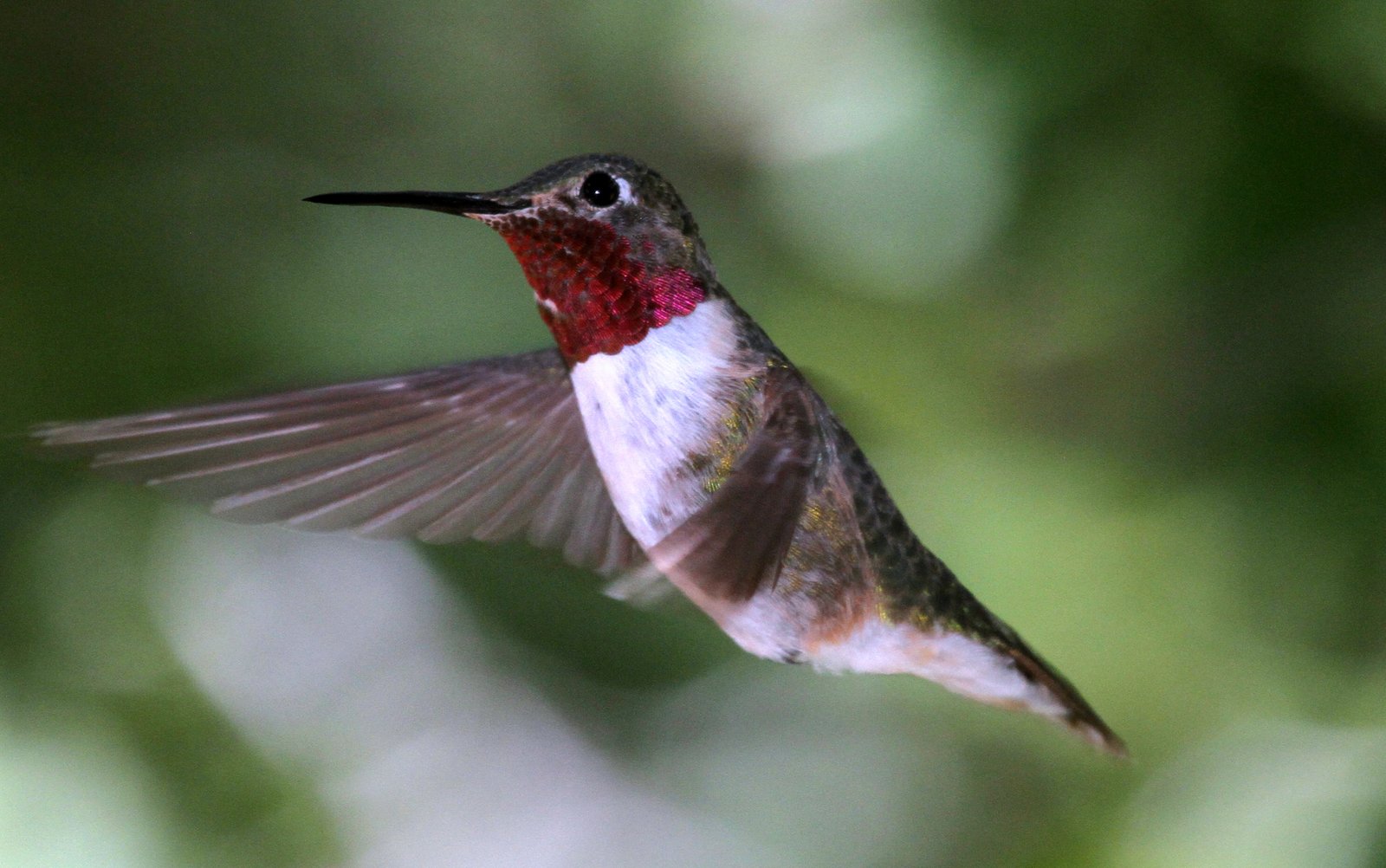
The Broad-tailed Hummingbird is the characteristic hummingbird of mountain forest in the western United States and the highlands of Mexico. Northern birds move to central and southern Mexico in winter; in the highlands of central Mexico, Chiapas and Guatemala birds are present year-round. In flight the male can be recognised by a metallic trilling wing sound.
Voice
The call is a sharp, metallic chip. In flight the wings of the adult male produce a high, metallic trilling buzz, like the ringing of a bicycle bell; young males and females lack this sound. In the display dive this trill is especially loud.
Recording: Sue Riffe — CC BY-NC-SA 4.0 · converted to mono · xeno-canto
Identification
9–10 cm, with a straight, medium-length black bill and a fairly long, broad tail. The male is green above and on the flanks, with a white breast and a metallic rose-red throat without projections. The female is green above, with a pale throat finely spotted green, pale cinnamon flanks, a white eye-ring, rufous at the base of the outer tail feathers and white tail tips. Young birds resemble the female.
Confusion species
Females of Rufous Hummingbird Selasphorus rufus and Allen's Hummingbird Selasphorus sasin are smaller, with more rufous on the flanks and tail. Male Ruby-throated Hummingbird Archilochus colubris has a redder throat, a black chin and a forked tail. Calliope Hummingbird Selasphorus calliope is smaller and clearly shorter-tailed, the male with a streaked throat. Male Bumblebee Hummingbird Selasphorus heloisa is much smaller, with long projections to the gorget.
Habitat
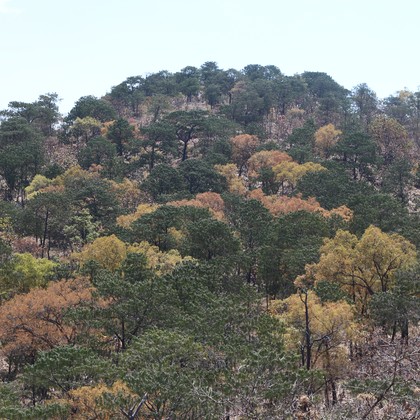
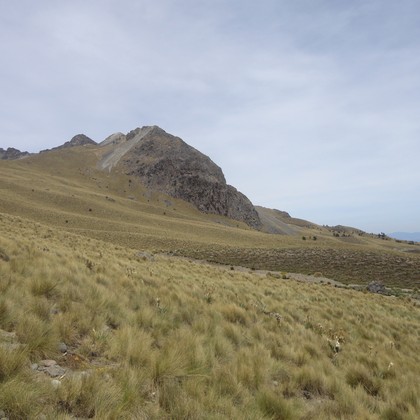
Pine-oak forest, conifer forest, open woodland with flowery clearings, mountain meadows, montane riparian woodland and gardens in mountain villages, mainly between about 1500 and 3500 m. In winter also in lower parts of the highlands and along forest edges at middle elevations.
Where the bird is most at home, classified by the vegetation units of Mexico and Central America.



Range and movements
Breeds in the mountains of northern Mexico, in the Sierra Madre Occidental and Sierra Madre Oriental from Sonora, Chihuahua, Coahuila and Nuevo León southwards, and further in the highlands of central Mexico, from Jalisco and Michoacán to Puebla, Veracruz and Oaxaca. A separate population lives year-round in the highlands of Chiapas and Guatemala. Birds from the north winter mainly in Sinaloa, Nayarit, Jalisco, Michoacán, the State of México and Oaxaca. Outside the guide area the species breeds in the western United States, from Idaho and Wyoming to Arizona, New Mexico and west Texas.
- Resident
- Summer visitor (c. Apr–Sep)
- Winter visitor (c. Oct–Mar)
- Passage (Mar–Apr, Oct–Nov)
- dark = core range, pale = thinly spread
How and when to look
In the highlands around Mexico City, for example in the mountain forest of Ajusco and Desierto de los Leones, at flowering plants along forest edges. The male's trilling wing sound is often heard before the bird is seen.
Conservation status
Least Concern. The world population is large and fairly stable. Locally the species suffers from the decline of flower-rich mountain forest and mountain meadows.
Scientific name
Selasphorus platycercus | (Swainson, 1827)
Swainson described the species in 1827 as Trochilus platycercus; because it was later moved to another genus, the author and year stand in brackets. The genus Selasphorus was introduced in 1832 by Swainson. Selasphorus is Greek, from selas 'light, flame' and -phoros 'bearing': 'light-bearer', after the fiery, glittering throat. platycercus is Greek, from platus 'broad' and kerkos 'tail', after the broad tail. The specimen the first description was based on came from Mexico (not specified).