All species › Passerines › Swallows › Blue-and-white Swallow
Position in the tree Birds Aves › Birds with a flexible palate Neognathae › All other modern birds Neoaves › Landbirds Telluraves › Falcons, parrots and passerines Australaves › Falcons and passerines Eufalconimorphae › Parrots and passerines Psittacopasserae
Blue-and-white Swallow | Pygochelidon cyanoleuca
Blauwwitte zwaluw | Golondrina azul y blanca
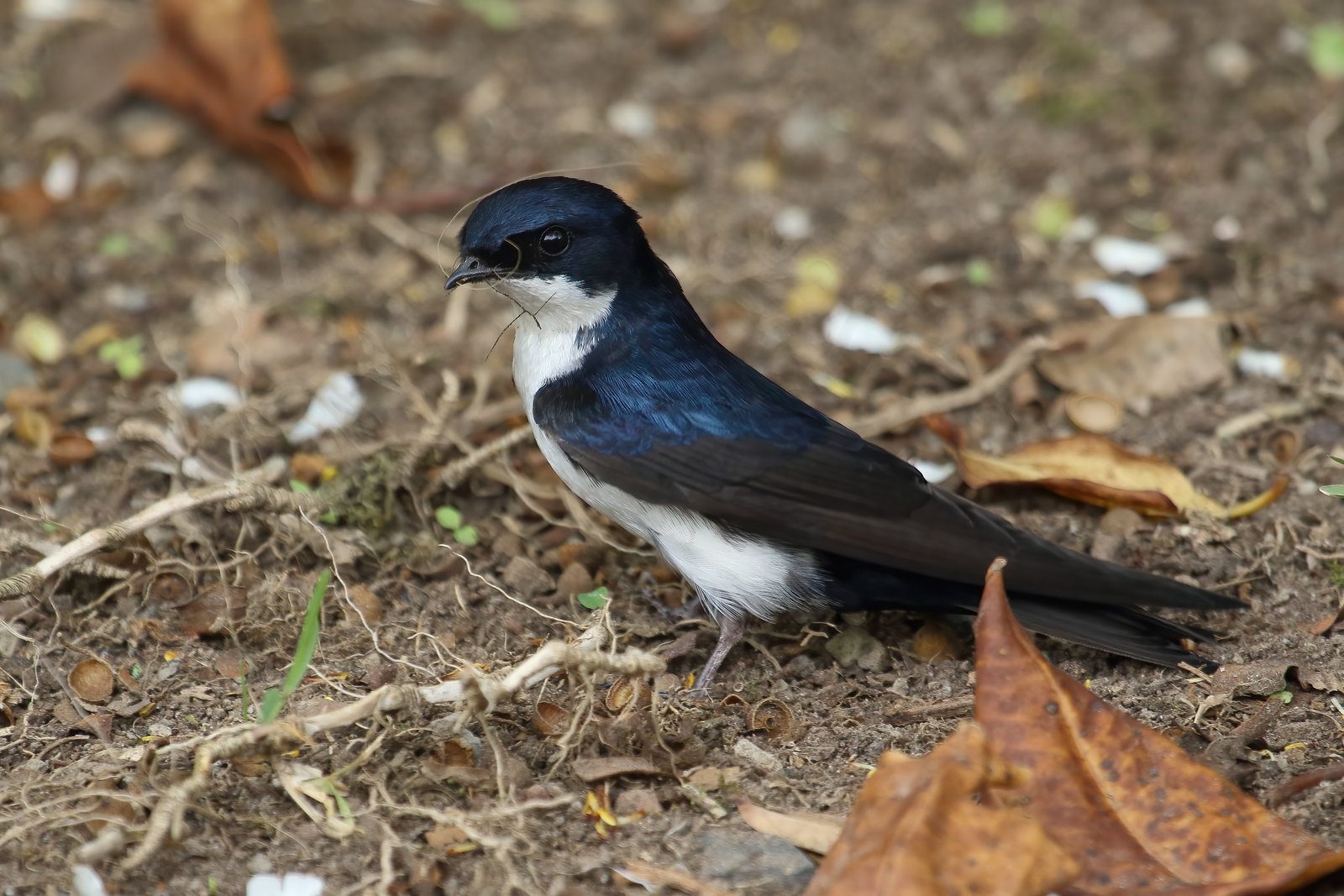
The Blue-and-white Swallow is a small swallow with dark blue upperparts, white underparts and black undertail coverts. In the guide area it is a common bird of the highlands of Costa Rica and western Panama, where it hunts around houses, villages and towns and over open mountain country.
Voice
Thin, buzzy dzeee calls and a soft, squeaky twittering.
Recording: Étienne Leroy — CC BY-NC-SA 4.0 · converted to mono · xeno-canto
Identification
11–13 cm, with a slightly forked tail. Upperparts glossy dark steel blue, underwing grey-brown. Underparts white, with dark flanks and black undertail coverts that contrast sharply with the white belly. Sexes alike; young birds are browner above and have a dingy white, slightly brown-tinged throat.
Confusion species
Tree Swallow Tachycineta bicolor (winter visitor) is larger and has white undertail coverts. Mangrove Swallow Tachycineta albilinea (lowlands, near water) has a white rump and a white line above the eye. Black-capped Swallow Atticora pileata lives further north and has brown upperparts without blue gloss.
Habitat
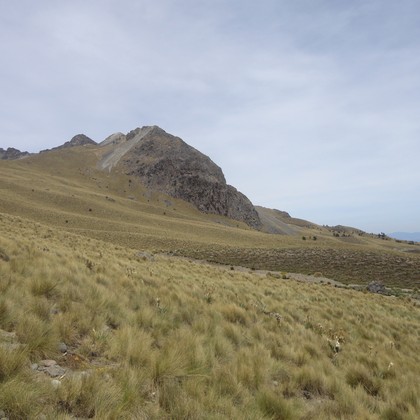
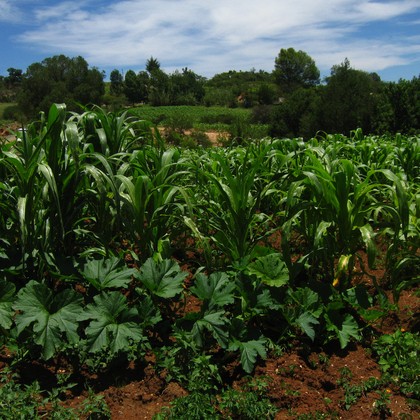
Villages, towns, farms, coffee plantations, pastures and clearings in the highlands, mostly above about 600 m, locally to well above the treeline. It hunts small flying insects in the air, often low down. It nests in cavities in buildings, walls, banks and road cuts.
Where the bird is most at home, classified by the vegetation units of Mexico and Central America.




Range and movements
In the guide area in the highlands of Costa Rica and western Panama; elsewhere in Panama and further north scarce to exceptional. Outside the guide area in much of South America, south to Tierra del Fuego; the southernmost populations move north in the austral winter.
- Resident
- dark = core range, pale = thinly spread
How and when to look
Common in the Central Valley of Costa Rica, including San José and other towns, and in the Chiriquí highlands of Panama. It often sits on roofs and wires.
Conservation status
Not threatened. Common and benefits from buildings as nest sites.
Scientific name
Pygochelidon cyanoleuca | (Vieillot, 1817) (GBIF: Notiochelidon cyanoleuca)
Vieillot described the species in 1817 as Hirundo cyanoleuca; because it was later moved to another genus, the author and year stand in brackets. The genus Pygochelidon was introduced in 1865 by Baird. Pygochelidon is Greek, from pugē 'rump' and khelidōn 'swallow': 'rump-swallow'. cyanoleuca is Greek, from kuanos 'dark blue' and leukos 'white', after the blue upperparts and white underparts. The specimen the first description was based on came from Paraguay.