All species › Passerines › New World warblers › Blackpoll Warbler
Position in the tree Birds Aves › Birds with a flexible palate Neognathae › All other modern birds Neoaves › Landbirds Telluraves › Falcons, parrots and passerines Australaves › Falcons and passerines Eufalconimorphae › Parrots and passerines Psittacopasserae
Blackpoll Warbler | Setophaga striata
Zwartkopzanger | Reinita estriada
The Blackpoll Warbler is a warbler of the northern coniferous forest that makes one of the longest migrations of any songbird: in autumn much of the population flies non-stop from the east coast of North America across the Atlantic Ocean to northern South America. The guide area therefore lies mostly beside its migration route; it is a scarce passage migrant there, most often in Panama.
Voice
The song is a series of very high, thin tsi notes that swells in volume and fades away again; rarely heard in the guide area. The call is a loud chip, the flight call a thin, high tseet.
Recording: Stanislas Wroza — CC BY-NC-SA 4.0 · shortened to the first 60 s, mono · xeno-canto
Identification
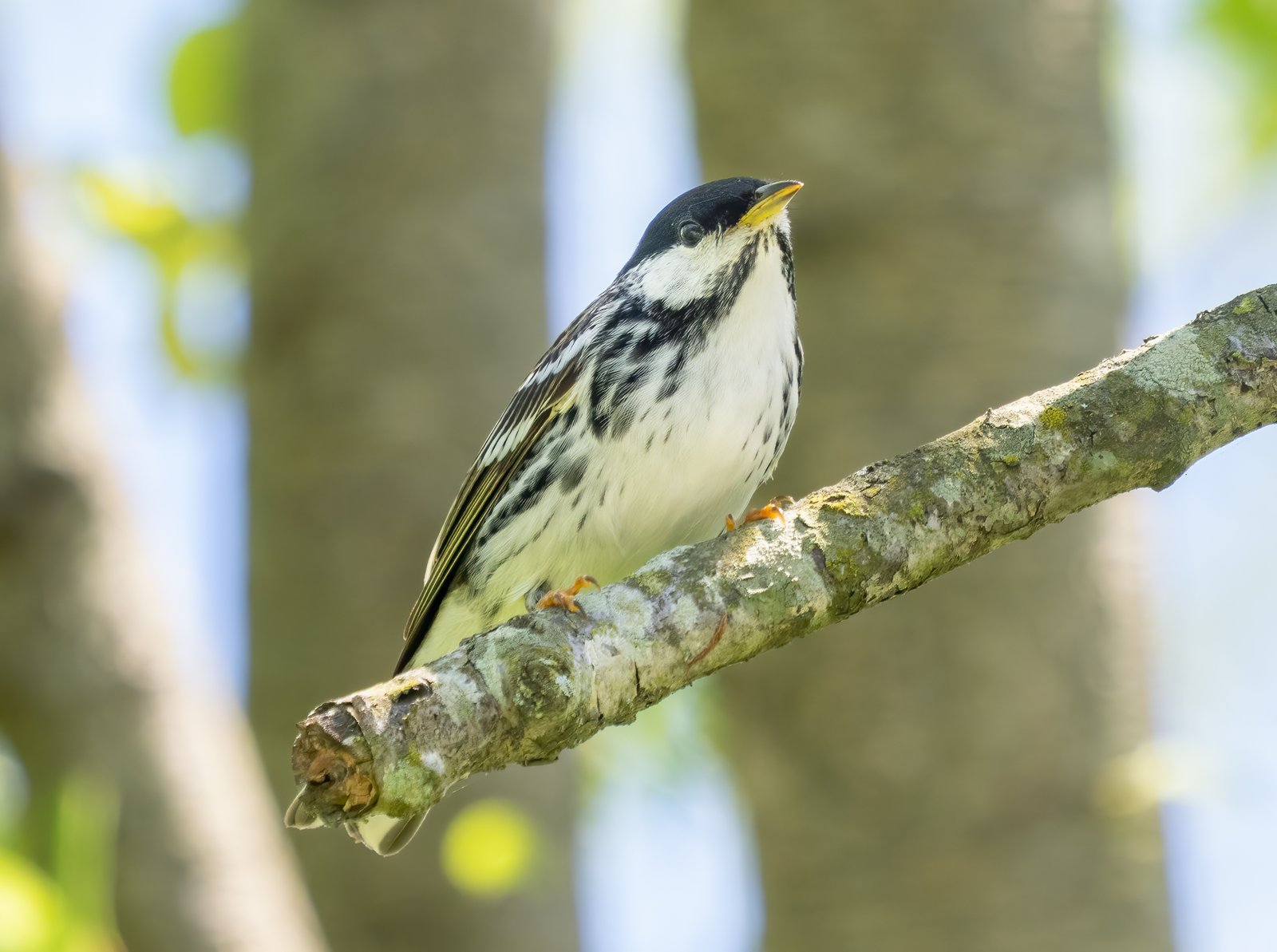
13–15 cm. The breeding male has a black cap, white cheeks, a grey back with black streaks, a black malar stripe and white underparts with black streaks on the flanks. The female in spring is greyish green and finely streaked, without a black cap. In autumn plumage, as usually seen in the guide area: olive green with faint streaks on the back, a dark eye-stripe, two white wing bars, yellowish breast with faint streaks on the sides, white undertail coverts and pale, yellowish legs and soles of the feet.
Confusion species
Bay-breasted Warbler Setophaga castanea closely resembles Blackpoll Warbler in autumn plumage, but has unstreaked, often pale buff flanks, sometimes with a trace of chestnut, buff undertail coverts and dark legs. The male Black-and-white Warbler Mniotilta varia resembles a breeding male Blackpoll Warbler, but has a black-and-white striped crown, a black cheek and creeps along trunks and branches.
Habitat
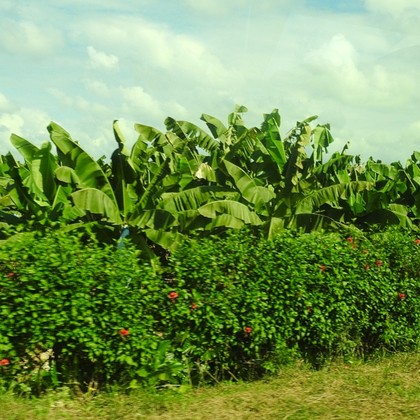
On migration forest edges, secondary forest, mangroves, parks and gardens with tall trees, especially in coastal lowlands. It searches for insects fairly high in the trees and on migration also eats berries.
Where the bird is most at home, classified by the vegetation units of Mexico and Central America.




Range and movements
Breeds in the northern coniferous forest from Alaska and Canada to the north-eastern United States. Winters in the northern and western Amazon Basin and along the eastern side of the Andes. In the guide area scarce in Panama and along the Caribbean coast of Central America, rare elsewhere; rare in Mexico, with records mainly in the east and on the Yucatán Peninsula.
- Summer visitor (c. Apr–Sep)
- Winter visitor (c. Oct–Mar)
- Passage (Mar–Apr, Oct–Nov)
- dark = core range, pale = thinly spread
How and when to look
The best chance is in October and November in Panama, especially in forest edges and gardens along the Panama Canal and on the Caribbean coast, where it sometimes occurs among other migrant warblers.
Conservation status
Near Threatened (NT). The population is large, but long-term counts in North America show a steep decline over several decades; possible causes include loss of breeding and wintering habitat and the risks of the long sea crossing.
Scientific name
Setophaga striata | (Forster, 1772)
Forster described the species in 1772 as Muscicapa striata; because it was later moved to another genus, the author and year stand in brackets. The genus Setophaga was introduced in 1827 by Swainson. Setophaga is Greek, from sēs, sētos 'moth' and -phagos '-eating': 'moth-eater'. striata is Latin for 'striated', after the streaked pattern of the plumage. The specimen the first description was based on came from Fort Severn, Hudson Bay.