All species › Passerines › Antbirds › Black-hooded Antshrike
Position in the tree Birds Aves › Birds with a flexible palate Neognathae › All other modern birds Neoaves › Landbirds Telluraves › Falcons, parrots and passerines Australaves › Falcons and passerines Eufalconimorphae › Parrots and passerines Psittacopasserae
Black-hooded Antshrike | Thamnophilus bridgesi
Zwartkapmierklauwier | Batará negruzco
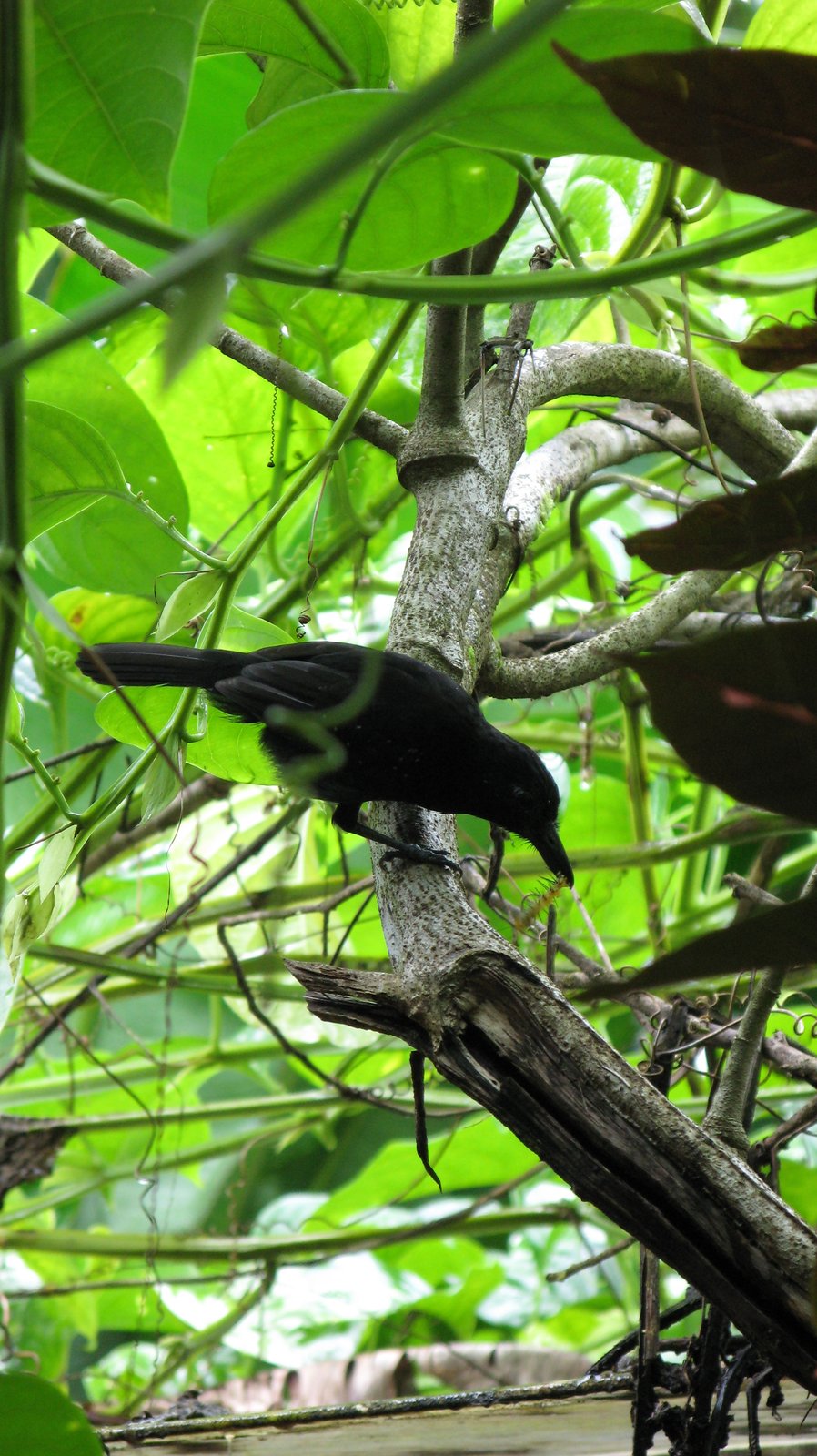
The Black-hooded Antshrike is a dark antshrike with a small range on the Pacific slope of southern Costa Rica and western Panama; it does not occur outside the guide area. The male is black and dark slate with white spots on the wing. It lives in the lower levels of forest edge and secondary forest and is often heard before it is seen.
Voice
The song is an accelerating series of nasal notes, as in related antshrikes. Also nasal calls.
Recording: Stephan Risch — CC BY-NC-SA 4.0 · converted to mono · xeno-canto
Identification
16 cm. Male: head, breast and upperparts black, belly and flanks dark slate; small white spots on the wing coverts and a white patch at the bend of the wing. Female: dark greyish-brown to slaty, with fine white streaks on head and breast. Bill heavy with a hooked tip.
Confusion species
Black-crowned Antshrike Thamnophilus atrinucha occurs in the same area but is paler: the male is grey with only a black crown, the female brown with a rufous crown. Jet Antbird Cercomacra nigricans (in Panama) is slimmer, with a finer bill and clear white wing bars and tail tips.
Habitat
Lower and middle levels of forest edge, secondary forest, gallery forest and scrub in the lowlands and foothills, locally higher; also semi-open country with patches of woodland. It eats insects and other invertebrates.
Where the bird is most at home, classified by the vegetation units of Mexico and Central America.




Range and movements
Endemic to the guide area: Pacific slope of southern Costa Rica and western Panama. It occurs nowhere else in the world.
- Resident
- dark = core range, pale = thinly spread
How and when to look
On the Osa Peninsula in Costa Rica, among other places around Corcovado, fairly regularly seen along forest edges and in secondary forest.
Conservation status
Not threatened. Locally fairly common within its small range and tolerates secondary forest.
Scientific name
Thamnophilus bridgesi | Sclater, 1856
Sclater described the species in 1856 and placed it straight away in the genus where it still stands. The genus Thamnophilus was introduced in 1816 by Vieillot. Thamnophilus is Greek, from thamnos 'bush' and philos 'loving': 'bush-lover'. bridgesi honours the English botanist, zoologist and collector Thomas Charles Bridges (1807–1865), who worked in tropical America from 1822. The specimen the first description was based on came from David, Chiriquí, Panama.