All species › Waterfowl › Ducks, swans and geese › Black-bellied Whistling Duck
Position in the tree Birds Aves › Birds with a flexible palate Neognathae › Fowl Galloanserae
Black-bellied Whistling Duck | Dendrocygna autumnalis
Zwartbuikfluiteend | Pijije ala blanca
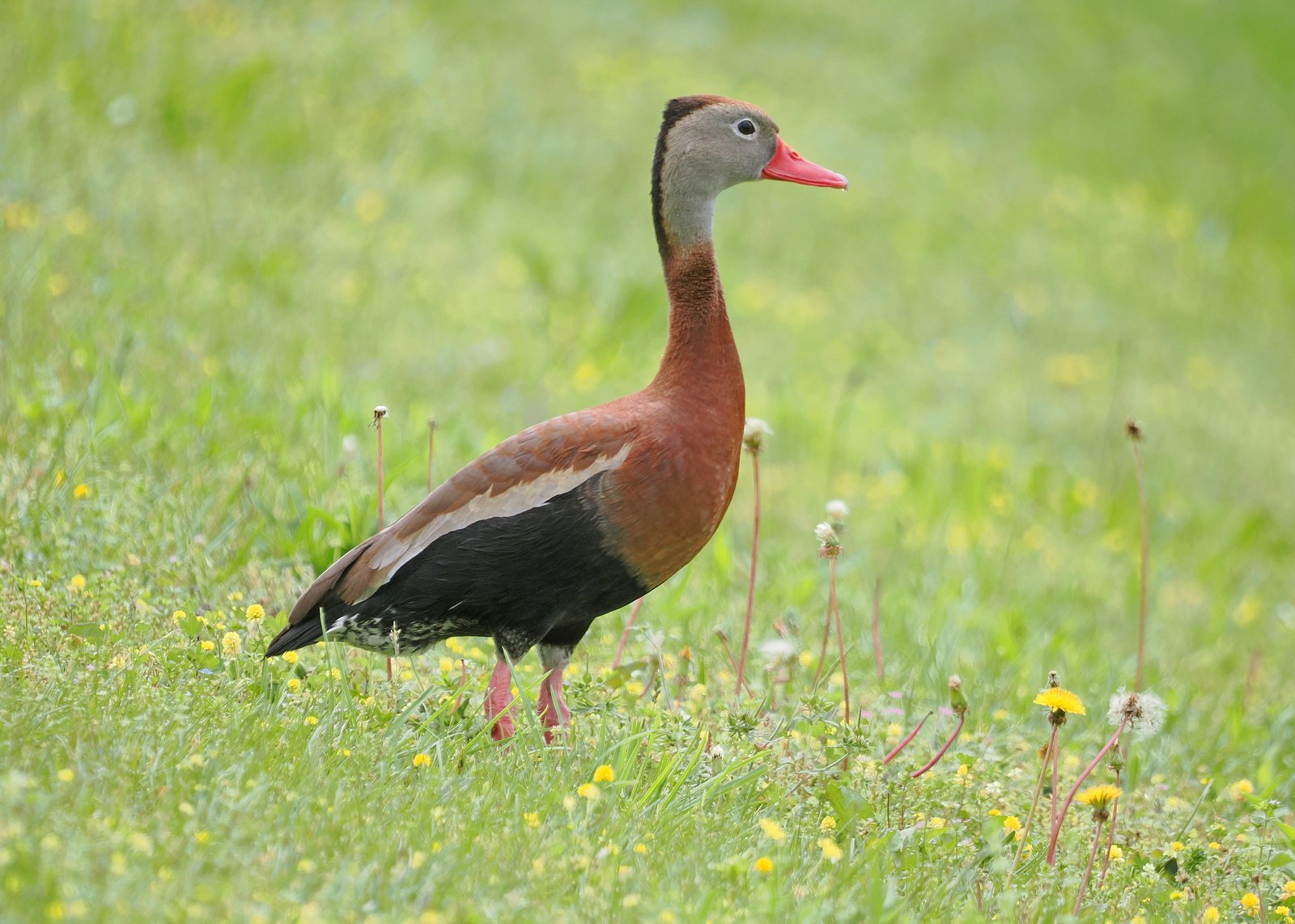
The Black-bellied Whistling Duck is the commonest whistling duck in the guide area and a familiar bird of marshes, rice fields and cattle pastures in the lowlands, from northern Mexico to Panama. It readily perches in trees and on posts and fences, and flocks fly whistling to their feeding grounds at dusk. In Mexico and much of Central America it is called pijije, after its call.
Voice
A high, whistled pee-chee-chee-nee of four or five notes, often in flight and also at night. Flocks give a continuous whistling.
Recording: Juan Freile — CC BY-NC-SA 4.0 · converted to mono · xeno-canto
Identification
47–56 cm, long-legged and long-necked; often stands upright. The crown, hindneck, breast and back are warm chestnut, the face and upper neck grey with a narrow white eye-ring. The belly, flanks and tail are black. The bill is bright reddish pink and the legs are pink. In flight a broad white band across the upperwing stands out sharply against the black flight feathers. The sexes are alike. Juveniles have a grey bill, grey legs and a dull grey, dark-mottled belly instead of a black one.
Confusion species
Fulvous Whistling Duck Dendrocygna bicolor is ochre-brown with a dark bill and dark legs, a row of creamy flank feathers and no white in the wing; in flight it shows a white U at the base of the tail. Young Black-bellied Whistling Ducks with their grey bill look less striking but already show the white wing band. Muscovy Duck Cairina moschata, which also perches in trees, is much heavier and black, with white wing coverts.
Habitat
Freshwater marshes, ponds, lakes and lagoons with vegetated margins, flooded grassland, rice fields, cattle pastures with pools, riparian forest and the edges of mangroves; also sewage ponds and park ponds in towns. Mainly below 1500 m. It feeds mostly at dusk and at night on seeds, grasses and aquatic plants, also in fields of maize and sorghum. It nests in tree cavities and nest boxes, sometimes on the ground in dense vegetation.
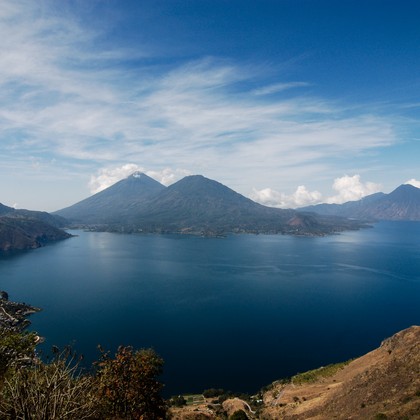
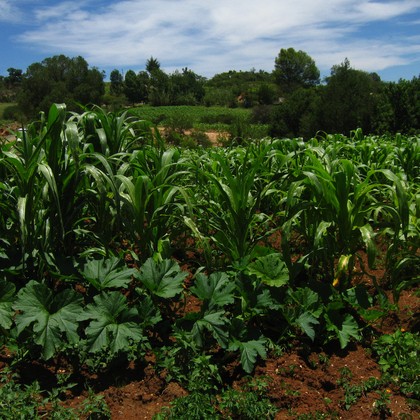
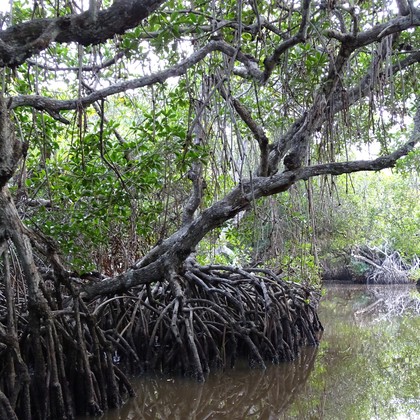
Where the bird is most at home, classified by the vegetation units of Mexico and Central America.



Range and movements
In the lowlands along both coasts of the guide area: on the Pacific side from Sonora and Sinaloa southwards, on the Gulf side from Tamaulipas and Nuevo León through Veracruz and Tabasco to the Yucatán Peninsula, and on through Belize, Guatemala, El Salvador, Honduras, Nicaragua, Costa Rica and Panama. Locally also inland in the central Mexican states; absent from the plateau and from Baja California. Outside the guide area from the southern United States to northern Argentina.
- Resident
- dark = core range, pale = thinly spread
How and when to look
Flocks rest by day on banks, dykes and in dead trees at rice fields and marshes, for example at Palo Verde in Costa Rica and in the wetlands of Tabasco and Campeche. At dusk they fly over whistling, and the call often leads to a roost.
Conservation status
Not threatened. Common in the guide area and increasing in many places, helped by rice fields and artificial waters. The species is hunted, and the drainage of wetlands also affects this duck, although it adapts well.
Scientific name
Dendrocygna autumnalis | (Linnaeus, 1758)
Linnaeus described the species in 1758 as Anas autumnalis; because it was later moved to another genus, the author and year stand in brackets. The genus Dendrocygna was introduced in 1837 by Swainson. Dendrocygna comes from the Greek dendron, 'tree', and the Latin cygnus, 'swan' — 'tree swan', because some whistling ducks perch or nest in trees. autumnalis is Latin for 'autumnal', after the orange, yellow and brown tones of the plumage. The specimen the first description was based on came from America (not specified).