All species › Kingfishers, bee-eaters and rollers › Kingfishers › Belted Kingfisher
Position in the tree Birds Aves › Birds with a flexible palate Neognathae › All other modern birds Neoaves › Landbirds Telluraves › Raptors, owls, kingfishers and woodpeckers Afroaves › Mousebirds, rollers and woodpeckers Coraciimorphae › Trogons and cavity nesters Cavitaves › Hornbills, kingfishers and woodpeckers Picocoraciae › Kingfishers, bee-eaters and woodpeckers Picodynastornithes
Belted Kingfisher | Megaceryle alcyon
Bandijsvogel | Martín gigante norteamericano
The Belted Kingfisher is a large, blue-grey kingfisher that breeds in North America and in winter is spread over the whole guide area, from Baja California to Panama. In winter it is the kingfisher most often seen along coasts, lagoons and lakes, and it draws attention with its dry, rattling call and its habit of hovering over the water before diving.
Voice
A loud, dry, rattling series krrrrrrr, especially in flight and when flushed. In winter also often a single rattle when changing perch.
Recording: Rory Nefdt — CC BY-NC-SA 4.0 · converted to mono · xeno-canto
Identification
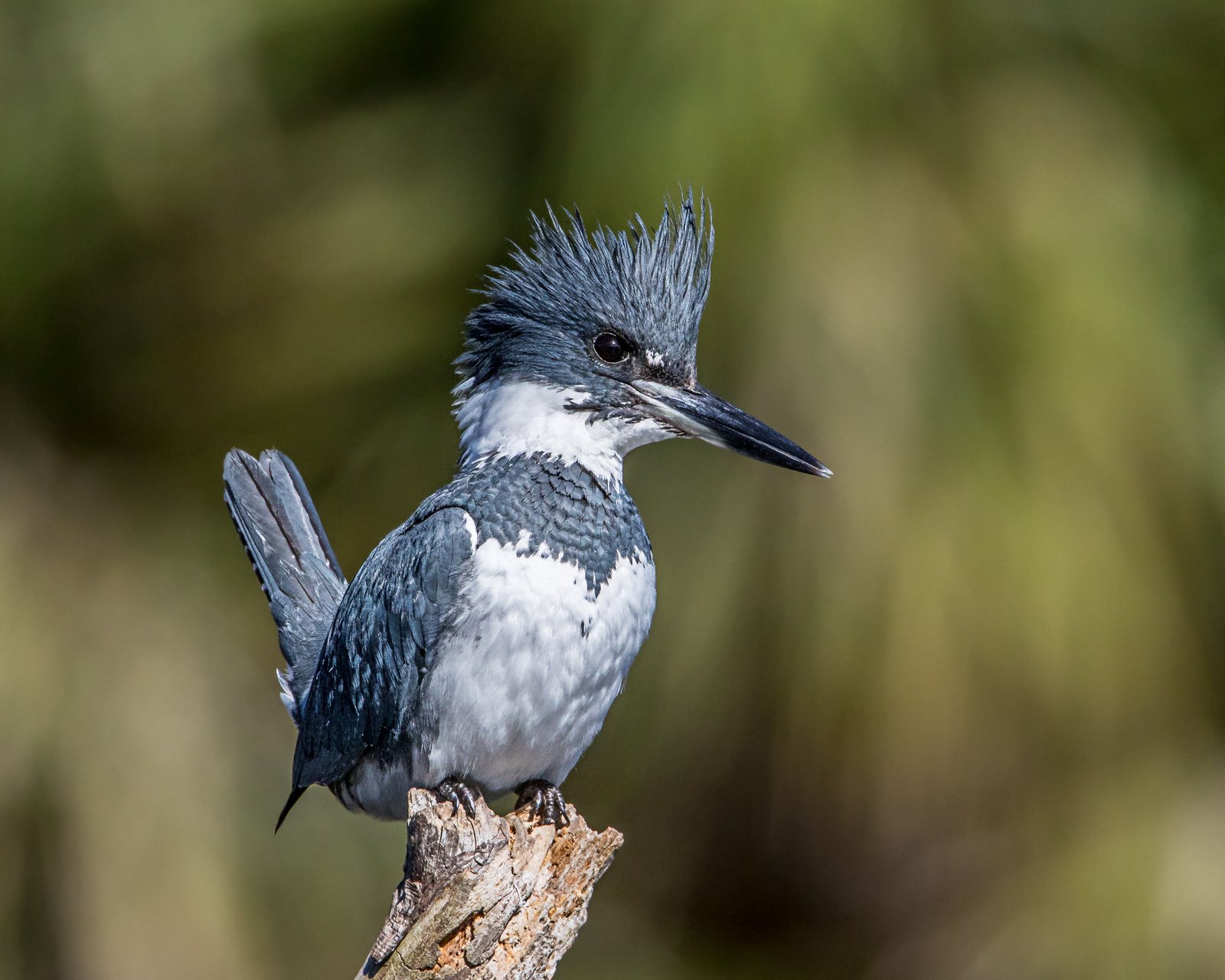
28–35 cm, with a large head with a shaggy crest and a long, heavy, black bill. The head, back and wings are blue-grey, with a white spot in front of the eye and a broad white collar. A blue-grey band crosses the breast; the belly is white. The female has a second, rufous band below it that continues onto the flanks; the male lacks this. Young birds have a rusty wash in the breast band. In flight a white patch shows at the base of the primaries.
Confusion species
Ringed Kingfisher Megaceryle torquata is larger, with a heavier bill, and has an entirely rufous belly (male) or a rufous belly below a blue-grey breast band (female); it lacks the white belly of the Belted Kingfisher. Green Kingfisher Chloroceryle americana, Amazon Kingfisher Chloroceryle amazona and the other Chloroceryle species are dark green above, not blue-grey.
Habitat
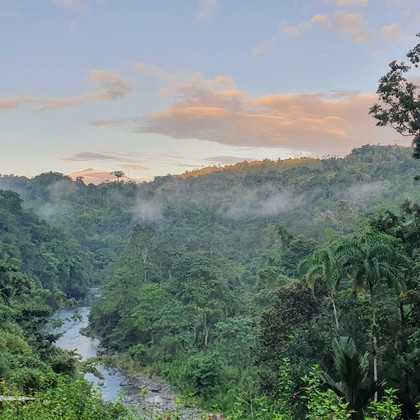
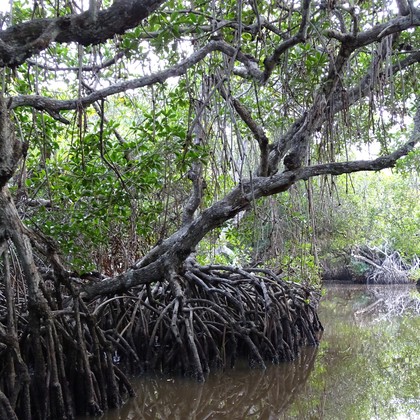
Almost any clear, calm water with fish and perches: coastal lagoons, estuaries, mangroves, harbours, lakes, reservoirs, rivers and fish ponds, from sea level up to the Mexican Plateau. It perches on posts, wires, branches and rocks over the water, or hovers above it, and dives for small fish; it also takes crabs, crayfish and other aquatic animals.
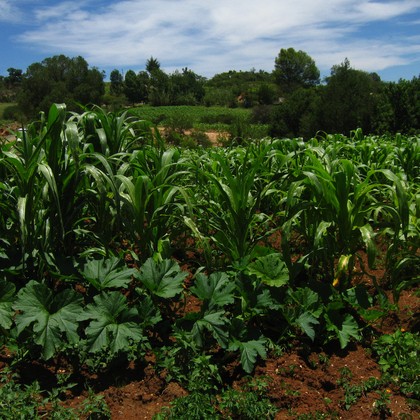
Where the bird is most at home, classified by the vegetation units of Mexico and Central America.


Range and movements
Winter visitor throughout Mexico, including Baja California, the Plateau and the Yucatán Peninsula, and further south through Belize, Guatemala, El Salvador, Honduras, Nicaragua and Costa Rica to Panama; fairly common in Mexico, scarcer to the south and uncommon in Panama. Breeds in North America, from Alaska and Canada to the southern United States; also winters in the Caribbean and northern South America.
- Winter visitor (c. Oct–Mar)
- dark = core range, pale = thinly spread
How and when to look
In winter at almost any lagoon, harbour or reservoir in Mexico; the rattling call often gives the bird away before it is seen. In the south of the guide area it pays to check the belly colour to rule out Ringed Kingfisher.
Conservation status
Not globally threatened. In the guide area a fairly common winter visitor in Mexico and a scarcer one in southern Central America.
Scientific name
Megaceryle alcyon | (Linnaeus, 1758)
Linnaeus described the species in 1758 as Alcedo Alcyon; because it was later moved to another genus, the author and year stand in brackets. The genus Megaceryle was introduced in 1848 by Kaup. Megaceryle combines Greek megas 'great' with the genus name Ceryle, setting the large kingfishers apart from the smaller ones. alcyon is Greek halkuon, the kingfisher of the myth of Alcyone, who was turned into the bird. The specimen the first description was based on came from South Carolina.