All species › Birds of prey › Kites, Old World vultures, eagles and hawks › Bald Eagle
Position in the tree Birds Aves › Birds with a flexible palate Neognathae › All other modern birds Neoaves › Landbirds Telluraves › Raptors, owls, kingfishers and woodpeckers Afroaves › Hawks and owls Hieraves
Bald Eagle | Haliaeetus leucocephalus
Amerikaanse zeearend | Águila cabeza blanca
The Bald Eagle is a large eagle of coasts, lakes and rivers with a white head and tail in adult plumage. It feeds on fish, waterbirds and carrion and often steals fish from Ospreys. In the guide area it is a rare winter visitor to northwestern and northern Mexico; it formerly also bred in Baja California and Sonora.
Voice
A high, weak, cackling kee-kee-kee-kikiki, mainly around roosts and the nest.
Recording: Rachel Thurman — CC BY 4.0 · converted to mono · xeno-canto
Identification
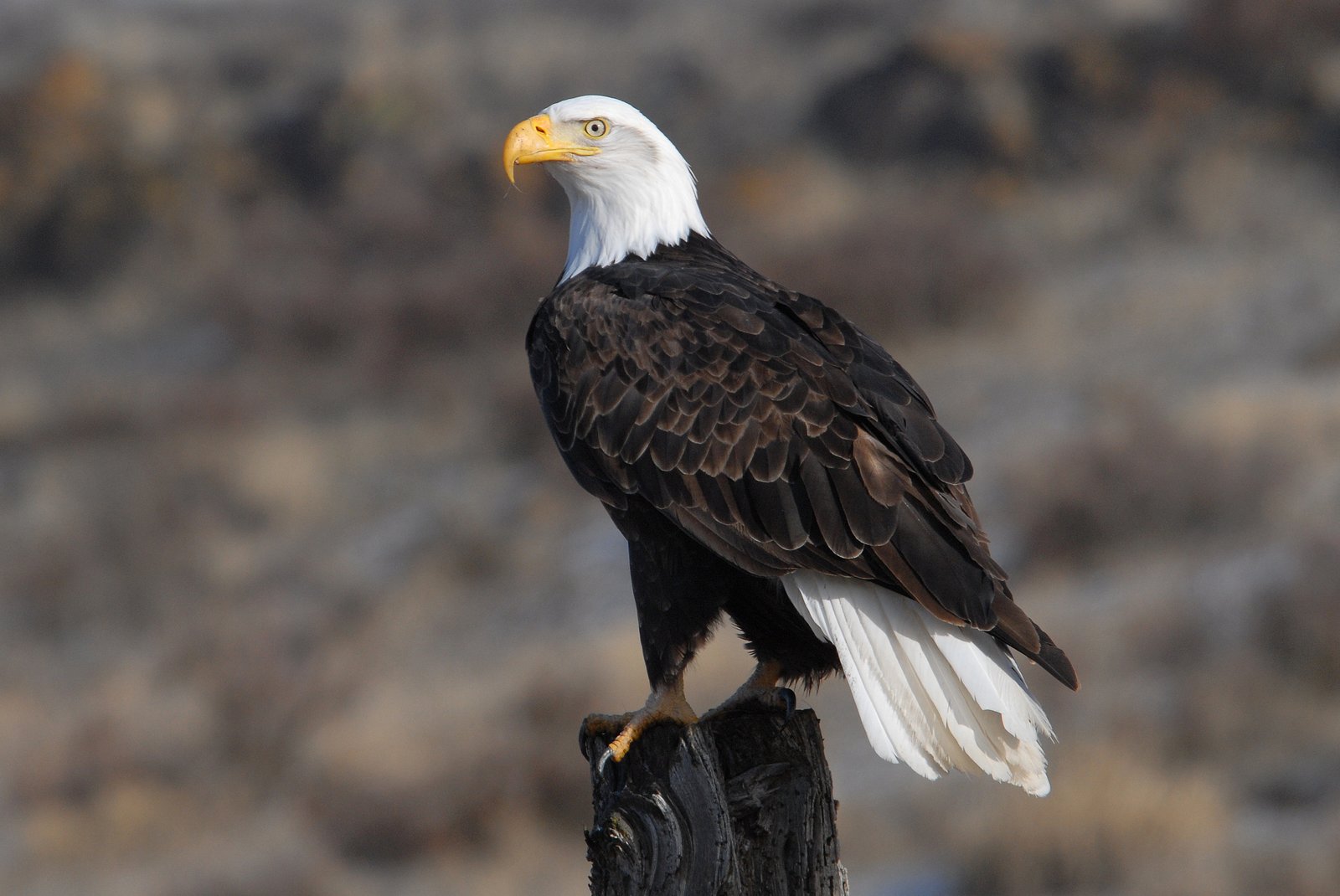
71–96 cm, with long, broad, plank-like wings and a fairly short, wedge-shaped tail; the female is larger than the male. Adults, from four to five years old, are dark brown with a white head and tail, a large yellow bill and yellow legs. Young birds are dark brown with a dark bill and varying amounts of white blotching on the underwings, belly and back; over the following years the head and tail gradually turn white.
Confusion species
The Golden Eagle Aquila chrysaetos resembles young Bald Eagles, but has a smaller head and bill, a golden nape, legs feathered to the toes and, in young birds, sharply defined white patches at the base of the flight feathers and tail. The Osprey Pandion haliaetus is smaller and slimmer, white below, with a dark eye stripe and crooked wings. The Turkey Vulture Cathartes aura has a small, bare head and holds its wings in a V.
Habitat
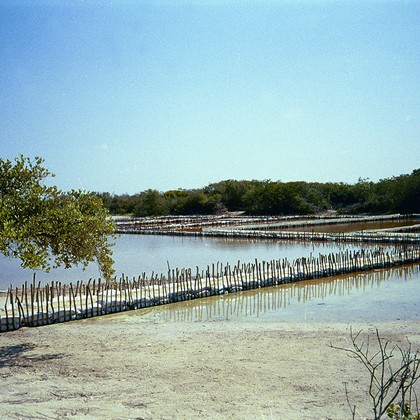
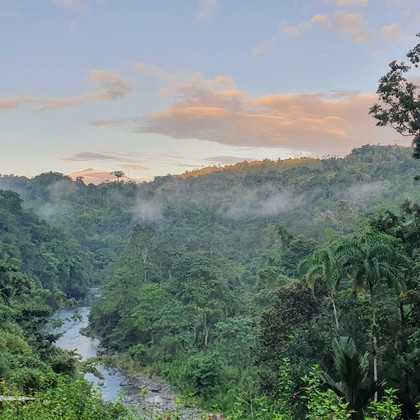
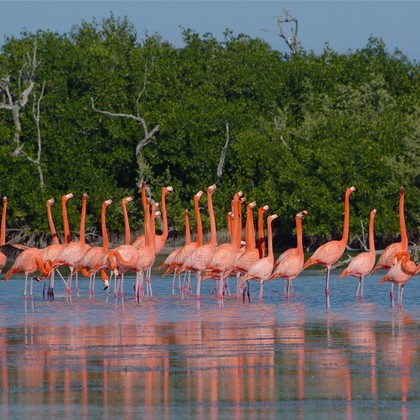
Coastal lagoons, bays and estuaries with mangroves, lakes, reservoirs and large rivers. It rests on tall trees, posts or sandbars near water and hunts mainly fish and waterbirds.
Where the bird is most at home, classified by the vegetation units of Mexico and Central America.


Range and movements
In the guide area almost only in northern Mexico. Most records come from the lagoons on the Pacific coast of Baja California Sur, especially Bahía Magdalena and its surroundings, and from lakes and reservoirs in Chihuahua, with smaller numbers in Baja California, Sonora, Durango and Tamaulipas. Birds are present mainly from November to March; in Baja California Sur and Sonora a few also remain in summer. Further south in Mexico it is a rare vagrant, and only isolated records are known from Central America. It formerly bred in Baja California and Sonora; whether pairs still breed regularly is uncertain. Outside the guide area it breeds in Alaska, Canada and much of the United States.
- Winter visitor (c. Oct–Mar)
- dark = core range, pale = thinly spread
How and when to look
In winter around Bahía Magdalena and Puerto San Carlos in Baja California Sur, where birds perch on mangroves and sandbars along the lagoon and are often seen from whale-watching boats; also at lakes and reservoirs on the Chihuahua plateau.
Conservation status
Not threatened. In North America it has increased again since the 1970s after a steep decline caused by DDT and shooting. In Mexico it is rare and legally protected.
Scientific name
Haliaeetus leucocephalus | (Linnaeus, 1766)
Linnaeus described the species in 1766 as Falco leucocephalus; because it was later moved to another genus, the author and year stand in brackets. The genus Haliaeetus was introduced in 1809 by De Savigny. Haliaeetus is Greek in origin, from hals 'sea' and aetos 'eagle': sea eagle. leucocephalus is Greek, from leukos 'white' and kephalē 'head', after the adult's white head. The specimen the first description was based on came from Carolina, USA (after Catesby).