All species › Waders, gulls and terns › Skimmers, noddies, terns and gulls › American Herring Gull
Position in the tree Birds Aves › Birds with a flexible palate Neognathae › All other modern birds Neoaves › Birds of the elements Elementaves › Cranes and waders Gruimorphae
American Herring Gull | Larus smithsonianus
Amerikaanse zilvermeeuw | Gaviota argéntea americana
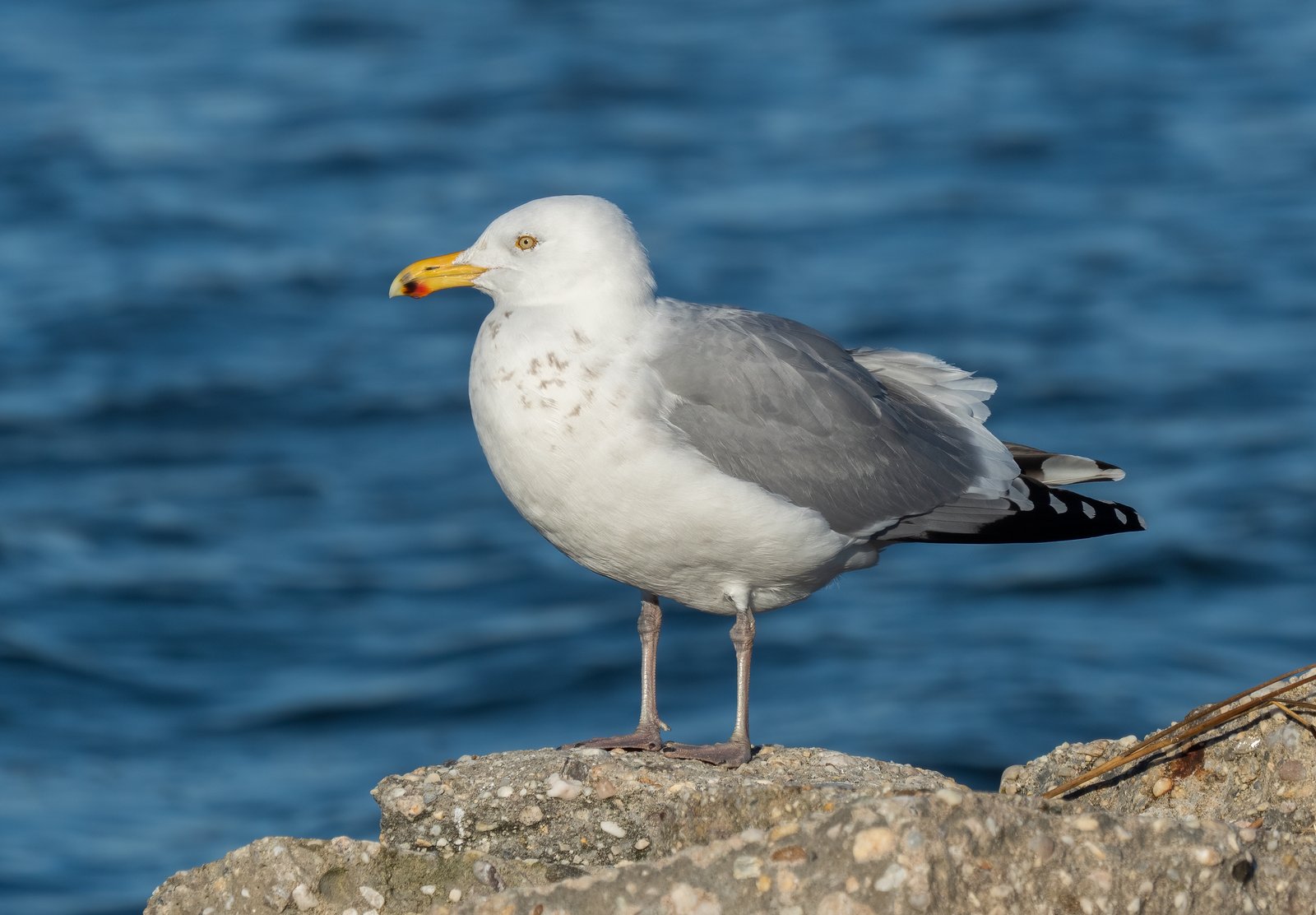
The American Herring Gull is the most widespread large gull of North America and was long treated as the same species as the Herring Gull of Europe. In the guide area it is a winter visitor, common along the coasts of north-western Mexico and the Gulf coast, and scarcer towards the south. Most of the birds wintering here are immatures.
Voice
A clear, laughing kyow-kyow-kyow and a long call of repeated shrill notes; when alarmed also a short ga-ga-ga.
Recording: Valerie Heemstra — CC BY-NC-SA 4.0 · converted to mono · xeno-canto
Identification
56–64 cm, a large gull with a yellow bill with a red spot, pink legs and a pale yellow eye. Adults have a pale grey mantle and wings, black wingtips with white spots and a white trailing edge. In winter plumage the head and neck are streaked or mottled brown. Juveniles are fairly uniform grey-brown with a dark bill and an almost entirely dark tail; they become adult in four years, with intermediate plumages showing a grey back and a pink bill with a dark tip.
Confusion species
European Herring Gull Larus argentatus is very similar and in the field can be separated almost only in young birds, which have a paler tail base and rump. California Gull Larus californicus is smaller, with greenish-yellow legs, a dark eye and a black and a red spot on the bill. Ring-billed Gull Larus delawarensis is smaller, with yellow legs and a black ring around the bill. Iceland Gull Larus glaucoides has a smaller, rounder head, a shorter bill and wingtips that are pale from below.
Habitat
Beaches, lagoons, estuaries, mudflats, harbours and rubbish dumps, and in northern Mexico also inland lakes and reservoirs. Feeds on fish, invertebrates, carrion and refuse and often follows fishing boats.
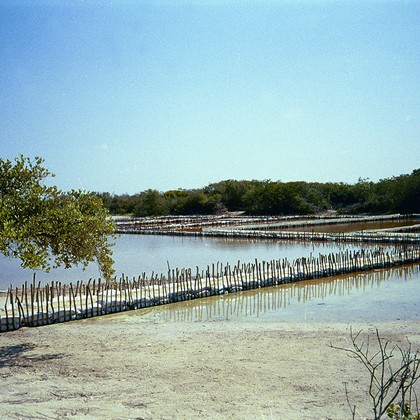
Where the bird is most at home, classified by the vegetation units of Mexico and Central America.




Range and movements
In winter common along the coasts of Baja California, Sonora and Sinaloa and on the Gulf coast from Tamaulipas through Veracruz to the Yucatán Peninsula; less numerous along the Pacific coast south to Oaxaca and on lakes in northern Mexico. In Central America scarce to locally fairly common, especially on the Caribbean coast of Belize and Honduras and on the Pacific coast of Panama. Outside the guide area the species breeds from Alaska to eastern Canada and the north-eastern United States, and winters along the coasts and on the Great Lakes of North America and in the Caribbean.
- Winter visitor (c. Oct–Mar)
- dark = core range, pale = thinly spread
How and when to look
Flocks of gulls on beaches and in harbours of Baja California, Sonora and the north coast of Yucatán offer the best chance in winter. The pale grey upperparts with pink legs and a pale eye separate adults from the other large gulls in the guide area.
Conservation status
Not threatened globally. The population is large but has declined locally since the 1980s. In the guide area a winter visitor with no breeding population.
Scientific name
Larus smithsonianus | Coues, 1862
Coues described the species in 1862 and placed it straight away in the genus where it still stands. The genus Larus was introduced in 1758 by Linnaeus. Larus is Latin, from Ancient Greek laros, and appears to have referred to a gull or another large seabird. smithsonianus refers to the Smithsonian Institution in Washington, named after the British chemist James Smithson (1765–1829). The specimen the first description was based on came from North America (not specified).