All species › Tubenoses › Northern storm petrels › Ainley's Storm Petrel
Position in the tree Birds Aves › Birds with a flexible palate Neognathae › All other modern birds Neoaves › Birds of the elements Elementaves › Tropicbirds and waterbirds Phaethoquornithes › Core waterbirds Aequornithes
Ainley's Storm Petrel | Hydrobates cheimomnestes
Ainleys stormvogeltje | Paíño de Ainley
Ainley's Storm Petrel is a small, dark storm petrel with a grey to white rump that breeds only in winter on a few rocky islets off Guadalupe Island, off the west coast of Baja California. Townsend's Storm Petrel breeds on the same islets in summer. It was long regarded as a form of Leach's Storm-Petrel and has only recently been recognised as a separate species, mainly on the basis of breeding season, calls and genetic differences. It is named after the American seabird biologist David Ainley.
No photograph of a living wild bird of this species with a suitable Creative Commons licence exists. Do you have one that meets the rules? Send it in.
Voice
Silent at sea. At the breeding site purring and rattling calls come from burrows and crevices at night, differing from those of Townsend's Storm Petrel and Leach's Storm-Petrel.
No recording with a suitable Creative Commons licence is available for this species yet.
Identification
17–19 cm. A small storm petrel with long, slightly angled wings and a clearly forked tail. The plumage is sooty brown to sooty black, with a pale band across the upperwing coverts. The rump is usually grey or dirty white and often divided by a dark central line; entirely dark and fairly white rumps also occur. Male, female and young birds are alike. Flies with a slightly bounding action, like Leach's Storm-Petrel. In the field the species can hardly be identified with certainty; place and season are the main clues.
Confusion species
Townsend's Storm Petrel Hydrobates socorroensis breeds on the same islets in summer, is slightly smaller, with shorter wings and a shallower tail fork, and usually has a whiter rump. Leach's Storm-Petrel Hydrobates leucorhous is slightly larger, with a white rump divided by a grey line; dark-rumped birds from the islands off Baja California closely resemble Ainley's Storm Petrel. At sea the three often cannot be separated with certainty. The Black Storm Petrel Hydrobates melania is larger, entirely dark and flies with slow, deep beats.
Habitat
Open ocean water far offshore. Takes small crustaceans, fish larvae and small squid from the surface in flight. Breeds in rock crevices and burrows on bare rocky islets.
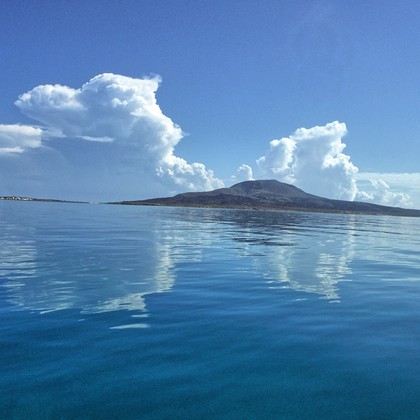
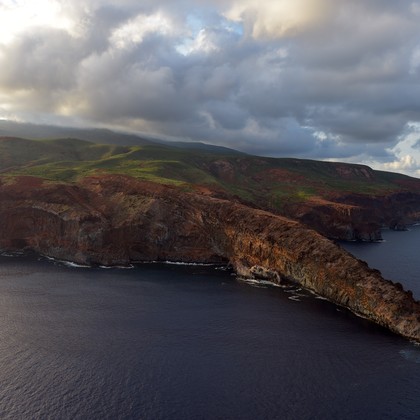
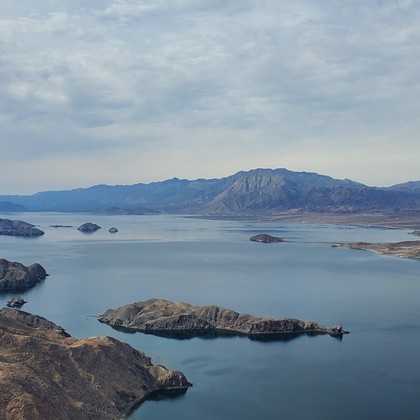
Where the bird is most at home, classified by the vegetation units of Mexico and Central America.
Range and movements
Breeds only on a few rocky islets close to Guadalupe Island, off the west coast of Baja California. The non-breeding distribution is poorly known; the birds probably disperse south over the eastern tropical Pacific, off the Pacific coast of Mexico and Central America and at least as far as the Galápagos Islands. Because the species cannot be reliably separated from related species at sea, there are hardly any certain records away from the breeding site.
How and when to look
A sighting at sea can rarely be identified with certainty. The best chance is offered by winter boat trips in the waters around Guadalupe Island, when the birds are at the breeding site; elsewhere storm petrels of this type usually remain unidentified.
Conservation status
Vulnerable. The entire world population breeds on a few rocky islets off a single island, which makes the species vulnerable to a single disaster or to new predators. Numbers are small and poorly known. Predation by gulls and owls and artificial light from ships are risks.
Scientific name
Hydrobates cheimomnestes | (Ainley, 1980)
Ainley described the species in 1980 as Oceanodroma leucorhoa cheimomnestes; because it was later moved to another genus, the author and year stand in brackets. The genus Hydrobates was introduced in 1822 by Boie. Hydrobates is Greek, from hudro- 'water' and batēs 'walker': 'water walker'. cheimomnestes is Greek, from kheimōn 'winter' and mnēstēr 'suitor': 'winter suitor', because this bird breeds in winter. The specimen the first description was based on came from Guadalupe Island, Baja California, Mexico.