All species › Pelicans, herons and ibises › Herons, egrets and bitterns › Agami Heron
Position in the tree Birds Aves › Birds with a flexible palate Neognathae › All other modern birds Neoaves › Birds of the elements Elementaves › Tropicbirds and waterbirds Phaethoquornithes › Core waterbirds Aequornithes
Agami Heron | Agamia agami
Agamireiger | Garza agamí
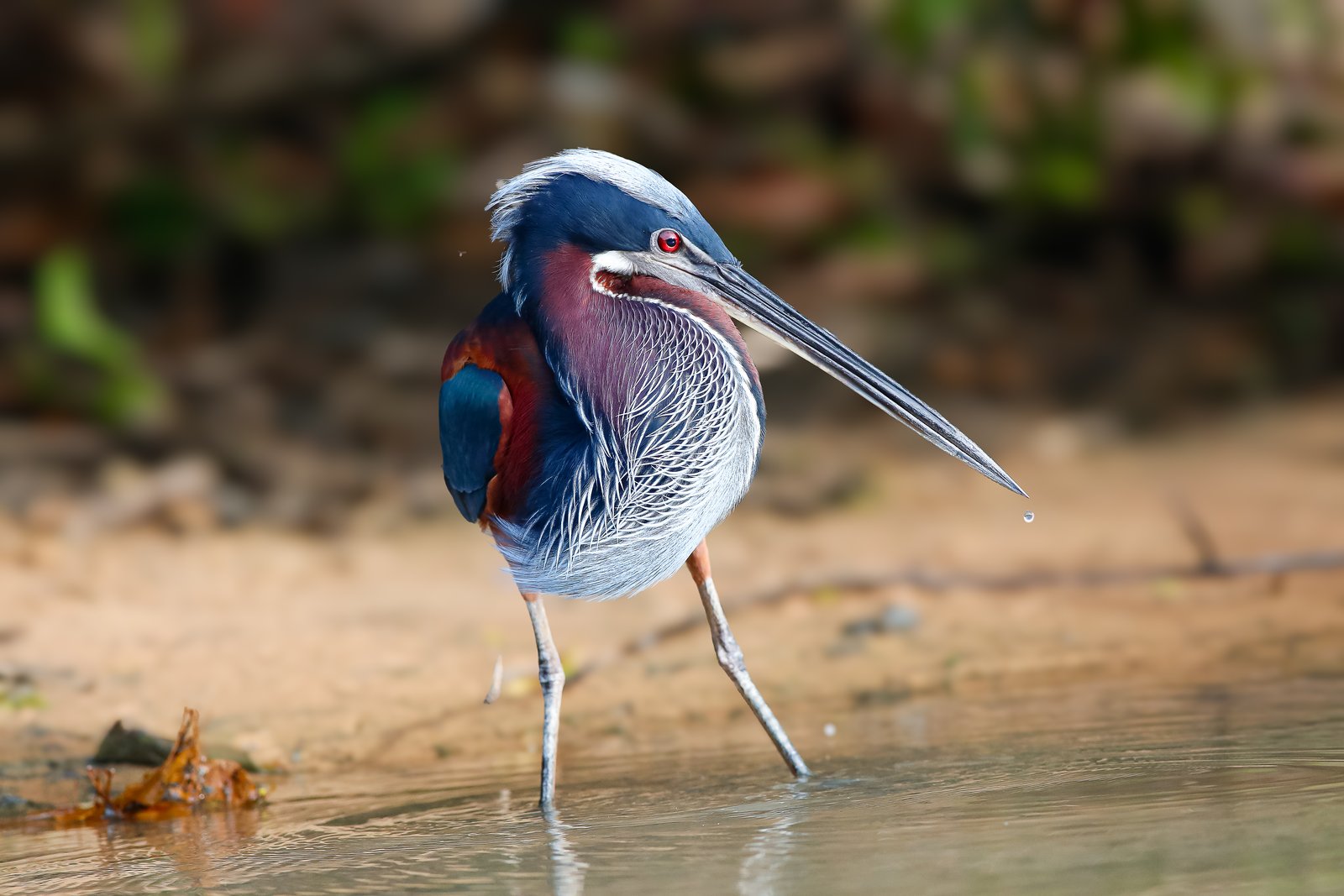
The Agami Heron is a medium-sized heron with short legs, a very long, thin bill and chestnut, green and silvery-blue plumage. It lives hidden along shady creeks and forest swamps and is seldom seen. In the guide area it is a scarce resident of the lowlands from southern Mexico to Panama, mainly on the Caribbean side.
Voice
Usually silent. At the colony a low, rattling kk-kk-kk and deep, growling sounds; when disturbed a short, hoarse croak.
Recording: Gabriel Maldonado — CC BY-NC-SA 4.0 · shortened to the first 60 s, mono · xeno-canto
Identification
66–76 cm. A slender heron with a long neck, a strikingly long, thin, dagger-shaped bill and rather short, yellowish legs. Adults have a dark green crown, a chestnut neck with a narrow silvery-white central stripe, a dark green-glossed back and wings and a deep chestnut belly. In the breeding season they carry long, silvery-blue plumes on the head, neck and back, and the bare facial skin is red or orange. Juveniles are dark brown above, with a blackish crown and a white, brown-streaked belly. The sexes are alike.
Confusion species
Rufescent Tiger Heron Tigrisoma lineatum also has a chestnut neck, but is stockier, with a shorter, thicker bill, a grey-brown back and a pale belly. Green Heron Butorides virescens has a similar colour pattern, but is much smaller, with a shorter bill and orange legs. Young Agami Herons can resemble a young Black-crowned Night Heron Nycticorax nycticorax, which however has a thick, short bill and white spots.
Habitat
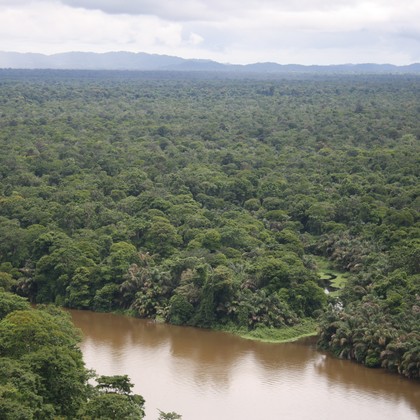
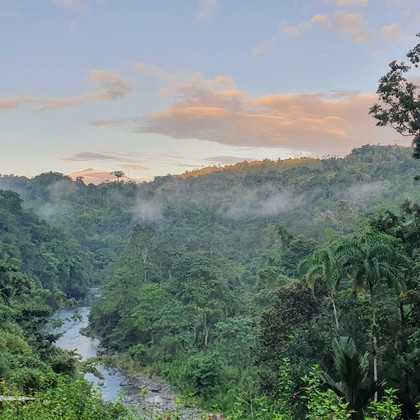
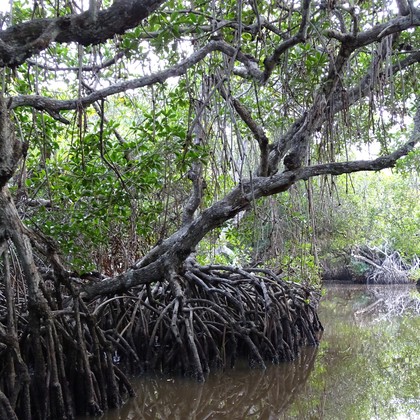
Shady banks of creeks, streams and slow-flowing rivers in rainforest, swamp forest, palm swamps and floodplain forest, locally also mangroves; in the lowlands. It hunts patiently from a branch or the bank for fish, often with the neck held low over the water. It breeds in colonies in shrubs or low trees over water, sometimes together with other herons.
Where the bird is most at home, classified by the vegetation units of Mexico and Central America.


Range and movements
In Mexico on the Gulf side from southern Veracruz through Tabasco and northern Chiapas to Campeche and Quintana Roo. Further in the lowlands of Belize and northern Guatemala, on the Caribbean side of Honduras, Nicaragua and Costa Rica, and in Panama. Outside the guide area in northern South America and the Amazon basin, south to Bolivia and Brazil.
- Resident
- dark = core range, pale = thinly spread
How and when to look
The species is best found from a canoe or boat along narrow, shady creeks, such as at Tortuguero, Caño Negro and Boca Tapada in Costa Rica and in the marshes of Tabasco. Known colonies draw visitors in the breeding season; birds at the nest are then watched from a distance to avoid disturbance.
Conservation status
Near Threatened. Globally threatened mainly by deforestation in the Amazon. In the guide area scarce and local, with few known breeding colonies, and sensitive to clearance of floodplain forest and disturbance of colonies.
Scientific name
Agamia agami | (Gmelin, 1789)
Gmelin described the species in 1789 as Ardea Agami; because it was later moved to another genus, the author and year stand in brackets. The genus Agamia was introduced in 1853 by Reichenbach. Agamia is derived from the specific name agami, an Amerindian name from Cayenne. agami is an Amerindian name from Cayenne for a forest bird, perhaps originally a trumpeter, via Buffon's 'Héron Agami'. The specimen the first description was based on came from Cayenne, French Guiana.