All species › Passerines › Wagtails and pipits
Wagtails and pipits | Motacillidae
Kwikstaarten en piepers | Lavanderas y bisbitas
Slender, long-legged songbirds that walk rather than hop: the foot pushes off, the head nods with it, and the long tail is pumped up and down without a pause — in the wagtails hard enough to rock the whole body. The bill is thin, straight and pointed, made for picking insects off the ground, off wet stones or out of the air; the leg is long and fine, and in the pipits the claw of the hind toe is greatly lengthened, nearly as long as the toe itself, which gives purchase in grass and sedge. Two appearances on one frame: the wagtails boldly marked in black, white, grey and yellow, the pipits brown and streaked and separated from each other mainly on call and wing formula. The nest is a cup on the ground, hidden under a tussock or in a niche, and the song is delivered in the air: up, sing, and down again on a parachuting descent.
Native species 4 species
Species that occur here by nature: breeding birds, winter visitors and passage migrants. They are arranged by genus, in the sequence of the list.
Anthus 4 species
-
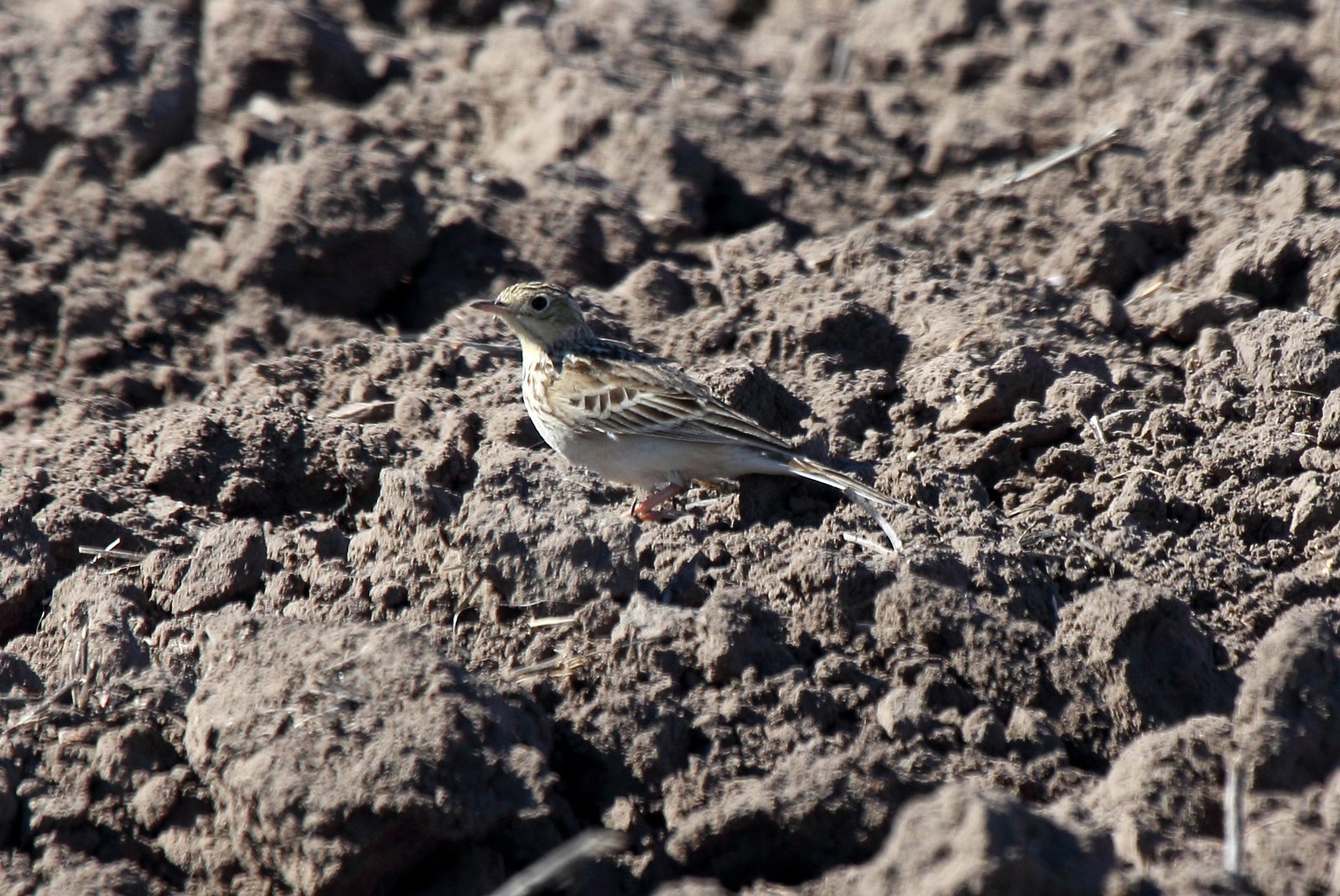
Sprague's Pipit
Anthus spragueii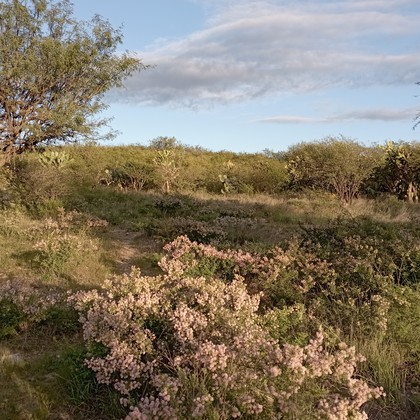 Semi-desert grassland
 Lowland savanna and open grassland
 Pasture and grazing land with trees
-
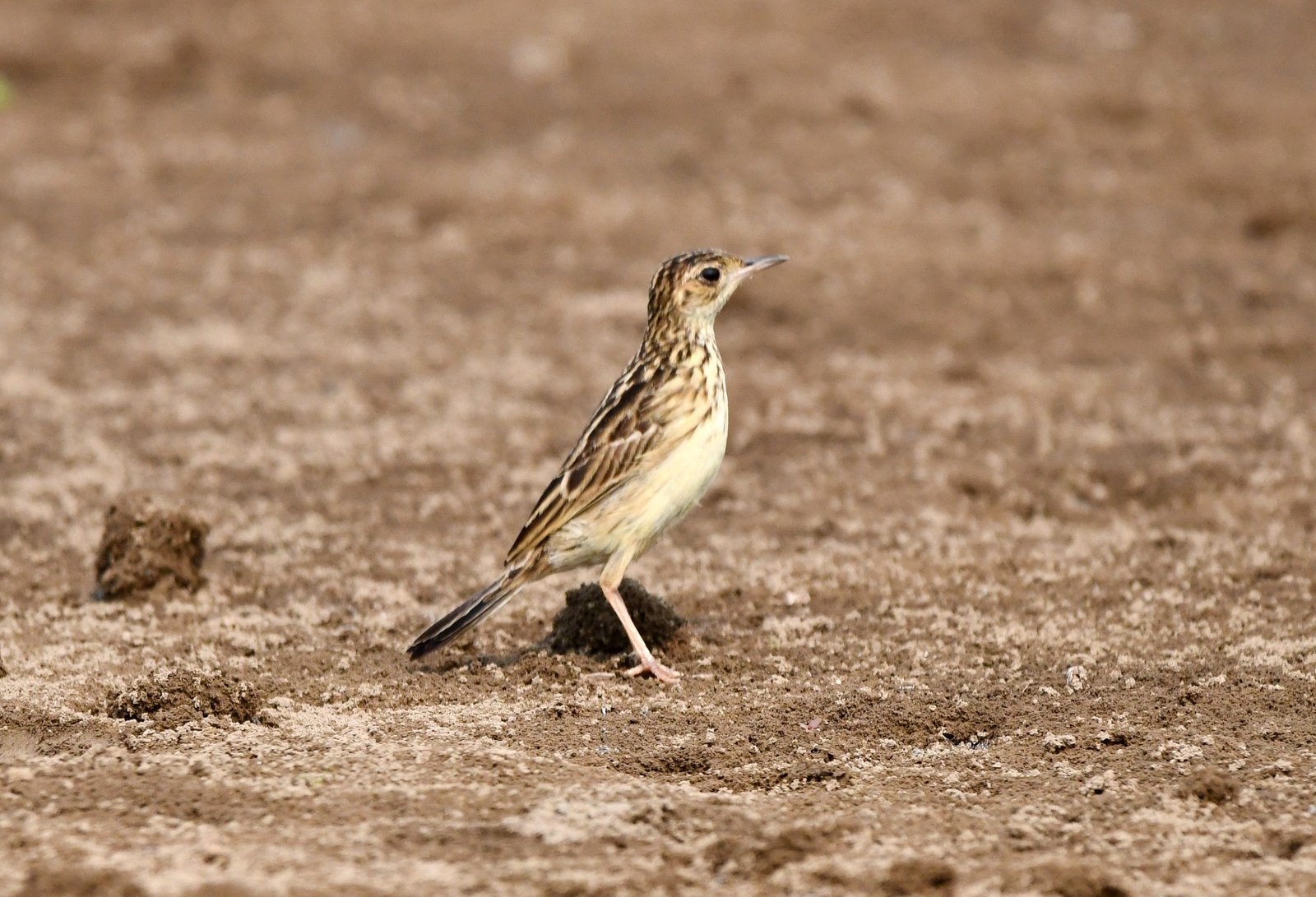
Yellowish Pipit
Anthus chii- Lowland savanna and open grassland
- Pasture and grazing land with trees
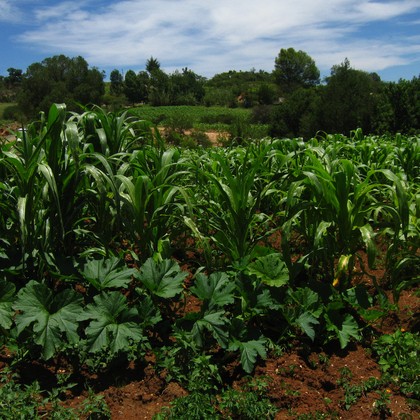 Rice fields and fish ponds
 Freshwater marsh and wet grassland
-
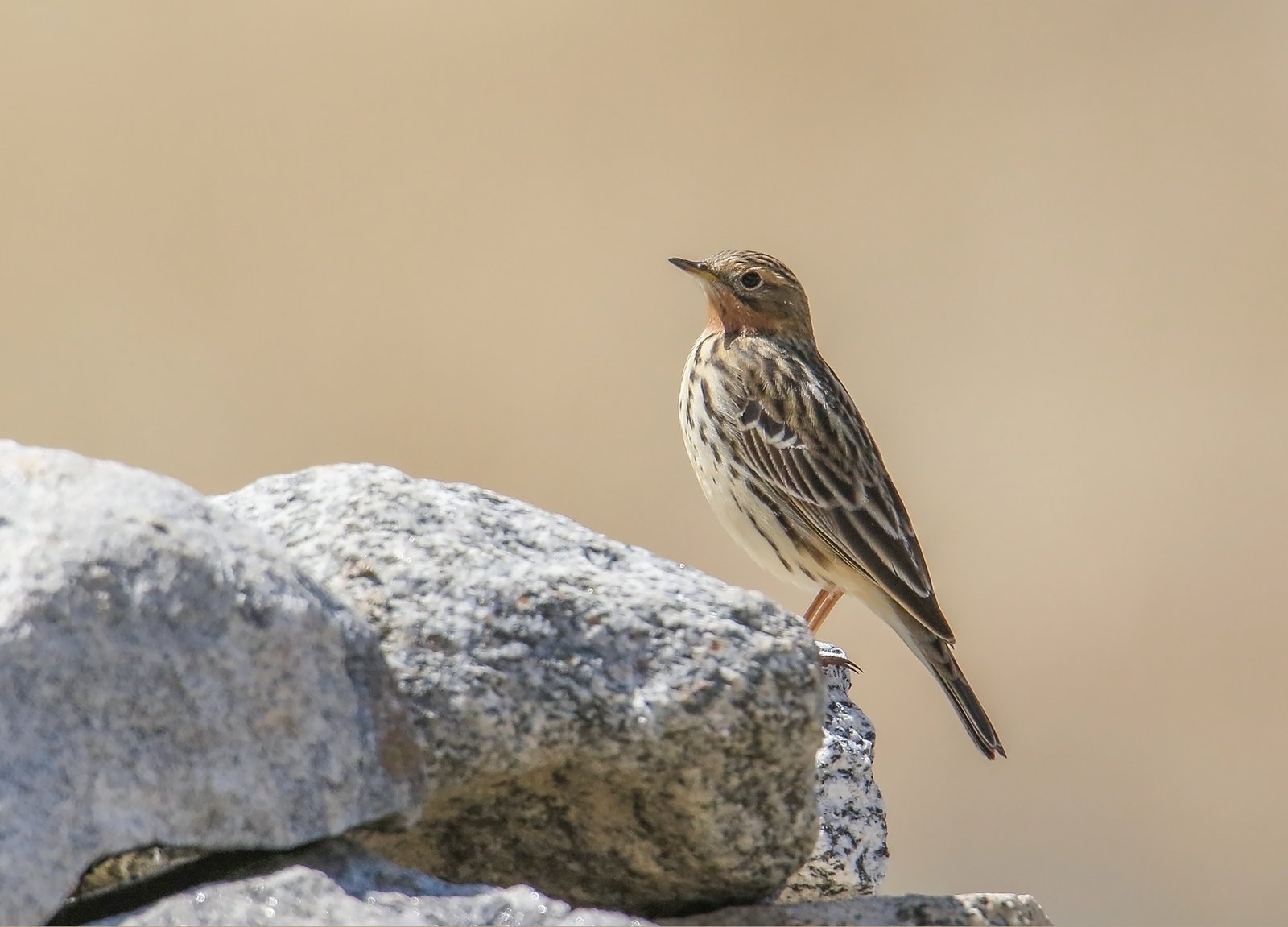
Red-throated Pipit
Anthus cervinus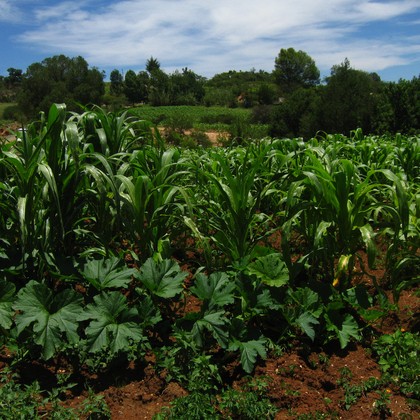 Arable fields and milpa
- Pasture and grazing land with trees
- Freshwater marsh and wet grassland
-
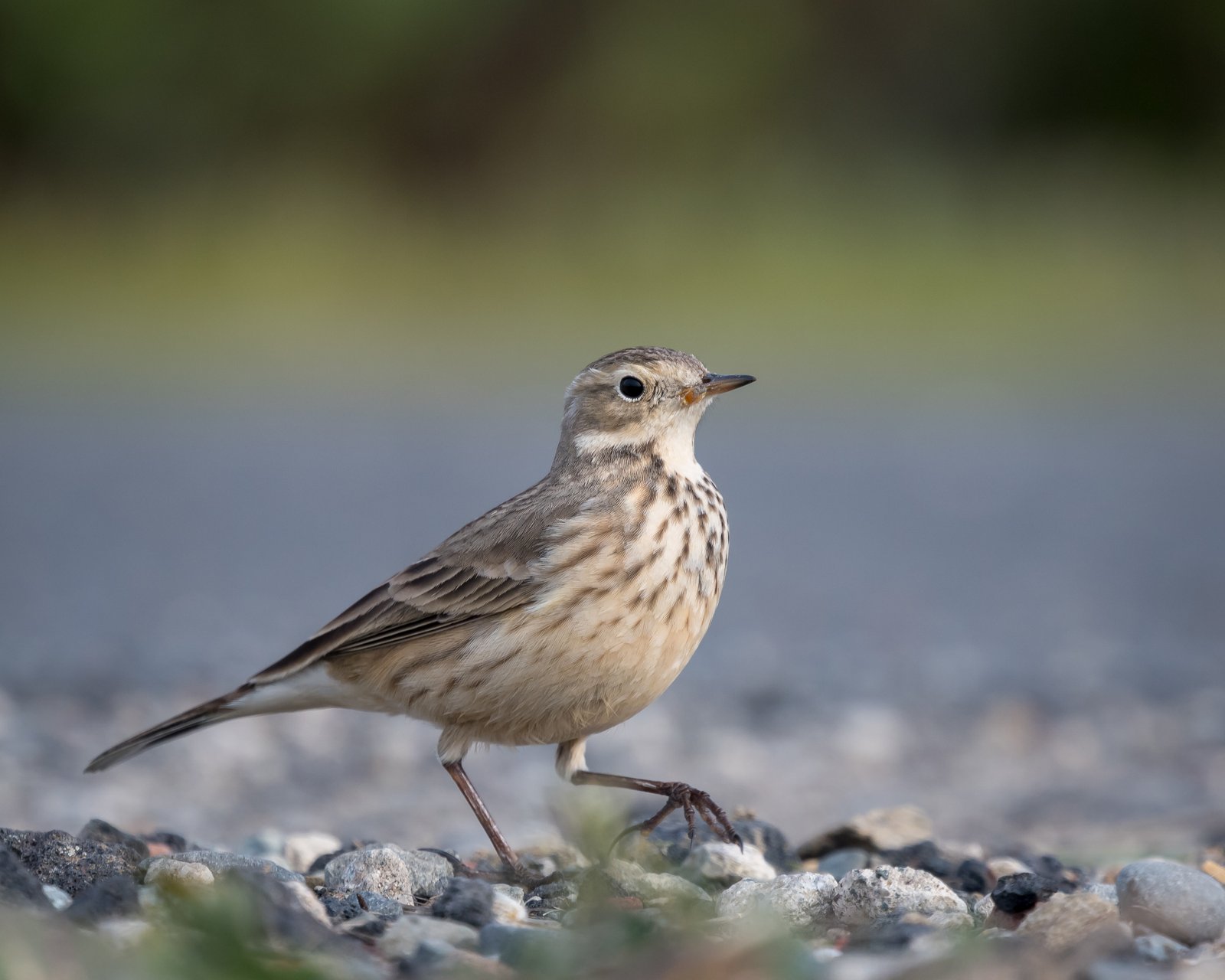
American Pipit
Anthus rubescens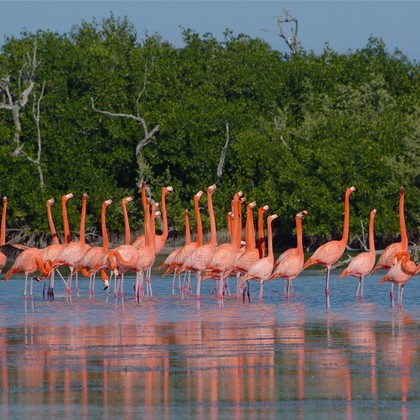 Tidal flats and mudflats
 Lakes, reservoirs and ponds
- Freshwater marsh and wet grassland
- Arable fields and milpa
- Pasture and grazing land with trees
- Lowland savanna and open grassland
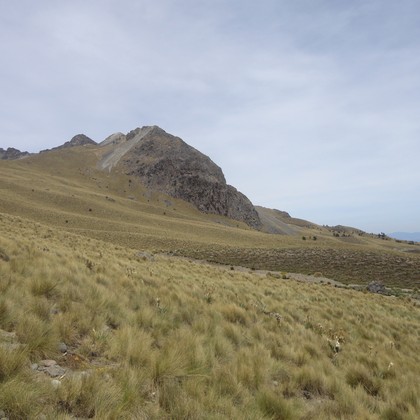 Montane grassland, zacatonal and páramo