All species › Passerines › Wrens › Zapata Wren
Zapata Wren | Ferminia cerverai
Zapatawinterkoning | Ferminia
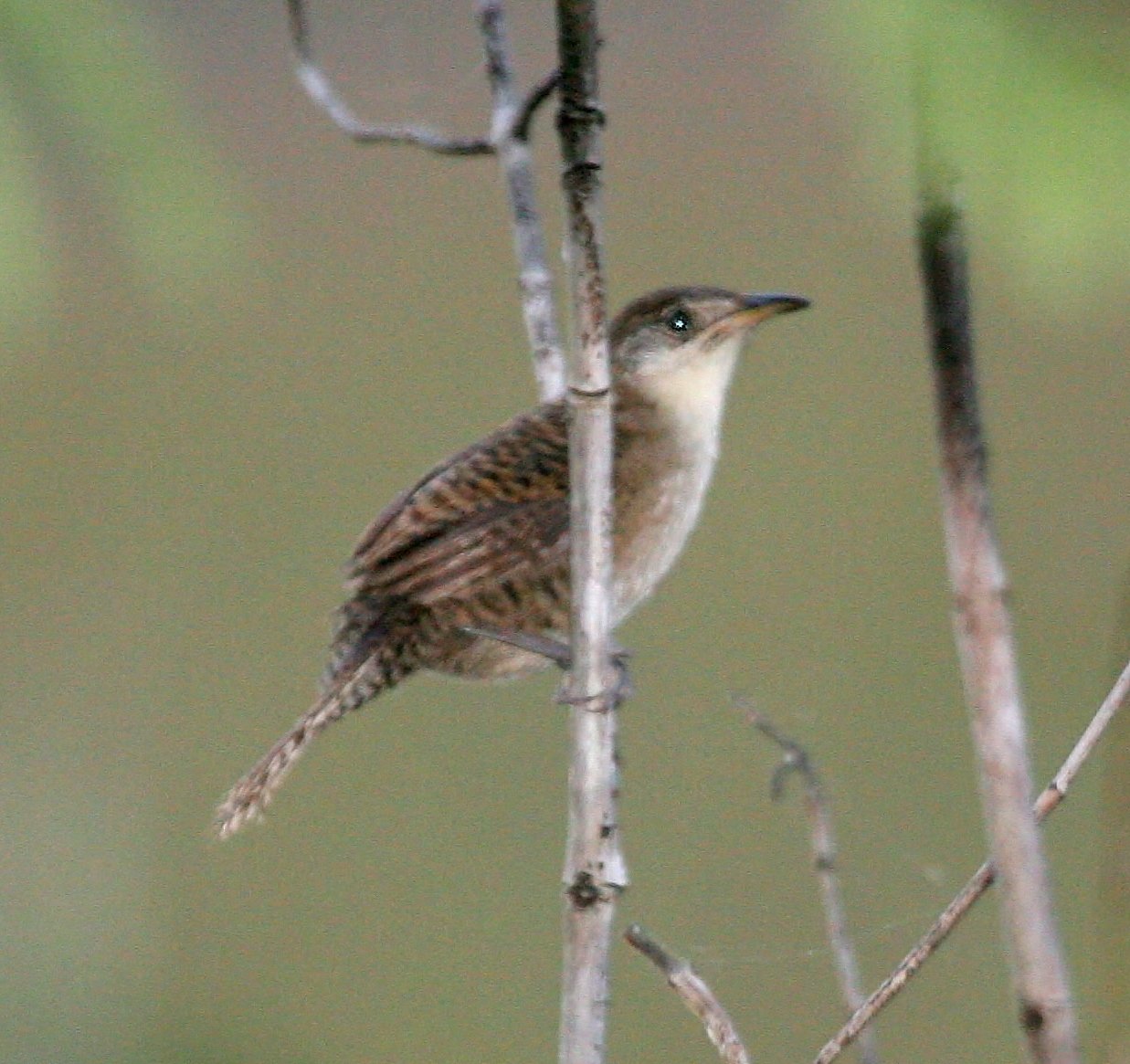
The Zapata Wren is the only member of the genus Ferminia and lives only in the Zapata Swamp in southern Cuba. Thomas Barbour described it in 1926; the scientific name honours the Spanish naturalist Fermín Zanón Cervera, who discovered the bird together with him. With Zapata Rail Mustelirallus cerverai and Zapata Sparrow Torreornis inexpectata, it is one of three birds named after this swamp.
Voice
The song is loud and musical: a bubbling, varied warble introduced by a few guttural notes, usually in series of three or four phrases. There is also a dry, rasping alarm call. Singing birds often perch briefly in view on top of a bush.
Recording: FREDERIC Lionel — CC BY-NC-SA 4.0 · converted to mono · xeno-canto
Identification
15–16 cm, a large wren with short rounded wings and a long tail. The upperparts are grey-brown with dense black barring that continues across wings and tail. A faint pale supercilium runs above the eye. The underparts are pale grey, the flanks and undertail browner and finely barred. The bill is fairly long and slightly curved. The sexes are alike. It flies little and weakly and almost always stays low in the vegetation.
Confusion species
The only other wren in Cuba is Northern House Wren Troglodytes aedon, a rare winter visitor: much smaller, with a short tail and plain brown upperparts without strong barring. Zapata Sparrow Torreornis inexpectata shares the swamp, but is a sparrow with a thick conical bill, a rufous crown and yellowish underparts.
Habitat
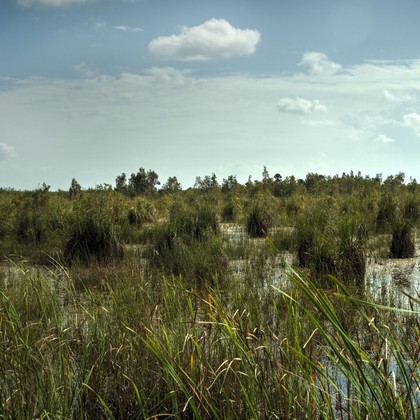
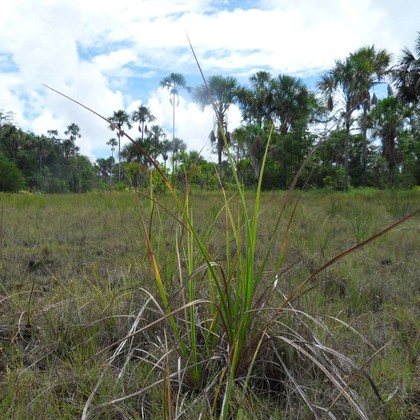
Freshwater marsh with tall tussocks of sawgrass Cladium jamaicense, interspersed with low bushes and scattered low trees, in places that partly dry out in the dry season. It searches the dense vegetation for insects, spiders and other small invertebrates, and occasionally small lizards. The nest is placed low in a sawgrass tussock.
Where the bird is most at home, classified by the vegetation types of the Caribbean.
Range and movements
Only in the Ciénaga de Zapata in Matanzas province, Cuba, in a small area in the northern and western part of the swamp, with the surroundings of Santo Tomás as the best-known site. The species does not occur outside this swamp.
- Resident
- dark = core range, pale = thinly spread
How and when to look
Around Santo Tomás, often with the help of local guides who know the territories. The best time is early morning, when the birds sing; outside the song period the species stays hidden in the tall sawgrass.
Conservation status
Endangered. The range is very small and the species is a sedentary, near-flightless resident. The main threats are dry-season fires, which destroy sawgrass over large areas, drainage and conversion of the swamp to farmland, and predation by introduced mongooses and rats. Most of its habitat lies within protected areas.
Scientific name
Ferminia cerverai | Barbour, 1926
Barbour described the species in 1926 and placed it straight away in the genus where it still stands. He introduced the genus Ferminia in that same work. Ferminia is named after Fermín Zanón Cervera (1875–1944), the Spanish collector and naturalist who discovered the species in the Ciénaga de Zapata. cerverai honours Fermín Zanón Cervera (1875–1944), the Spanish collector and naturalist who discovered the bird in the Ciénaga de Zapata. The specimen the first description was based on came from Santo Tomás, Ciénaga de Zapata, Cuba.