All species › Passerines › Wrens › Northern House Wren
Northern House Wren | Troglodytes aedon
Huiswinterkoning | Chivirín saltapared
Northern House Wren is one of the best-known garden birds of North America, but in the Caribbean a rare winter visitor. The name formerly also covered the house wrens of Central and South America and the Lesser Antilles; these are now treated as separate species, among them Southern House Wren Troglodytes musculus and four endemic species on Dominica, Saint Lucia, Saint Vincent and Grenada. In this guide the name refers to the northern birds only.
Voice
In winter mainly a dry, hard chek and a harsh, rattling chrrrr from dense cover. The bubbling, rapid song is rarely heard in winter quarters.
Recording: Ned Bohman — CC BY-NC-SA 4.0 · converted to mono · xeno-canto
Identification
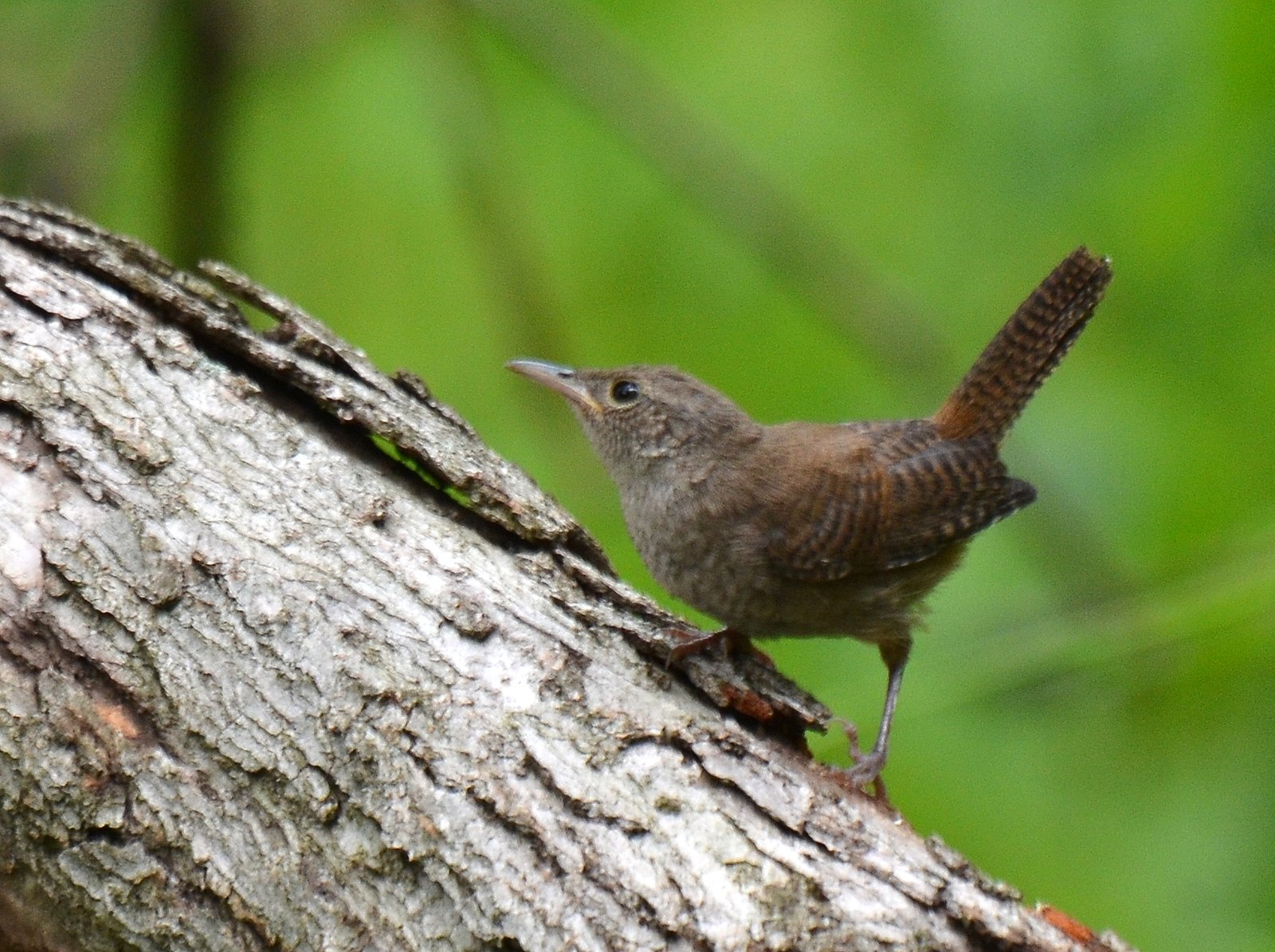
11–13 cm, small and nondescript, with a fairly long, thin, slightly curved bill and a short tail often held cocked. The upperparts are grey-brown, slightly warmer on rump and tail; wings and tail are finely barred blackish. A faint pale supercilium and a narrow pale eye-ring give the face little pattern. The underparts are pale grey to buff, the flanks and undertail brownish and faintly barred. The sexes are alike.
Confusion species
In Cuba, Zapata Wren Ferminia cerverai is much larger, with a long, heavily barred tail, and lives only in the Zapata Swamp. Blue-grey Gnatcatcher Polioptila caerulea also forages low in scrub, but is blue-grey with a long black-and-white tail. Southern House Wren Troglodytes musculus looks almost identical in the field, but their ranges do not overlap.
Habitat
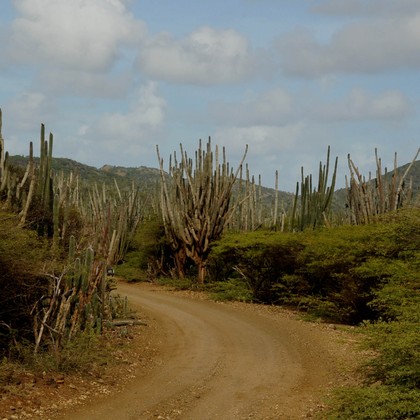
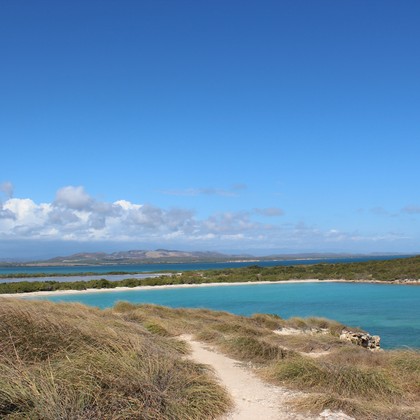
In winter, dense low vegetation: coastal scrub, dry thickets, the edges of coppice forest in the Bahamas, hedgerows, overgrown lots and gardens with plenty of cover. It forages low in bushes, among dead wood and on the ground for insects and spiders.
Where the bird is most at home, classified by the vegetation types of the Caribbean.


Range and movements
In the Caribbean a rare winter visitor to the northern Bahamas and Cuba; a few records from the Cayman Islands and Hispaniola. Outside the region it breeds in southern Canada and much of the United States and winters in the southern United States and Mexico. The range map also shows records from the Lesser Antilles and Trinidad and Tobago; these refer to the resident birds there, now placed in other species.
- Resident
- dark = core range, pale = thinly spread
How and when to look
The best chance is on Grand Bahama, Abaco and New Providence in the winter months. An unfamiliar chek or rattle from dense scrub is the first clue; with patience the bird often shows briefly.
Conservation status
Not threatened. The species is common in North America and benefits from gardens, nest boxes and open, partly cultivated land. In the Caribbean only small numbers winter.
Scientific name
Troglodytes aedon | Vieillot, 1809
Vieillot described the species in 1809 and placed it straight away in the genus where it still stands. He introduced the genus Troglodytes in that same work. Troglodytes is Greek, from troglē 'hole, crevice' and dyein 'to creep into': 'cave-dweller', after the habit of disappearing into crevices and holes while foraging. aedon is Greek aēdōn 'nightingale', after the rich, bubbling song. The specimen the first description was based on came from New York (later designated).