All species › Passerines › Cuban warblers › Yellow-headed Warbler
Yellow-headed Warbler | Teretistris fernandinae
Geelkopzanger | Chillina
The Yellow-headed Warbler is one of the two species of the family Teretistridae, which is found only in Cuba. Both were long placed among the New World warblers; DNA studies led to a family of their own, recognised by the American Ornithological Society since 2017. The Yellow-headed Warbler lives in western Cuba, the Oriente Warbler in the east. In Cuba it is called chillina.
Voice
A rapid, high-pitched, staccato chatter, often repeated as tsi-tsi-tsi; the song is a series of buzzy, grating notes interspersed with softer, more musical ones, such as tsi-tsi-tsi…tzeeet-tzeeet…tsi-tsi-tsi.
Recording: FREDERIC Lionel — CC BY-NC-SA 4.0 · converted to mono · xeno-canto
Identification
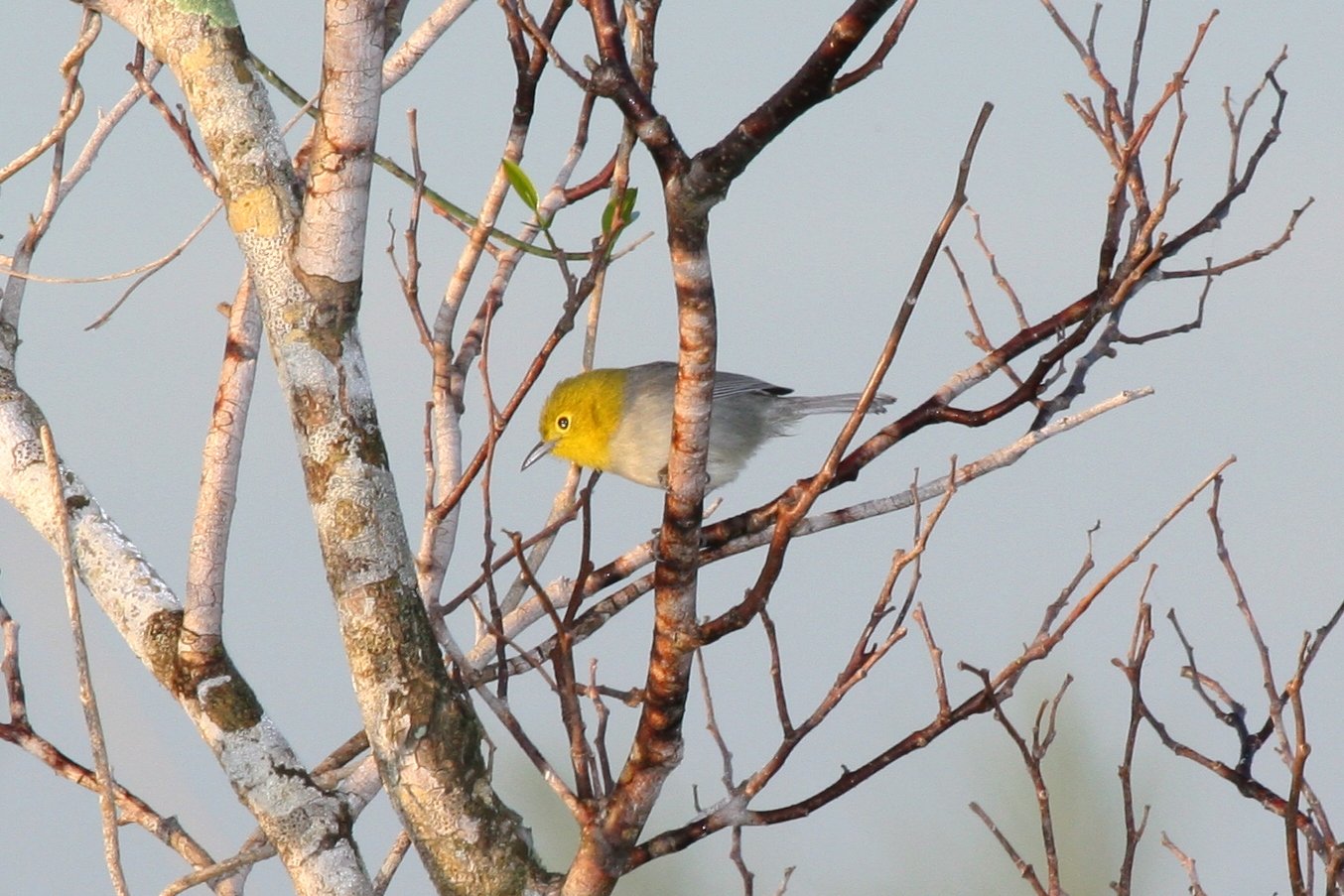
About 13 cm, with a fairly long, slightly decurved, blackish bill with a grey base. The whole head is yellow, tinged olive on the crown and nape, and the eye is ringed yellow. The upperparts are grey, the underparts paler greyish white. The legs are bluish grey. The sexes are alike.
Confusion species
Oriente Warbler Teretistris fornsi has a grey crown, a yellow face and yellow underparts, and lives in eastern Cuba; the ranges barely overlap. Olive-capped Warbler Setophaga pityophila of the western pine forests has a yellow throat and breast, but an olive-green cap and white wing bars. The female Hooded Warbler Setophaga citrina, a winter visitor, is olive-green above and yellow below.
Habitat
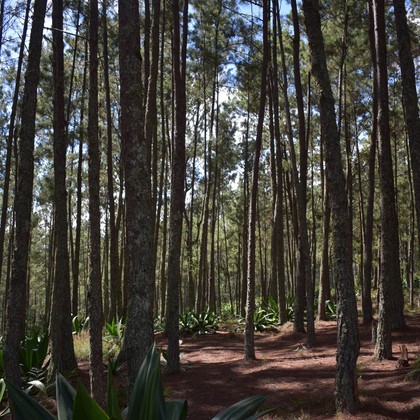
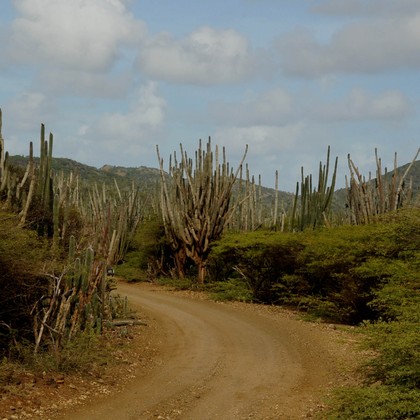
All forest types with a relatively undisturbed understorey, from the lowlands to the mountains: dry and semi-evergreen forest, limestone forest on the mogotes, pine forest and coastal woodland, as well as scrubby thickets in drier areas. It searches the understorey and the ground up to the middle level for insects and other invertebrates, gleaned from branches and foliage. It often forages in flocks and then forms the core of mixed flocks, in winter also with North American warblers. It breeds from March to July in a cup placed low in a bush, vine or sapling; the clutch is two or three eggs.
Where the bird is most at home, classified by the vegetation types of the Caribbean.




Range and movements
Only in western Cuba, from the Guanahacabibes Peninsula and the north coast of the west east into Matanzas Province, including the Zapata Peninsula, and on the Isla de la Juventud and Cayo Cantiles. The species does not occur outside Cuba.
- Resident
- dark = core range, pale = thinly spread
How and when to look
Found in the Sierra del Rosario, on the Zapata Peninsula and on Guanahacabibes. The chatter of a flock is often the first sign; other species move along with it. Especially in winter such a flock is worth following.
Conservation status
Not threatened. The species is common in western Cuba as long as the forest understorey remains intact.
Scientific name
Teretistris fernandinae | (Lembeye, 1850)
Lembeye described the species in 1850 as Anabates fernandinae; because it was later moved to another genus, the author and year stand in brackets. The genus Teretistris was introduced in 1855 by Cabanis. Teretistris is Greek, from teretisma 'whistling, twittering' (teretizō 'to twitter'), after the shrill calls of these warblers. fernandinae honours José María Herrera y Herrera, Count of Fernandina (1788–1864), a Spanish landowner in Cuba; Fernandina was also an early name for Cuba. The specimen the first description was based on came from Cuba.