All species › Cuckoos › Cuckoos › Yellow-billed Cuckoo
Yellow-billed Cuckoo | Coccyzus americanus
Geelsnavelkoekoek | Cuclillo piquiamarillo
The Yellow-billed Cuckoo is a slender, long-tailed cuckoo that migrates across the Caribbean islands between North and South America. In spring and autumn it is a common passage migrant in the southern Bahamas and the Greater Antilles; in Cuba, Hispaniola, Puerto Rico, Jamaica and the Virgin Islands it also breeds in small numbers in summer. It keeps hidden in dense foliage and is usually noticed only when it flies off or calls.
Voice
A wooden, knocking ka-ka-ka-ka-kow-kow-kowlp-kowlp, slowing and dropping towards the end; also a drawn-out, hollow cooo, repeated at long intervals. Heard on the breeding grounds in summer; migrants are mostly silent.
Recording: David Tattersley — CC BY-NC-SA 4.0 · converted to mono · xeno-canto
Identification
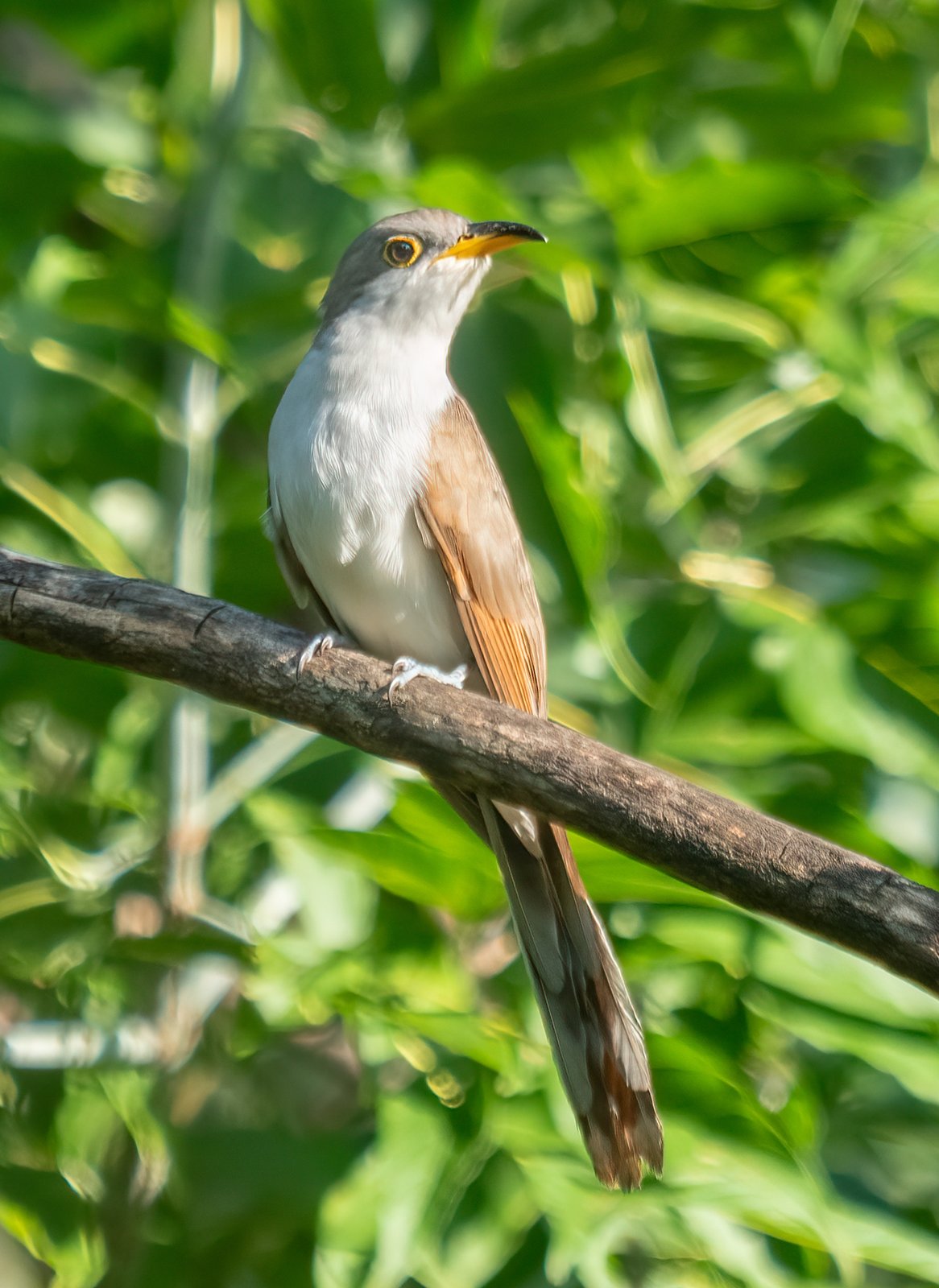
26–30 cm, about half of it tail. The upperparts are plain grey-brown, the underparts pure white without markings. The bill is slightly curved; the upper mandible is black, the lower largely yellow. A narrow yellow ring surrounds the eye. In flight a rufous patch in the primaries is visible, often visible on a perched bird as a rusty edge to the folded wing. The underside of the tail is black with large white spots at the feather tips, giving a strongly contrasting pattern. The flight is fast and direct, on pointed wings. The sexes are alike; young birds have less yellow on the bill and a less distinct tail pattern.
Confusion species
Mangrove Cuckoo Coccyzus minor also has a yellow lower mandible and large white tail spots, but has a black eye mask, ochre underparts and no rufous in the wing. Black-billed Cuckoo Coccyzus erythropthalmus, a scarce passage migrant, has an all-dark bill, a red eye-ring in adults, at most a hint of rufous in the wing and narrow white tips on the underside of the tail. Dark-billed Cuckoo Coccyzus melacoryphus has a black bill, a mask and ochre underparts. The lizard cuckoos of the Greater Antilles, such as Great Lizard Cuckoo Coccyzus merlini, are much larger, with a long, straight bill.
Habitat
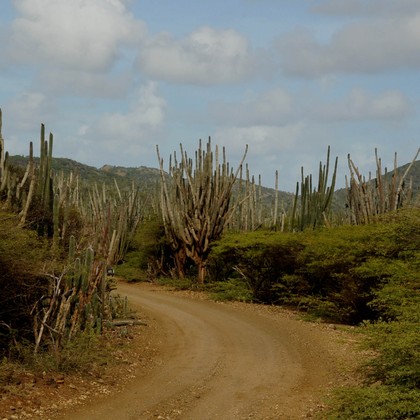
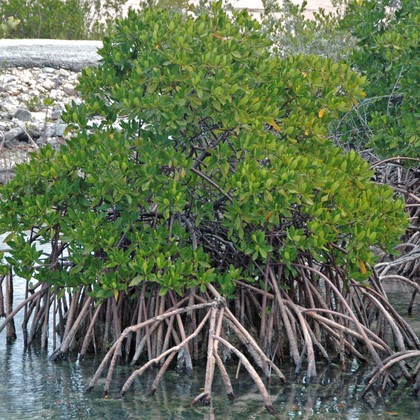
In the region mainly dry forest and scrub in the lowlands and along the coast, also moister deciduous forest and the edges of mangroves; on migration also in gardens, parks and copses. In Puerto Rico it breeds mainly in the dry forest of the coastal regions. It forages slowly and hidden in the foliage, taking large insects, especially caterpillars, as well as cicadas, grasshoppers, occasionally small lizards and berries; it sometimes catches insects in flight. The nest is a loose, flat platform of twigs in a bush or tree; the species incubates its own eggs, although it occasionally lays an egg in another bird's nest.
Where the bird is most at home, classified by the vegetation types of the Caribbean.


Range and movements
Breeds in small numbers from May to August in Cuba, Hispaniola, Puerto Rico, Jamaica and the Virgin Islands, mainly in the dry lowlands. As a passage migrant common in the southern Bahamas, Cuba, Hispaniola and Puerto Rico, and in smaller numbers in the Cayman Islands, the Turks and Caicos Islands, San Andrés, the Lesser Antilles, Aruba, Curaçao and Bonaire, and in Trinidad and Tobago, where it is rare. Wintering in the region is hardly known. Outside the region it breeds from southern Canada through the United States to Mexico and winters in South America, south to northern Argentina.
- Summer visitor (c. Oct–Mar)
- Passage (Mar–Apr, Oct–Nov)
- dark = core range, pale = thinly spread
How and when to look
The best chance is during migration, especially in September and October and again in March and April, in dry forest and scrub near the coast. A bird sitting still in dense foliage is often noticed only when it flies off and shows the rufous in the wing. In summer breeding birds give themselves away by their knocking call.
Conservation status
Globally not threatened, but it has declined sharply in western North America; the western population has been listed as threatened in the United States since 2014. In the Caribbean the species is scarce as a breeder and common as a passage migrant on the northern islands.
Scientific name
Coccyzus americanus | (Linnaeus, 1758)
Linnaeus described the species in 1758 as Cuculus americanus; because it was later moved to another genus, the author and year stand in brackets. The genus Coccyzus was introduced in 1816 by Vieillot. Coccyzus is Greek, from kokkuzō 'to cry cuckoo', after the cuckoo's call. americanus is Latin for 'American'. The specimen the first description was based on came from South Carolina, United States.