All species › Waterfowl › Ducks and geese › White-cheeked Pintail
White-cheeked Pintail | Anas bahamensis
Bahamapijlstaart | Pato gargantillo
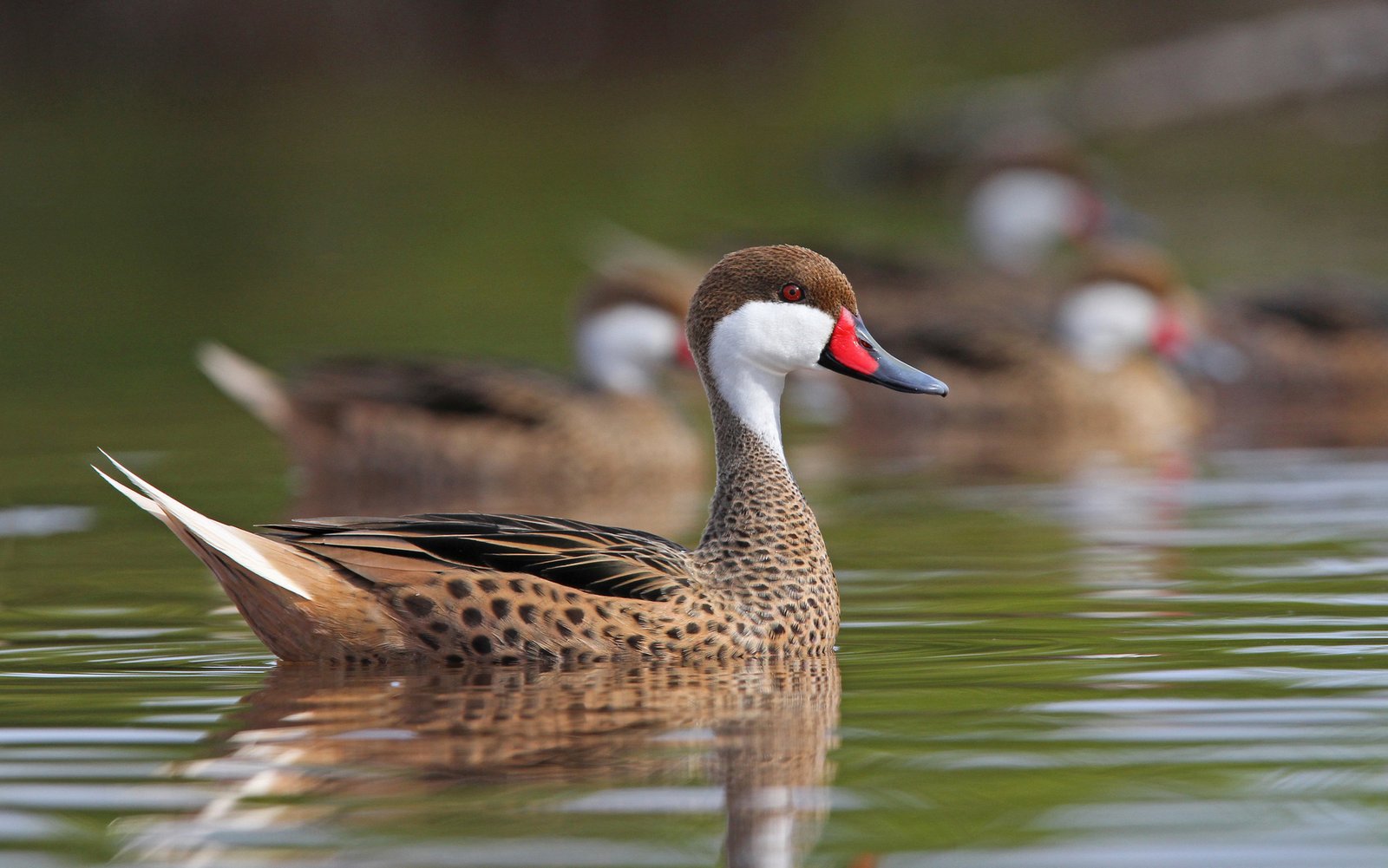
The White-cheeked Pintail is the native dabbling duck of the Caribbean: brown, with crisp white cheeks and throat and a red patch at the base of the bill. Unlike most ducks in this guide it is present year-round and breeds on many islands, especially by brackish and salt water. In Cuba it is called pato de Bahamas, in Puerto Rico pato quijada colorada.
Voice
Mostly silent. The male gives a soft, high squeaky whistle, especially in display; the female a series of soft, descending quacks.
Recording: Ignacio Escobar — CC BY-NC-SA 4.0 · converted to mono · xeno-canto
Identification
38–50 cm, slender, with a pointed, pale tail. The plumage is warm brown with dark spots on breast and flanks; cheeks, throat and foreneck are bright white and sharply set off from the brown crown. The bill is blue-grey with a red patch on each side of the base. The sexes are similar; the female is duller, with a shorter tail and less red on the bill. In flight it shows a green speculum with broad buff borders.
Confusion species
No other duck in the region combines white cheeks with a red bill base. Female Northern Pintail Anas acuta is larger and greyer brown, with a plain grey bill and no white cheeks. Blue-winged Teal Spatula discors has a white crescent in front of the eye on a blue-grey head in the male, and pale blue forewings.
Habitat
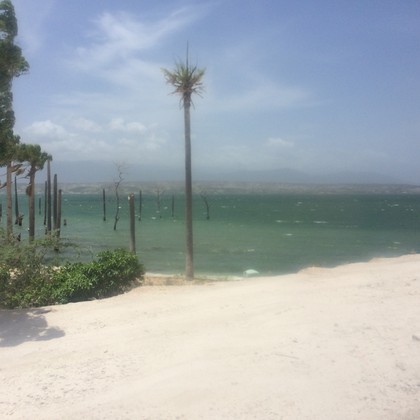
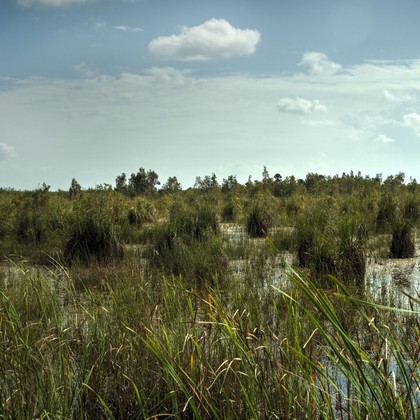
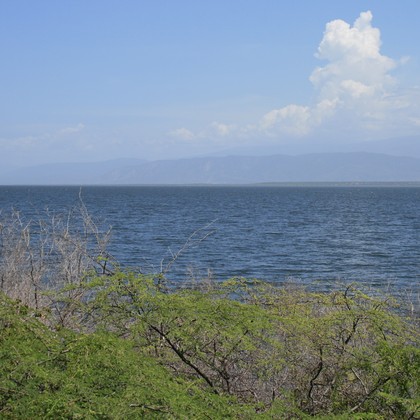
Mainly brackish and salt water: coastal lagoons, salt ponds, mangroves, tidal creeks and shallow bays, but also freshwater lakes, ponds and marshes, including sewage ponds and rice fields. It dabbles in shallow water for aquatic plants, seeds and small invertebrates. The nest is on the ground in dense vegetation or under mangrove roots, close to water; on many islands breeding can take place in any season.
Where the bird is most at home, classified by the vegetation types of the Caribbean.



Range and movements
Resident in the Bahamas and the Turks and Caicos Islands, in Cuba, where it is a fairly common breeder, on Hispaniola (Haiti and the Dominican Republic), Puerto Rico and the Virgin Islands. Local in the Lesser Antilles, on islands with suitable lagoons and salt ponds. Also on the ABC islands; scarce in Trinidad and Tobago, Jamaica and the Cayman Islands. Outside the region along the coasts of northern South America and, as another subspecies, from Ecuador and Peru to Chile and from Brazil to Argentina, and in the Galápagos Islands. A vagrant to Florida, where escaped ornamental birds also turn up.
- Resident
- Summer visitor (c. Oct–Mar)
- Winter visitor (c. Apr–Sep)
- Passage (Mar–Apr, Oct–Nov)
- dark = core range, pale = thinly spread
How and when to look
Salt ponds and shallow coastal lagoons are the best places, often with shorebirds and flamingos; the white cheeks are visible even at a distance. In the Bahamas, Puerto Rico and the ABC islands it can be found at many sites.
Conservation status
Least Concern. On many islands the species has declined through hunting, the loss and development of coastal lagoons and mangroves, and predation by introduced mongooses, rats and feral cats. Small island populations are vulnerable to drought and hurricanes.
Scientific name
Anas bahamensis | Linnaeus, 1758
Linnaeus described the species in 1758 and placed it straight away in the genus where it still stands. He introduced the genus Anas in that same work. Anas is the Latin word for 'duck'. bahamensis means 'of the Bahamas', where the described specimen came from. The specimen the first description was based on came from the Bahamas.