All species › Passerines › Thrushes › Western Red-legged Thrush
Western Red-legged Thrush | Turdus plumbeus
Westelijke roodpootlijster | Zorzal patirrojo occidental
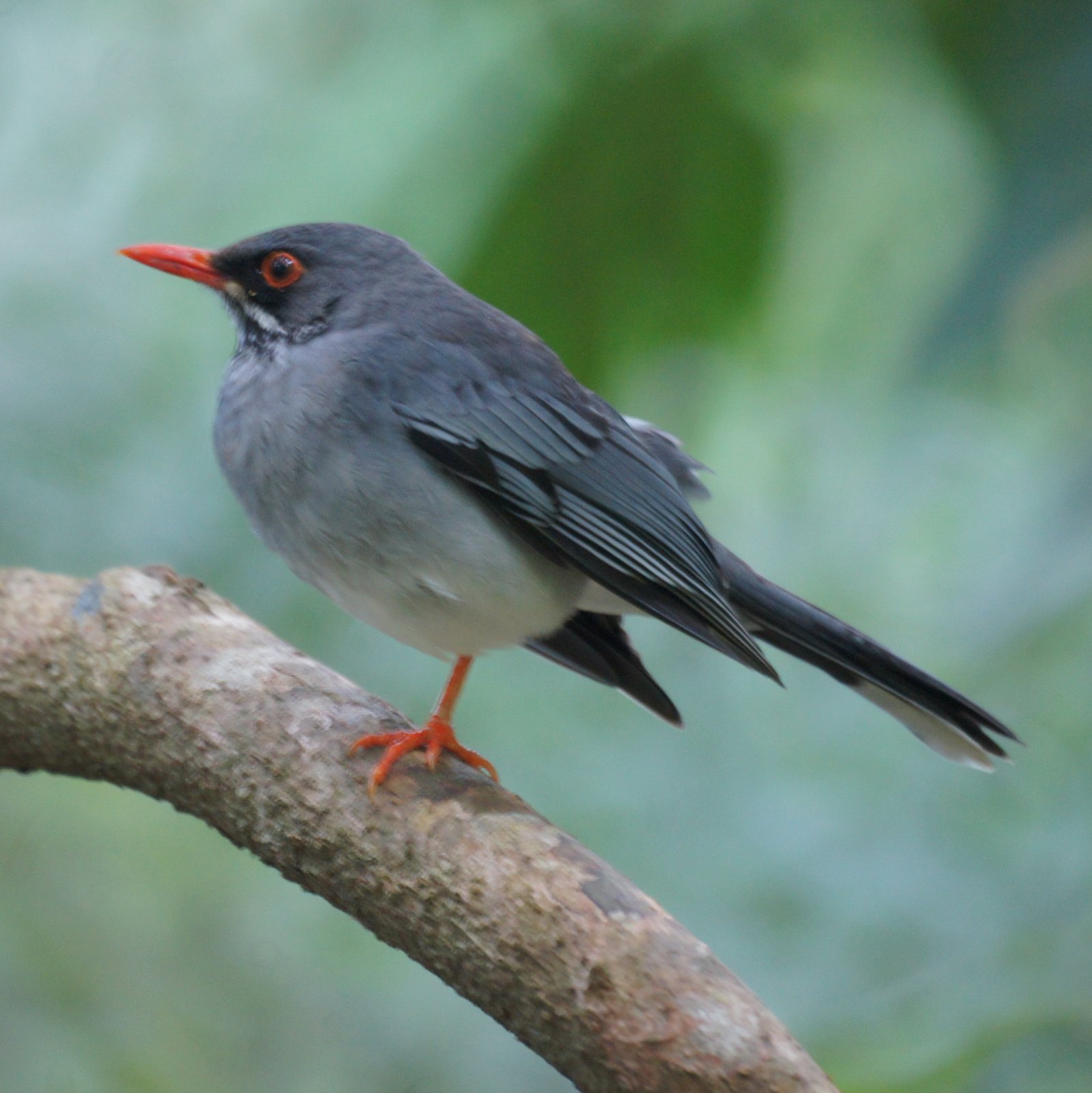
The Western Red-legged Thrush is the western half of the former Red-legged Thrush and has been a separate species since 2025, alongside the Eastern Red-legged Thrush of Hispaniola, Puerto Rico and Dominica. In Cuba it is one of the best known forest birds, called zorzal real there. It often hops along forest trails and lawns with its tail raised.
Voice
The song is a slow series of short, varied phrases of one to three notes. Calls include a low wet-wet, a loud chu-week and a rapid, high chatter when disturbed; calls are often given before dawn.
Recording: FREDERIC Lionel — CC BY-NC-SA 4.0 · shortened to the first 60 s, mono · xeno-canto
Identification
25–28 cm, a large, long-tailed thrush. The upperparts are slate grey, the throat white with black streaks. Bill, eye-ring and legs are orange-red. The tail is dark with white tips to the outer feathers. The underparts vary by subspecies: in the Bahamas grey with a white belly, in western and central Cuba with more white on throat and cheeks and an orange lower belly, in eastern Cuba with beige-orange rear flanks and undertail, and in the Cayman Islands paler, with less orange. The sexes are alike. Juveniles are duller, with dark breast spots.
Confusion species
Eastern Red-legged Thrush Turdus ardosiaceus does not share the same range and has a white, not orange-tinged, belly. American Robin Turdus migratorius has a red-orange breast, a yellow bill and dark legs, and is a rare winter visitor in Cuba and the Bahamas. Cuban Solitaire Myadestes elisabeth is smaller and olive-brown, with a short bill.
Habitat
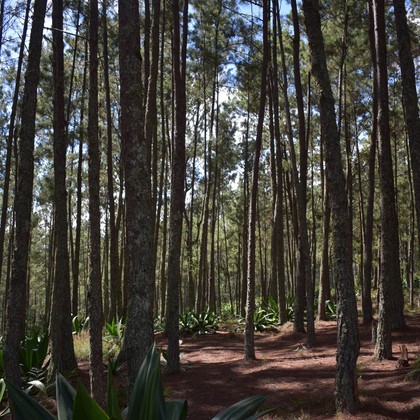
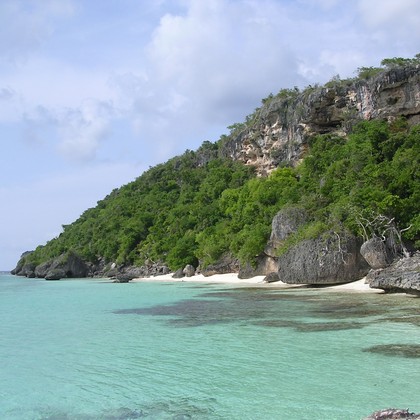
Forest of almost every type, from dry lowland, coastal and limestone forest to moist montane forest; in the Bahamas also pine forest and coppice on limestone. Also coffee plantations, gardens and parks. It forages on the ground and in the lower storeys. It eats mainly fruit, supplemented with insects, snails, frogs and lizards. The nest is a cup of grass and leaves in a tree or palm.
Where the bird is most at home, classified by the vegetation types of the Caribbean.





Range and movements
Resident in the northern Bahamas (including Grand Bahama, Abaco, Andros, the Berry Islands and Eleuthera), Cuba with the Isla de la Juventud and the larger cays, and Cayman Brac; extirpated from Grand Cayman. Formerly also on the Swan Islands off Honduras, where it no longer occurs.
- Resident
- dark = core range, pale = thinly spread
How and when to look
In Cuba found almost everywhere in woodland and parks, for example on the Zapata Peninsula and in the Sierra del Rosario. In the Bahamas in gardens and woodland edges on Andros and Abaco. At dawn birds forage on open ground along trails.
Conservation status
Not threatened. The species is common in Cuba and tolerates secondary forest and gardens. The small Cayman population is confined to Cayman Brac and therefore vulnerable to hurricanes and habitat loss.
Scientific name
Turdus plumbeus | Linnaeus, 1758
Linnaeus described the species in 1758 and placed it straight away in the genus where it still stands. He introduced the genus Turdus in that same work. Turdus is the ordinary Latin word for 'thrush'. plumbeus is Latin for 'leaden, lead-coloured', after the grey plumage. The specimen the first description was based on came from Andros and Eleuthera, Bahamas.