All species › Waterfowl › Ducks and geese › West Indian Whistling Duck
West Indian Whistling Duck | Dendrocygna arborea
West-Indische fluiteend | Yaguasa
The West Indian Whistling Duck is the largest of the whistling ducks and is confined to the West Indies. It is a shy, largely nocturnal duck that spends the day hidden in mangroves and swamp forest and flies out to feed only after dusk. In Cuba it is called yaguasa; the name chiriría, used on several islands, imitates its call.
Voice
A shrill whistled chee-ree-ree-a, the origin of the name chiriría, given mainly at dusk and at night and often in flight. Flocks call together; resting birds give softer squeaky notes.
Recording: Eric DeFonso — CC BY-NC-SA 4.0 · shortened to the first 60 s, mono · xeno-canto
Identification
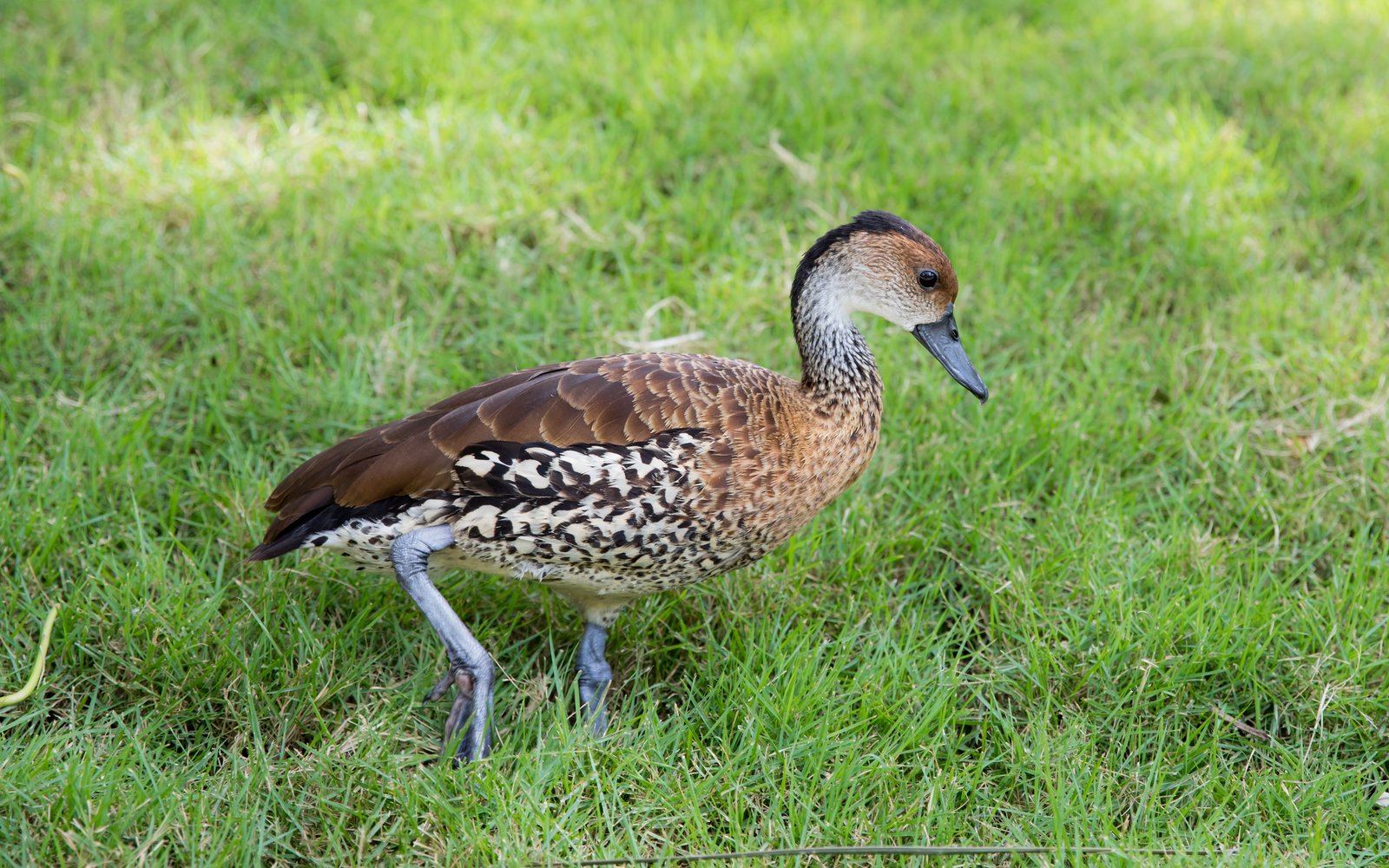
48–58 cm, long-legged and long-necked, standing upright like all whistling ducks. The upperparts are dark brown with pale feather edges, the crown and a stripe down the hindneck dark. Face and foreneck are paler brown, the throat almost white. The flanks are white with bold black spots, the first thing to stand out in a resting group. The bill is black and the long legs dark grey. In flight the wings are uniformly dark with greyish-brown coverts and no white wing stripe, and the feet project beyond the tail. The sexes are alike; juveniles are duller, with less sharply defined flank spots.
Confusion species
Black-bellied Whistling Duck Dendrocygna autumnalis has a red bill, grey face, black belly and a broad white wing stripe in flight. Fulvous Whistling Duck Dendrocygna bicolor is smaller and warm ochre-brown, with creamy flank stripes rather than spots and a white U on the rump. West Indian differs from both in its spotted flanks and plain dark wing.
Habitat
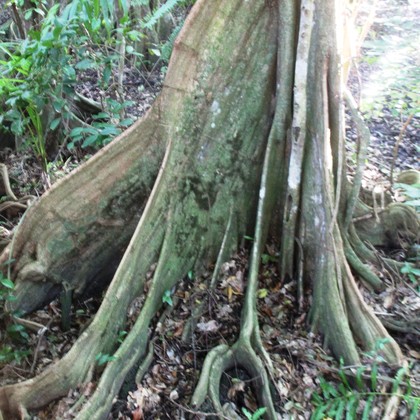
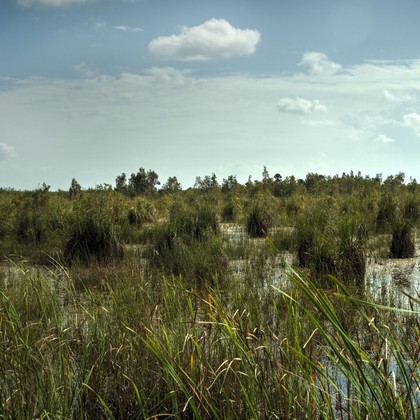
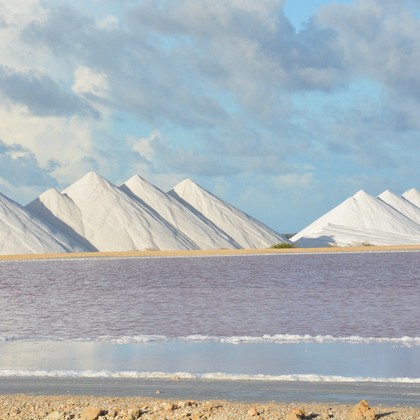
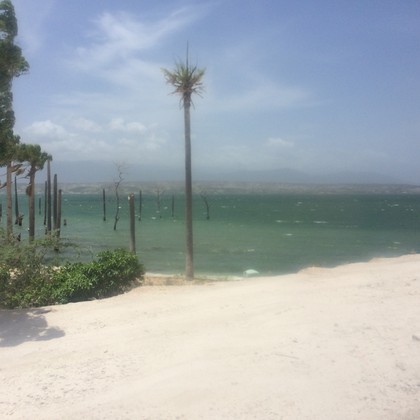
Mangroves, palm swamp forest, freshwater marshes, lagoons and ponds, including those near farmland. It roosts by day in dense cover and feeds at night, in shallow water and on land, on seeds, grasses, aquatic plants and fruit, including that of the royal palm. The nest is on the ground in thick vegetation, in a tree cavity or in the leaf bases of a palm.
Where the bird is most at home, classified by the vegetation types of the Caribbean.

Range and movements
Scattered through the Bahamas and the Turks and Caicos Islands, Cuba with the Isla de la Juventud, the Cayman Islands, Jamaica and Hispaniola (Haiti and the Dominican Republic). Scarce and local in Puerto Rico and the Virgin Islands; in the Lesser Antilles chiefly on Antigua and Barbuda, elsewhere irregular or gone. On many islands the populations are small and scattered. The species does not occur outside the West Indies.
- Resident
- Winter visitor (c. Apr–Sep)
- Passage (Mar–Apr, Oct–Nov)
- dark = core range, pale = thinly spread
How and when to look
Best at dusk by fresh or brackish water at the edge of mangroves, when small groups fly out whistling to their feeding grounds; at night the calls give away where the birds are. In the Cayman Islands the ducks on some ponds are used to people and can be seen there by day. Resting flocks in dense mangrove can seldom be found without disturbing them.
Conservation status
Near Threatened. The range is fragmented and numbers have fallen steeply on many islands through hunting of the birds and their eggs, the draining and building over of wetlands, mangrove cutting and predation by introduced mongooses. Drought and hurricanes hit the small populations hard. Several islands run education and conservation programmes for the species and its wetlands.
Scientific name
Dendrocygna arborea | (Linnaeus, 1758)
Linnaeus described the species in 1758 as Anas arborea; because it was later moved to another genus, the author and year stand in brackets. The genus Dendrocygna was introduced in 1837 by Swainson. Dendrocygna comes from the Greek dendron, 'tree', and the Latin cygnus, 'swan' — 'tree swan', because some whistling ducks perch or nest in trees. arborea is Latin for 'of the trees', after its habit of perching and nesting in trees. The specimen the first description was based on came from Jamaica.