All species › Waterfowl › Ducks and geese › Fulvous Whistling Duck
Fulvous Whistling Duck | Dendrocygna bicolor
Rosse fluiteend | Suirirí bicolor
The Fulvous Whistling Duck is a warm ochre-brown whistling duck found in the tropics of four continents. In the West Indies it is a fairly recent colonist: it spread from the south during the twentieth century, and breeding was first recorded in Cuba in 1964. Above all in Cuba, where it is called yaguasín, it is now a common bird of rice fields and marshes.
Voice
A clear whistled kee-wee-ooo, often in flight and also at night. Flocks keep up a continuous whistling.
Recording: José María Loaiza B. — CC BY-NC-SA 4.0 · converted to mono · xeno-canto
Identification
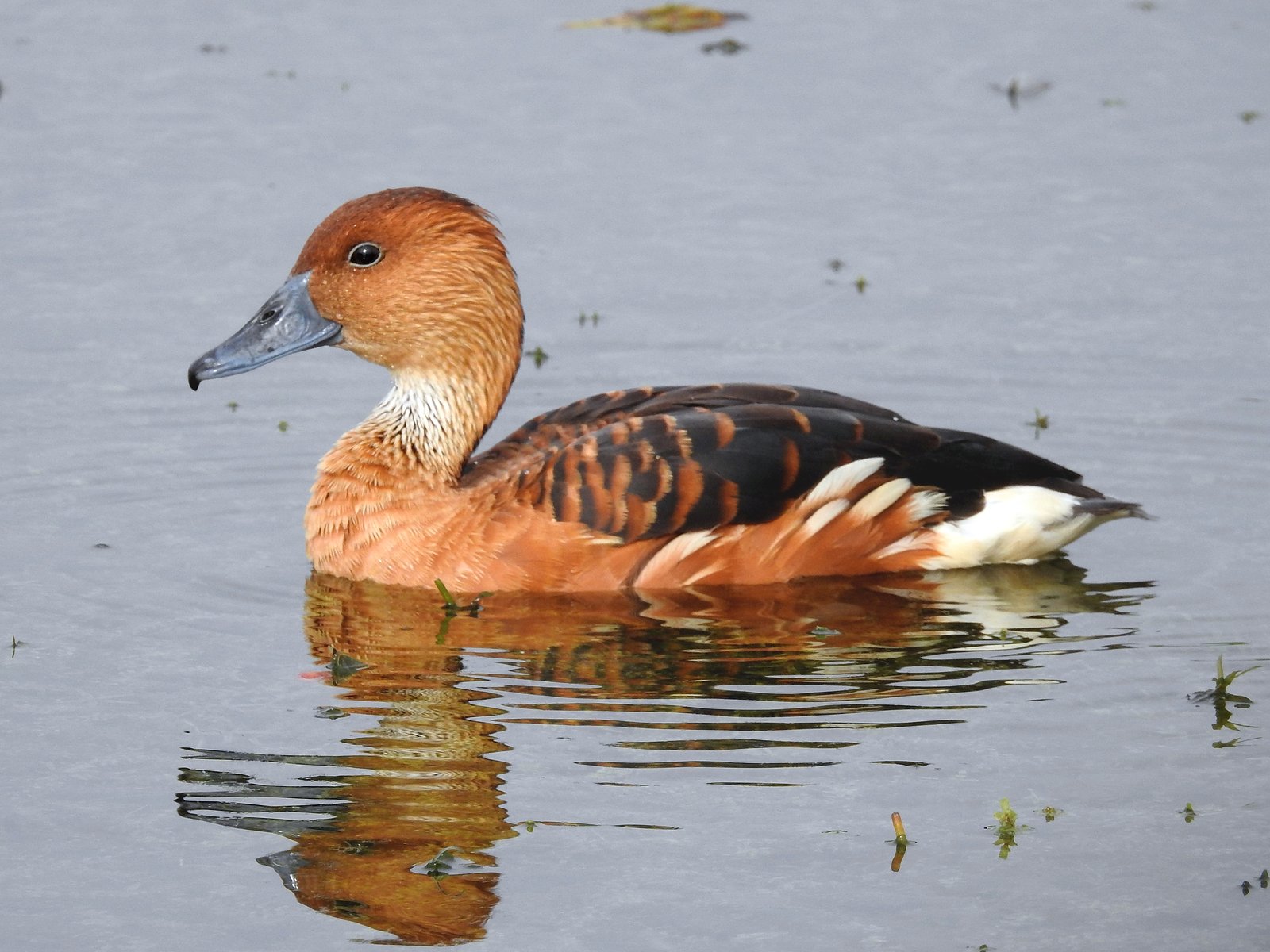
45–53 cm, with long neck and long legs. Head, neck and underparts are warm ochre-brown, the crown and a stripe down the hindneck darker brown. The neck is finely streaked white. The back is dark brown with broad rufous feather edges. A row of creamy-white, elongated feathers runs along the flanks. Bill and legs are dark bluish-grey. In flight the wings are uniformly dark, and a white U on the uppertail coverts shows against the black tail. The sexes are alike; juveniles are duller, with less visible flank stripes.
Confusion species
West Indian Whistling Duck Dendrocygna arborea is larger and darker, with white flanks spotted black and no white U at the base of the tail. Black-bellied Whistling Duck Dendrocygna autumnalis has a red bill, black belly and white wing band. Juvenile Black-bellied already show the white wing band, which Fulvous always lacks.
Habitat
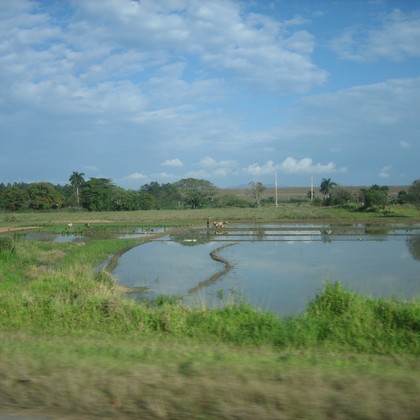
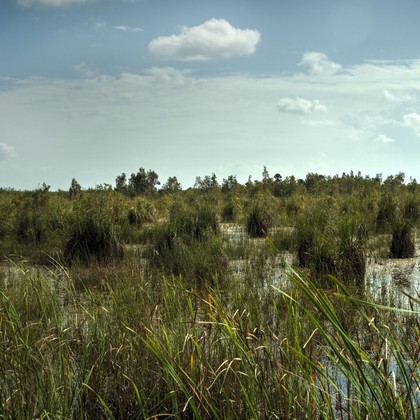
Rice fields, freshwater marshes, flooded grassland and shallow ponds rich in aquatic plants. It feeds in shallow water, often swimming and up-ending, on the seeds of grasses and aquatic plants. The nest is in dense marsh vegetation or in rice fields.
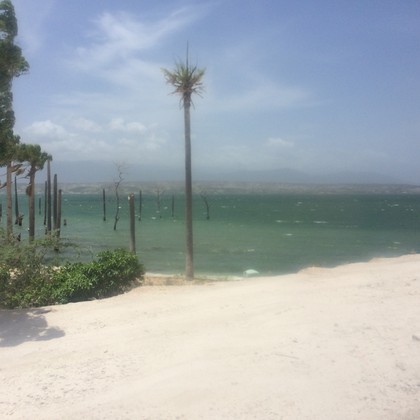
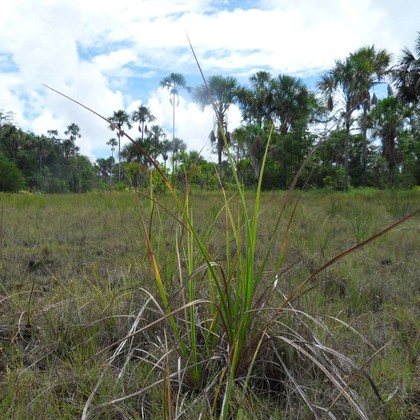
Where the bird is most at home, classified by the vegetation types of the Caribbean.
Range and movements
Most numerous in Cuba; also on Hispaniola (Haiti and the Dominican Republic) and in Puerto Rico, where the species is more local. Regular on Barbados and Trinidad, scarce in the Bahamas, the Virgin Islands and the Turks and Caicos Islands; elsewhere in the Lesser Antilles and on Jamaica and the Cayman Islands an irregular visitor. Numbers fluctuate with water levels and rice growing. Outside the region from the southern United States and Mexico to Argentina, in sub-Saharan Africa, Madagascar and South Asia.
- Resident
- Summer visitor (c. Oct–Mar)
- Winter visitor (c. Apr–Sep)
- Passage (Mar–Apr, Oct–Nov)
- dark = core range, pale = thinly spread
How and when to look
In Cuba in rice fields, where flocks feed in flooded plots. At dusk passing flocks can be recognised by their whistled call.
Conservation status
Not threatened globally. In the West Indies the species benefits from rice growing; it is hunted on some islands. Changes in rice farming and the use of pesticides can affect its numbers.
Scientific name
Dendrocygna bicolor | (Vieillot, 1816)
Vieillot described the species in 1816 as Anas bicolor; because it was later moved to another genus, the author and year stand in brackets. The genus Dendrocygna was introduced in 1837 by Swainson. Dendrocygna comes from the Greek dendron, 'tree', and the Latin cygnus, 'swan' — 'tree swan', because some whistling ducks perch or nest in trees. bicolor is Latin for 'two-coloured', for the contrast between the rufous body and the dark back. The specimen the first description was based on came from Paraguay.