All species › Passerines › Tyrant flycatchers › Variegated Flycatcher
Variegated Flycatcher | Empidonomus varius
Bonte tiran | Mosquero variegado
The Variegated Flycatcher is a medium-sized, streaked flycatcher of South America. Southern populations move to the north of the continent in the austral winter, and an occasional bird reaches Trinidad or the ABC Islands in the process. In the Caribbean it is therefore a rare visitor; no breeding is known there.
Voice
A thin, high, nasal psee or zureee, and a harsh chee-chee-chu with the last note drawn out. Outside the breeding season it is fairly quiet.
Recording: JAYRSON ARAUJO DE OLIVEIRA — CC BY-NC-SA 4.0 · converted to mono · xeno-canto
Identification
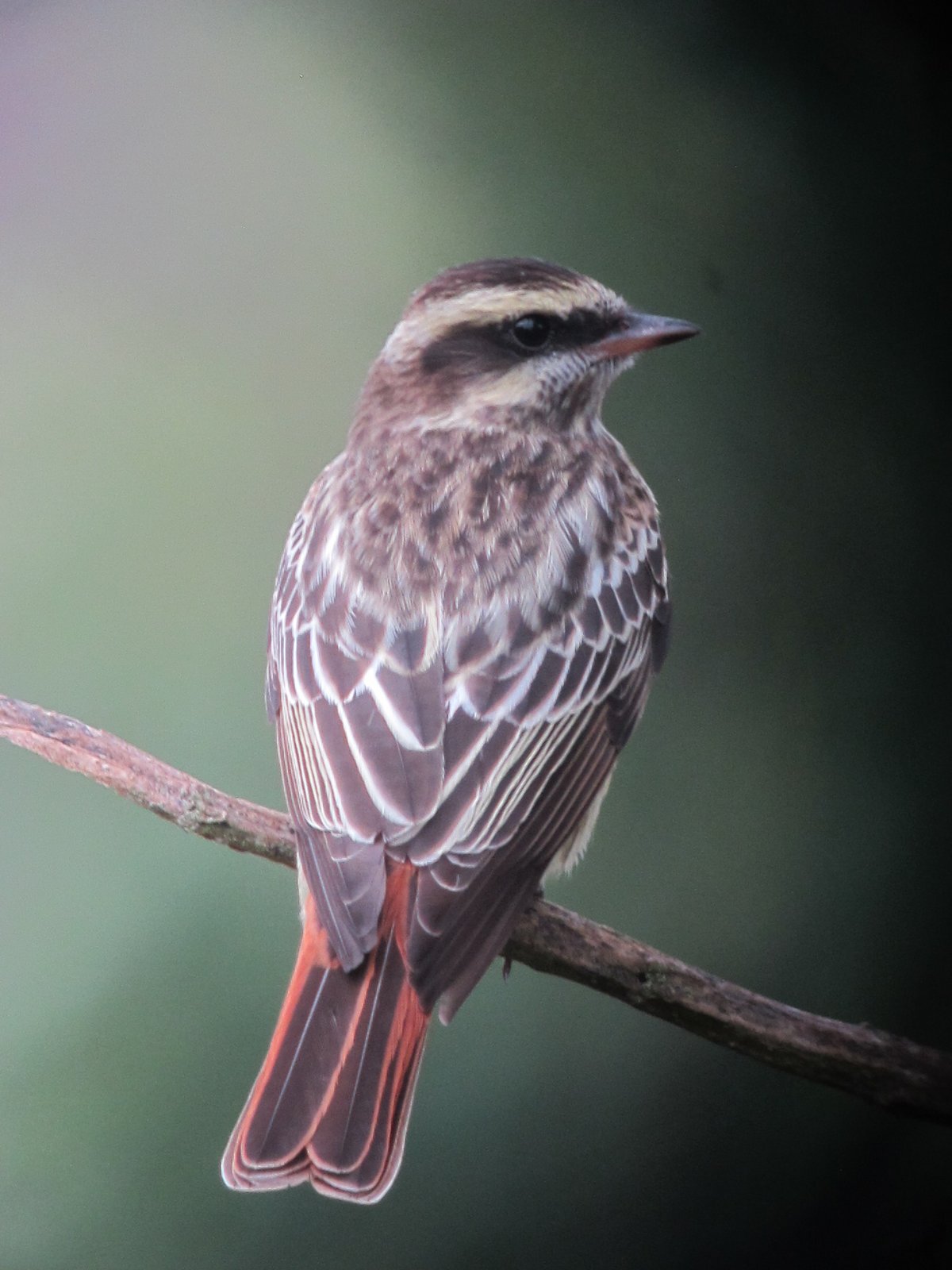
18–19 cm, with a short, slender black bill. The crown is blackish with a concealed yellow patch, bordered by a long white supercilium that almost encircles the nape; a dark band runs from lores to ear coverts, and the cheeks are whitish. The upperparts are dark with pale streaks, the rump brown with rufous edges. The tail is dark with rufous edges; the wings are dark with white edges to coverts and flight feathers. The underparts are yellowish white with a dingy white throat and indistinct dark streaks on breast and sides. The sexes are alike.
Confusion species
Streaked Flycatcher Myiodynastes maculatus is larger, with a heavy, pale-based bill, a thicker malar stripe, sharper streaking and a wholly rufous tail. Piratic Flycatcher Legatus leucophaius is slightly smaller, has an even shorter bill, no rufous in the tail and a dark brown crown without a distinct cap.
Habitat
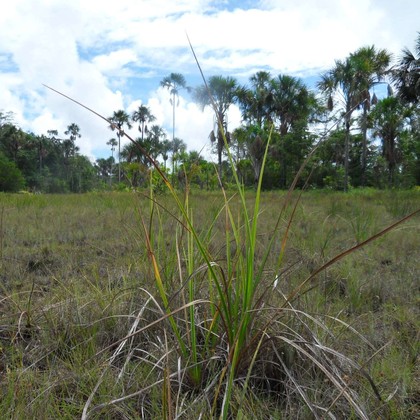
Edges of moist deciduous forest, secondary forest, savanna with scattered trees and shrubs, large clearings and sometimes parks. It often perches high on a bare branch and sallies for flying insects; it also eats much fruit, especially outside the breeding season.
Where the bird is most at home, classified by the vegetation types of the Caribbean.



Range and movements
A rare visitor to Trinidad, with most records in the austral winter. A few vagrants have been recorded on Aruba and Curaçao. Not regularly recorded on Tobago or the other islands. Outside the region over almost all of South America east of the Andes to northern Argentina; vagrants have also reached North America.
- Summer visitor (c. Oct–Mar)
- Winter visitor (c. Apr–Sep)
- Passage (Mar–Apr, Oct–Nov)
- dark = core range, pale = thinly spread
How and when to look
A streaked flycatcher with a short, fine bill and a dark cap on a bare branch deserves extra attention on Trinidad and the ABC Islands. Records are worth documenting.
Conservation status
Not threatened. The species has a very large range in South America.
Scientific name
Empidonomus varius | (Vieillot, 1818)
Vieillot described the species in 1818 as Muscicapa varia; because it was later moved to another genus, the author and year stand in brackets. The genus Empidonomus was introduced in 1860 by Cabanis & Heine. Empidonomus is Greek, from empis, empidos 'gnat' and -nomos '-ruling': 'gnat-ruler'. varius is Latin for 'variegated, diverse', after the streaked plumage. The specimen the first description was based on came from Paraguay.