All species › Passerines › Tyrant flycatchers › Boat-billed Flycatcher
Boat-billed Flycatcher | Megarynchus pitangua
Bootsnaveltiran | Luis pico grueso
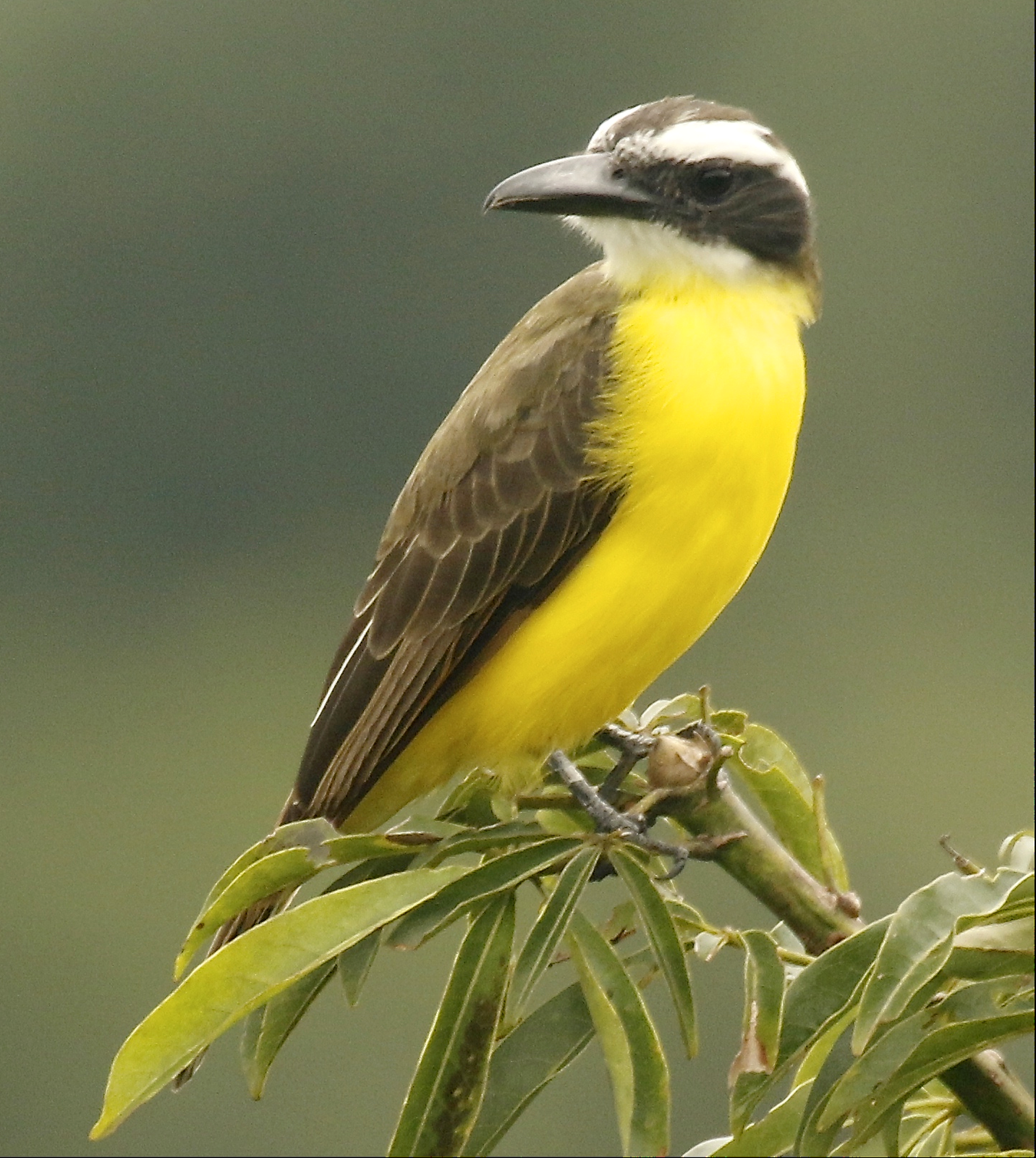
The Boat-billed Flycatcher is the largest of the yellow-bellied flycatchers with a black-and-white head and owes its name to its very broad, arched bill. On Trinidad it is a resident of forest and forest edge; because it resembles the much more common Great Kiskadee it is often overlooked. It keeps higher in the trees than the kiskadee.
Voice
A nasal, grating and often rolling kirrrr or kreee-ik, and harsh, rattling and squealing series. The dawn song is loud but simple, a clear, slightly reedy and rolled phrase repeated many times.
Recording: Robson Silva e Silva — CC BY-NC-SA 4.0 · shortened to the first 60 s, mono · xeno-canto
Identification
22–24 cm, robust, with a long, very broad, arched black bill. The crown is blackish-brown with a usually concealed yellow to orange-rufous patch. A broad white supercilium runs from the forehead almost round the nape; a wide black band runs from the lores to the ear coverts, and the cheeks are white. The upperparts are olive-brown, the wings and tail dull brown without rufous edges. The throat is white, the rest of the underparts bright yellow. The sexes are alike; juveniles have paler wing fringes and no crown patch.
Confusion species
Great Kiskadee Pitangus sulphuratus has a straighter, narrower bill, a browner back and prominent rufous edges in wing and tail. Streaked Flycatcher Myiodynastes maculatus is heavily streaked and has a rufous tail. Tropical Kingbird Tyrannus melancholicus has a grey head without a white supercilium.
Habitat
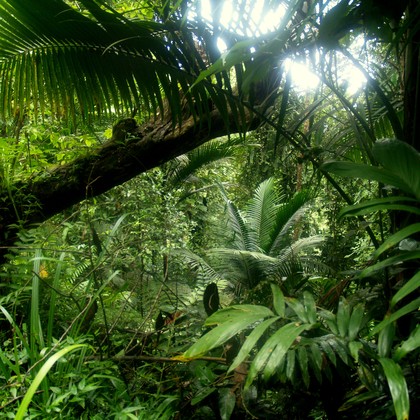
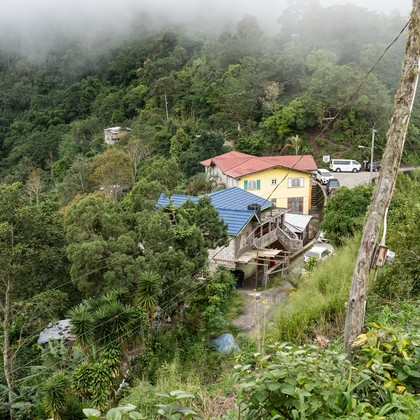
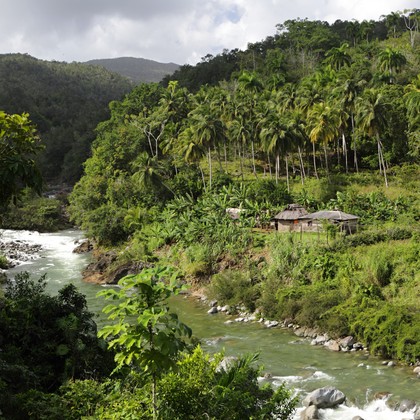
Canopy and edges of moist and dry deciduous forest, secondary forest, cocoa plantations with shade trees, open country with tall trees and large gardens. It hunts from a high perch, mainly for large insects such as cicadas, and also eats figs, berries and occasionally small vertebrates. The nest is a shallow, open cup high in a tree fork.
Where the bird is most at home, classified by the vegetation types of the Caribbean.



Range and movements
Resident on Trinidad, fairly common in its wooded parts. Absent from Tobago and the other islands. Outside the region from Mexico through Central America and almost all of South America to northern Argentina.
- Resident
- dark = core range, pale = thinly spread
How and when to look
On Trinidad along forest edges and clearings in the Northern Range and around old cocoa estates, often high in a bare tree. Any kiskadee-like bird high in a tree is worth checking: the bill, the olive back and the call settle it.
Conservation status
Not threatened. The species has a very large range and also occurs in secondary forest and plantations.
Scientific name
Megarynchus pitangua | (Linnaeus, 1766)
Linnaeus described the species in 1766 as [Lanius] Pitangua; because it was later moved to another genus, the author and year stand in brackets. The genus Megarynchus was introduced in 1824 by Thunberg. Megarynchus is Greek, from megas 'great' and rhunkhos 'bill', after the strikingly broad, heavy bill. pitangua comes from Pitanguá, the Tupí name for a large flycatcher, the same source as the genus Pitangus. The specimen the first description was based on came from Brazil (later restricted to Rio de Janeiro).