All species › Pelicans, herons and ibises › Herons and bitterns › Tricolored Heron
Tricolored Heron | Egretta tricolor
Witbuikreiger | Garceta tricolor
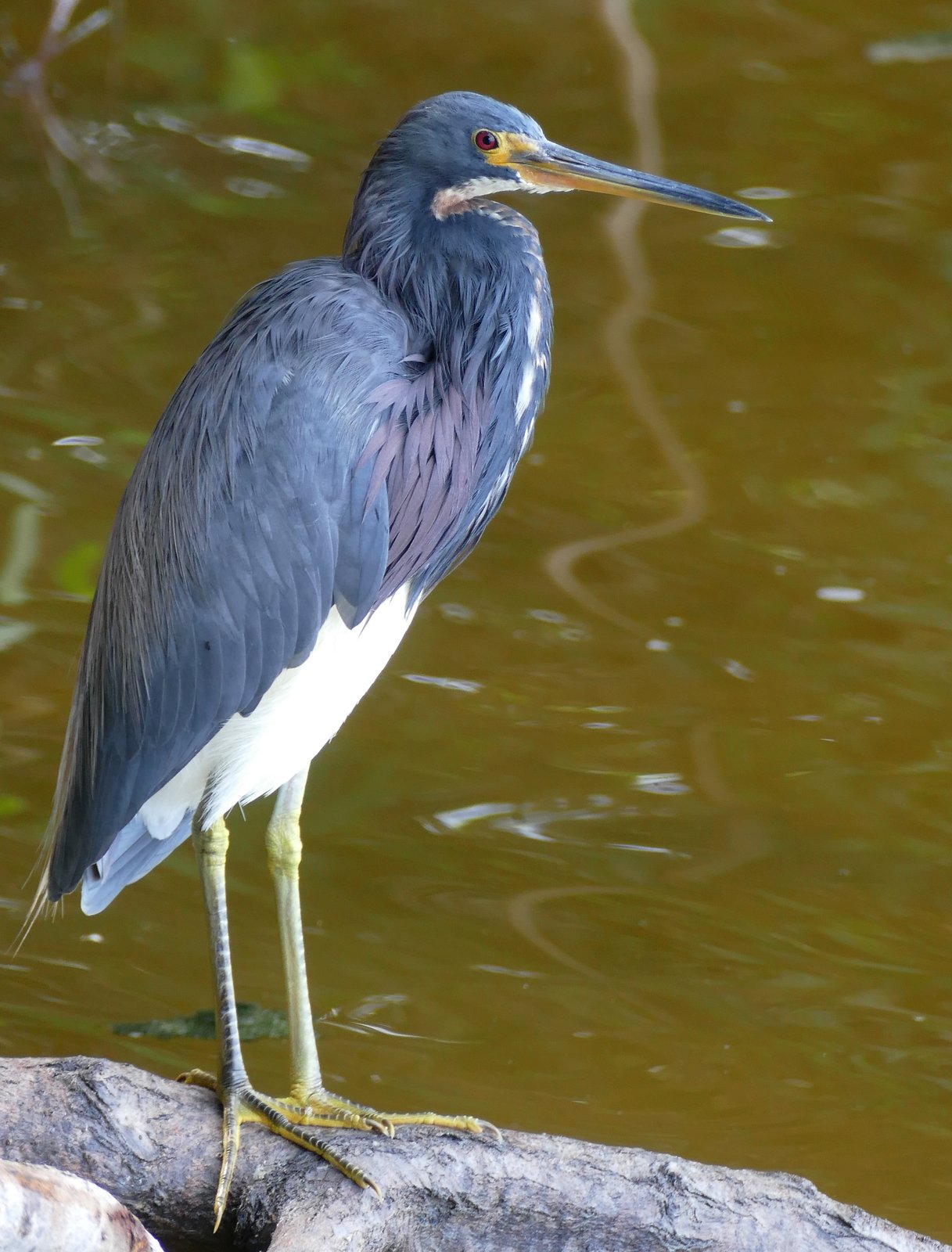
The Tricolored Heron is a slim, medium-sized heron of shallow coastal water and a familiar sight in mangroves, lagoons and salt ponds throughout the Caribbean. It is the only dark heron in the region with a white belly. It usually hunts alone and more actively than most relatives, with short dashes, sudden turns and at times half-opened wings.
Voice
Mostly silent away from the colony. When flushed a hoarse, low graa or aah; at the colony various croaking and groaning sounds.
Recording: GABRIEL LEITE — CC BY-NC-SA 4.0 · converted to mono · xeno-canto
Identification
56–76 cm, with a long, thin neck and a long, fine bill. Head, neck, back and wings are slate blue; a white stripe runs down the front of the neck, and the belly, flanks and underwing coverts are white, contrasting sharply in flight with the dark flight feathers. In the breeding season it has pale, buffy plumes on the back and a short white crest, the bill base and lores turn blue and the legs pink to reddish. Outside the breeding season the bill is yellowish with a dark tip and the legs are yellow-green. Juveniles have a rufous neck and rufous edges to the wing coverts, but already show the white belly. The sexes are alike.
Confusion species
Little Blue Heron Egretta caerulea is dark throughout, with no white belly or neck stripe, and has a grey-blue bill with a black tip. The dark morph of Reddish Egret Egretta rufescens is larger and heavier, with a rufous, shaggy neck and, when breeding, a pink bill with a black tip; it too lacks the white belly. Great Blue Heron Ardea herodias is much larger, with a heavy yellow bill.
Habitat
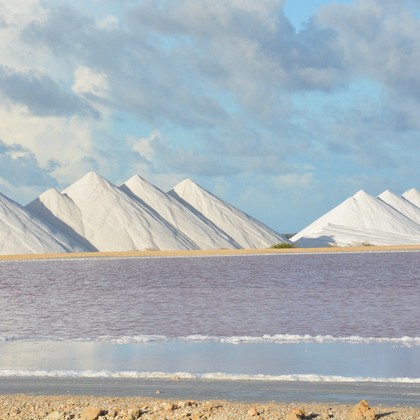
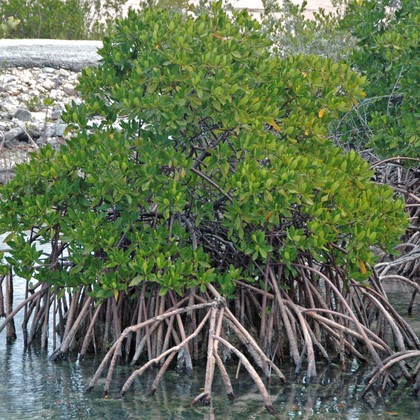
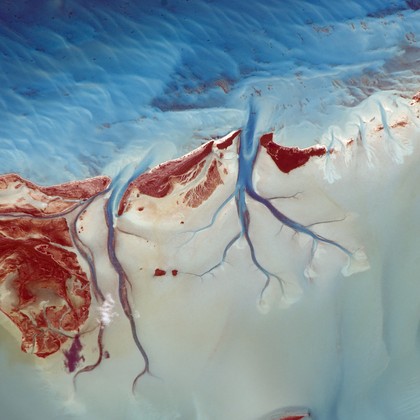
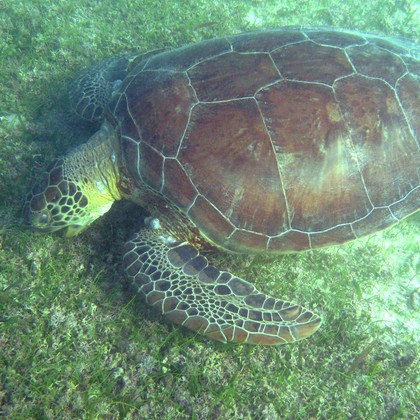
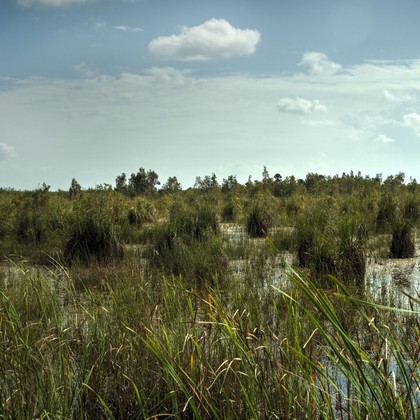
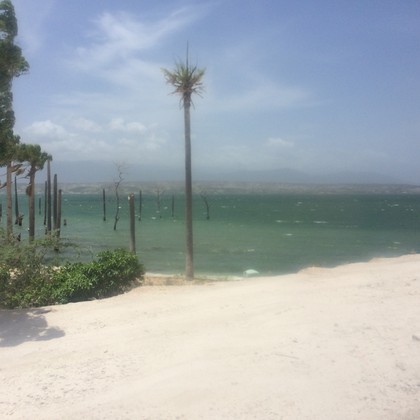
Mainly saline and brackish coastal waters: shallow lagoons, salt ponds, mangroves, tidal flats and seagrass shallows; to a lesser extent freshwater marshes and ponds near the coast. It feeds almost entirely on small fish, plus shrimps and other crustaceans, often standing belly-deep in the water. It nests in mixed heron colonies, usually in mangroves or low scrub on islets.
Where the bird is most at home, classified by the vegetation types of the Caribbean.
Range and movements
Resident in the Bahamas, the Turks and Caicos Islands, Cuba, the Cayman Islands, Jamaica, Hispaniola (Haiti and the Dominican Republic), Puerto Rico and the Virgin Islands, and also on the ABC islands, San Andrés and Trinidad and Tobago. Scarcer and more irregular in the Lesser Antilles; more frequent on islands with extensive shallow coasts and salt ponds, such as Antigua and Grenada, than on the mountainous islands with steep shores. Birds from North America arrive in winter. Outside the region along the coasts of the eastern and southern United States, Mexico and Central America to northern South America.
- Resident
- Summer visitor (c. Oct–Mar)
- Winter visitor (c. Apr–Sep)
- Passage (Mar–Apr, Oct–Nov)
- dark = core range, pale = thinly spread
How and when to look
Salt ponds and shallow lagoons beside mangroves are the best places, ideally in calm water. The species stands out by its running and sudden lunges, often while other herons stand still. On a dark heron in flight, the white belly is the quickest feature.
Conservation status
Not threatened. Locally, habitat is lost to coastal development, mangrove clearance and the draining of lagoons, and breeding colonies are sensitive to disturbance.
Scientific name
Egretta tricolor | (Müller, 1776)
Müller described the species in 1776 as Ardea tricolor; because it was later moved to another genus, the author and year stand in brackets. The genus Egretta was introduced in 1817 by Forster. Egretta comes from Provençal aigrette, the name for the little egret, a diminutive of aigron 'heron'. tricolor is Latin for 'three-coloured', after the blue-grey, white and rufous of the plumage. The specimen the first description was based on came from Cayenne, French Guiana.