All species › Pelicans, herons and ibises › Herons and bitterns › Little Blue Heron
Little Blue Heron | Egretta caerulea
Kleine blauwe reiger | Garceta azul
The Little Blue Heron is a medium-sized, slender heron that is common throughout the region, from mangroves and salt pans to ponds and rice fields. A distinctive feature is the contrast between the slate-coloured adults and the pure white juveniles, which in their first year are often mistaken for egrets.

Voice
Usually silent. At the colony and when disturbed, a hoarse, rasping gerr and croaking sounds.
Recording: Valerie Heemstra — CC BY-NC-SA 4.0 · converted to mono · xeno-canto
Identification
56–74 cm, slender, with a fairly thick, slightly drooping bill. Adults are dark slate-blue, with a maroon-purple head and neck; in breeding plumage they have long, shaggy plumes on head, neck and back. The bill is blue-grey with a black tip, the lores grey-blue and the legs dull greenish to grey. Juveniles are white with dark tips to the primaries, greenish legs and the same two-toned bill. While moulting into adult plumage in their first spring they are irregularly blotched blue and white.
Confusion species
Juveniles resemble Snowy Egret Egretta thula and Little Egret Egretta garzetta, but these have an all-black bill, black legs with yellow feet and no dark wingtips. Tricolored Heron Egretta tricolor has a white belly and a longer, thinner bill. Reddish Egret Egretta rufescens is larger, with a pink bill with black tip and a shaggy rufous neck. Great Blue Heron Ardea herodias is much larger and paler grey.
Habitat
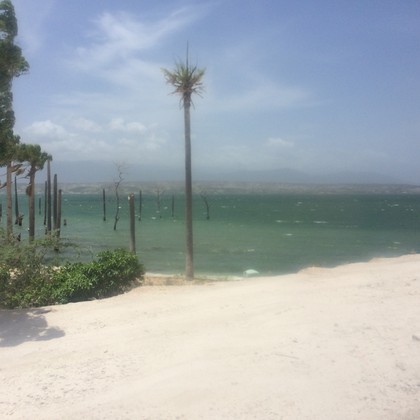
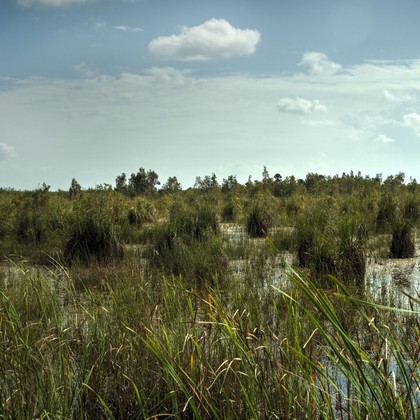
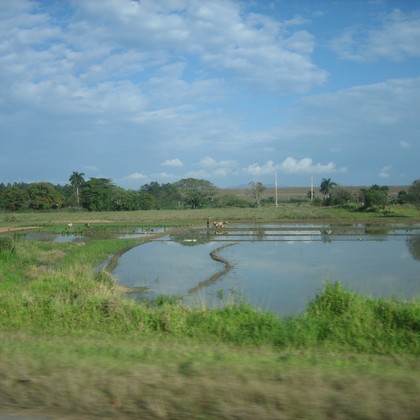
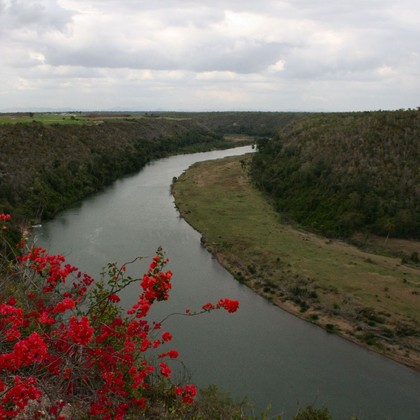
Mangroves, tidal flats, saline lagoons and salt pans, but also freshwater ponds, marshes, river banks, rice fields and wet pastures. It hunts mostly by standing still or walking slowly, taking fish, crabs, frogs and insects. It breeds in colonies, often with other herons, in mangroves or shrubs over water.
Where the bird is most at home, classified by the vegetation types of the Caribbean.



Range and movements
Resident on almost all islands of the region: the Bahamas, the Turks and Caicos Islands, Cuba, the Cayman Islands, Jamaica, Hispaniola (Haiti and the Dominican Republic), Puerto Rico, the Virgin Islands, the Lesser Antilles, the ABC Islands, San Andrés and Trinidad and Tobago. In winter migrants from North America join them. Outside the region from the eastern and southern United States through Mexico and Central America to Peru and south-eastern Brazil.
- Resident
- dark = core range, pale = thinly spread
How and when to look
Almost any wetland, from mangrove coasts to ponds in parks and on golf courses. White birds are best told from egrets by the two-toned bill, the greenish legs and the slow, patient hunting style.
Conservation status
Not threatened. The species is common and adapts to many kinds of water, including man-made ones. Colonies are sensitive to disturbance and to mangrove cutting; on some islands herons are hunted.
Scientific name
Egretta caerulea | (Linnaeus, 1758)
Linnaeus described the species in 1758 as Ardea caerulea; because it was later moved to another genus, the author and year stand in brackets. The genus Egretta was introduced in 1817 by Forster. Egretta comes from Provençal aigrette, the name for the little egret, a diminutive of aigron 'heron'. caerulea is Latin for 'blue', after the slate-blue plumage of the adult. The specimen the first description was based on came from South Carolina.