All species › Passerines › New World blackbirds › Tawny-shouldered Blackbird
Tawny-shouldered Blackbird | Agelaius humeralis
Bruinboegtroepiaal | Mayito
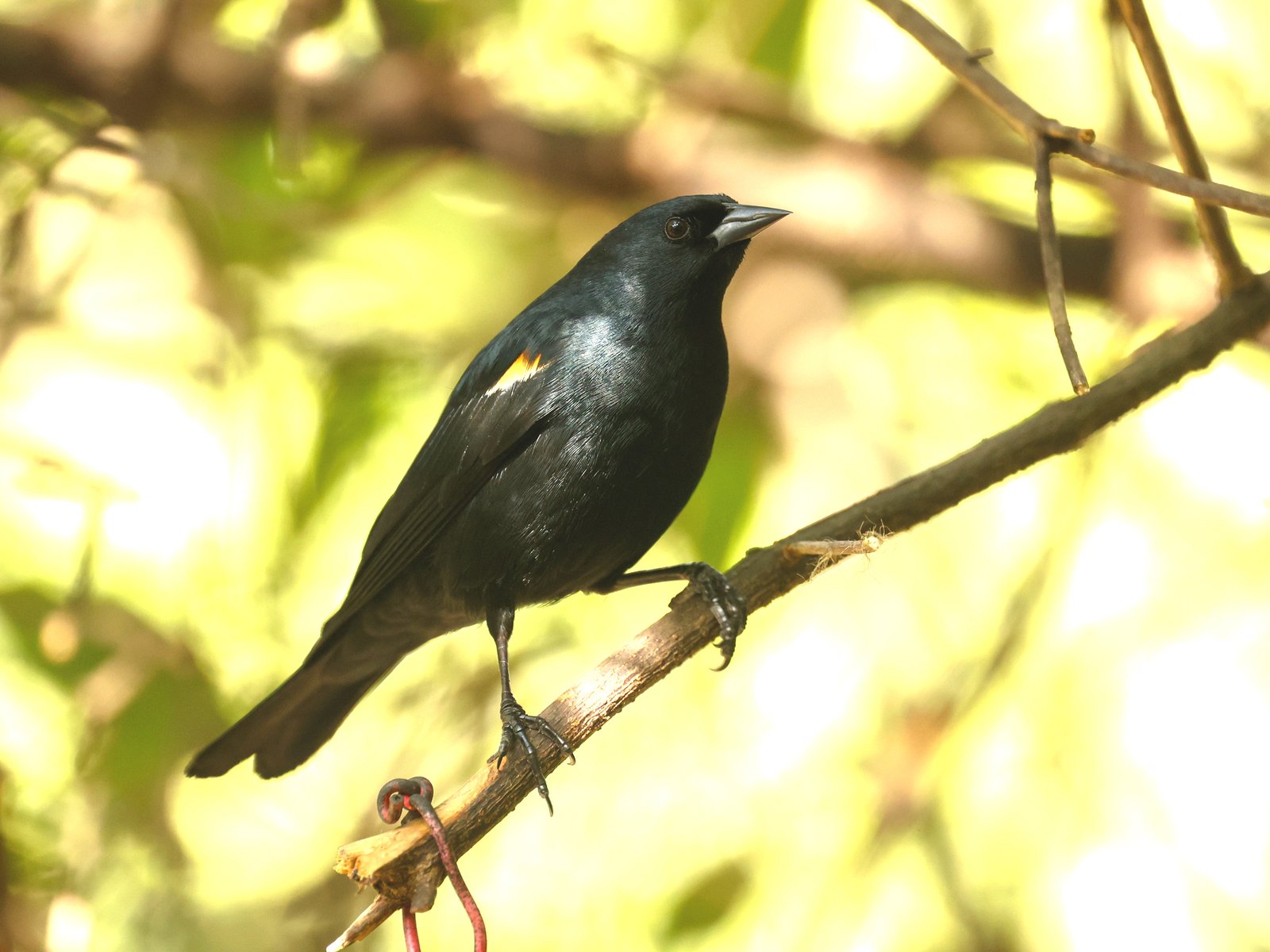
The Tawny-shouldered Blackbird is a common blackbird of Cuba that also occurs locally in Haiti. It lives in flocks in open country, farmland and villages, often together with other blackbirds. In Cuba it is called mayito, in Haiti ti kawouj.
Voice
Both sexes sing, also in duet; the song includes one or two drawn-out, buzzing notes. Calls are a dry chuk or cheek, and nasal and metallic sounds.
Recording: GABRIEL LEITE — CC BY-NC-SA 4.0 · converted to mono · xeno-canto
Identification
19–22 cm. Both sexes are black with a tawny patch on the lesser wing coverts, often largely hidden on perched birds and more obvious in flight. The male has a bluish gloss; the female is duller black without gloss and has a smaller, less bright shoulder patch. Eyes dark brown, bill and legs black. The bill is pointed and fairly slender.
Confusion species
Red-shouldered Blackbird Agelaius assimilis has a red shoulder patch and lives in marshes. Cuban Blackbird Ptiloxena atroviolacea is larger, with a violet gloss and no coloured shoulder. The male Shiny Cowbird Molothrus bonariensis has a purple gloss, a shorter, thicker bill and no shoulder patch. Greater Antillean Grackle Quiscalus niger is larger, with a yellow eye and a long, keel-shaped tail.
Habitat
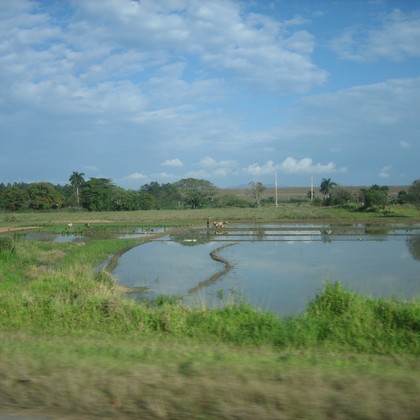
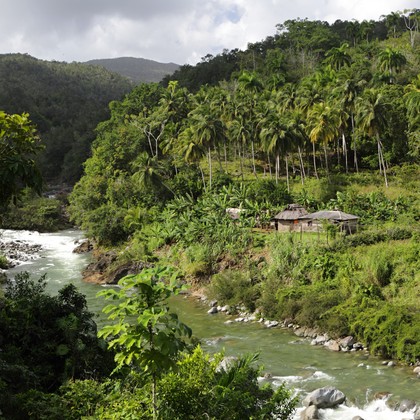
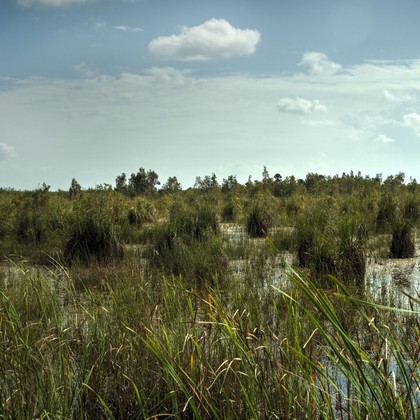
Open and semi-open country from sea level to about 900 m: dry forest and forest edges, rice fields, sugarcane, pastures with scattered trees and palms, scrub, marsh edges, gardens and villages. It eats insects and other arthropods, small lizards, seeds, fruit and nectar, on the ground and in all layers of vegetation. It forms large flocks with other blackbirds. In Cuba it breeds from April to August in a cup nest in a tree or palm, often near water.
Where the bird is most at home, classified by the vegetation types of the Caribbean.




Range and movements
Resident throughout Cuba and on some smaller Cuban islands and cays; the subspecies scopulus lives on Cayo Cantiles. Also local in Haiti, mainly in the north-western lowlands and the Artibonite Valley. Whether it occurs in the Dominican Republic is uncertain. Vagrant to the Florida Keys and southern Florida.
- Resident
- dark = core range, pale = thinly spread
How and when to look
In Cuba it can be found almost anywhere in farmland and villages, often in mixed flocks with Cuban Blackbirds and Shiny Cowbirds. The tawny shoulder patch is best seen when a bird takes off or adjusts its wings.
Conservation status
Not threatened. Common in Cuba and well adapted to farmland. The small Haitian population is little studied.
Scientific name
Agelaius humeralis | (Vigors, 1827)
Vigors described the species in 1827 as Leistes humeralis; because it was later moved to another genus, the author and year stand in brackets. The genus Agelaius was introduced in 1816 by Vieillot. Agelaius is Greek, from agelaios 'gregarious, of a flock', after the birds feeding and roosting in large flocks. humeralis is Latin for 'of the shoulder' (humerus), after the tawny shoulder patch. The specimen the first description was based on came from vicinity of Havana, Cuba.