All species › Waders, gulls and terns › Sandpipers and snipes › Solitary Sandpiper
Solitary Sandpiper | Tringa solitaria
Amerikaanse bosruiter | Andarríos solitario
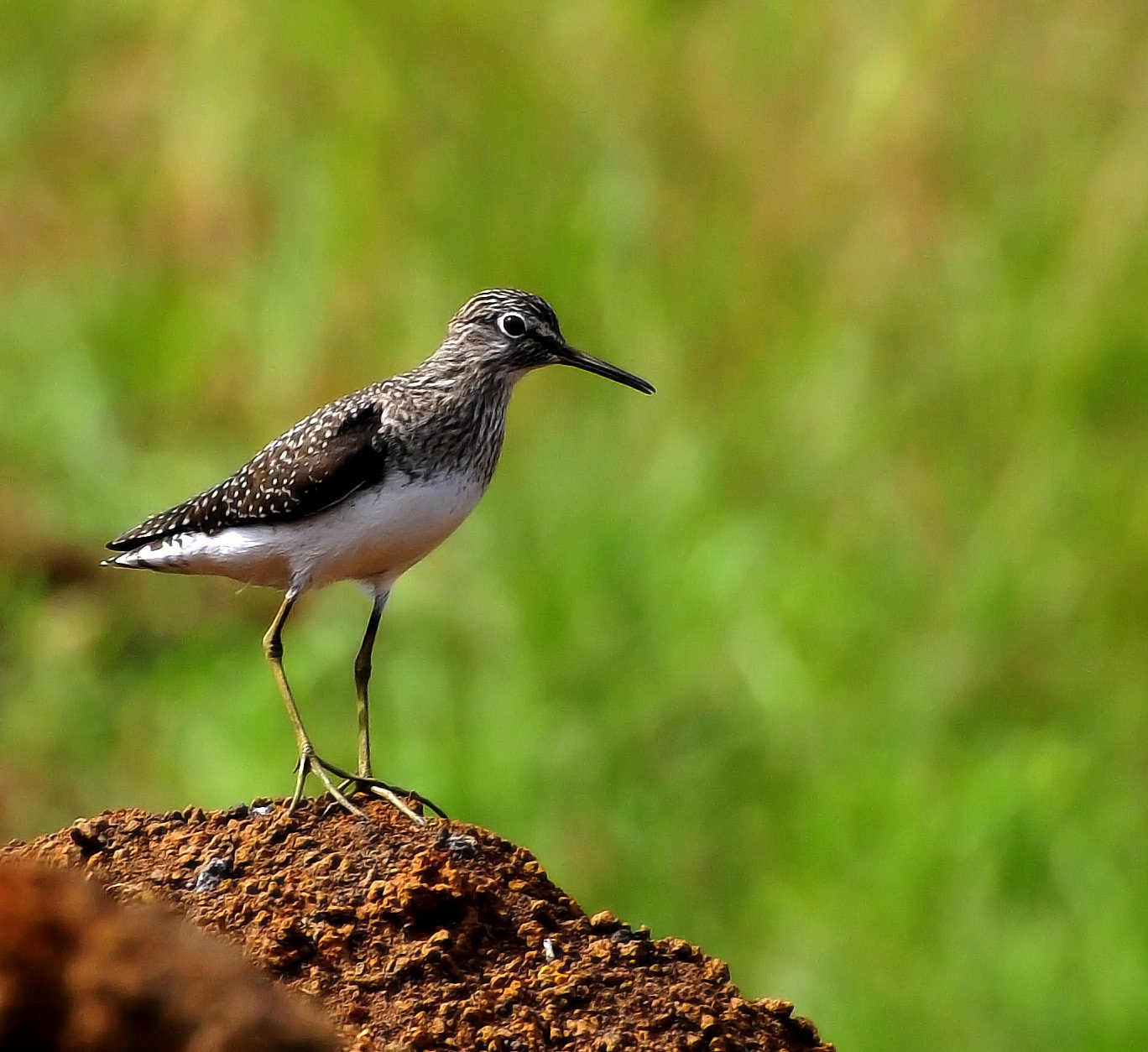
The Solitary Sandpiper is a dark, medium-sized sandpiper of freshwater margins that usually feeds alone. It breeds in the boreal forests of Canada and Alaska and is the only American wader that lays its eggs in old songbird nests in trees. In the Caribbean it is a fairly common passage migrant and winter visitor at ponds and ditches.
Voice
A high, clear peet-weet or peet-weet-weet, higher and sharper than that of Spotted Sandpiper, often given on take-off.
Recording: Stanislas Wroza — CC BY-NC-SA 4.0 · converted to mono · xeno-canto
Identification
18–23 cm, slim, with a straight, dark bill about the length of the head and greenish legs. Upperparts dark olive-brown with fine white spots, head and breast streaked grey-brown, belly white. A distinctive white eye-ring and a pale line between bill and eye. In flight dark wings with no wing bar, a dark underwing, a dark rump and central tail and white outer tail feathers barred with black. Juveniles have browner upperparts with buff spots. It often bobs its head and foreparts.
Confusion species
Lesser Yellowlegs Tringa flavipes is paler, with longer, bright yellow legs, a square white rump and no obvious eye-ring. Spotted Sandpiper Actitis macularius is stockier, teeters its rear, has a white wing bar and flies low with flickering wingbeats. At a distance, the dark rump and barred tail sides of a bird taking off are distinctive.
Habitat
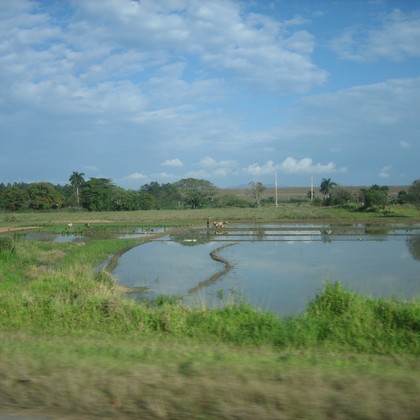
Small freshwater pools, muddy pond edges, ditches, river banks, rice fields, flooded pastures and temporary rain pools, also in wooded surroundings; rarely on the coast or on salt ponds. It wades calmly in shallow water, picking insects and larvae from the surface or stirring up the bottom with one foot.
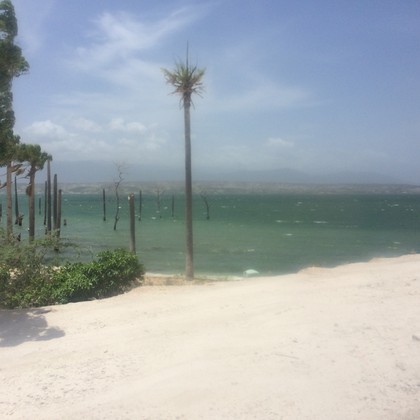
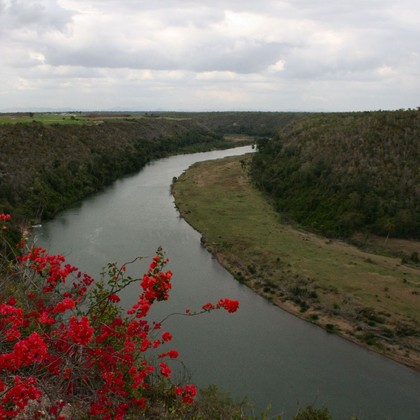
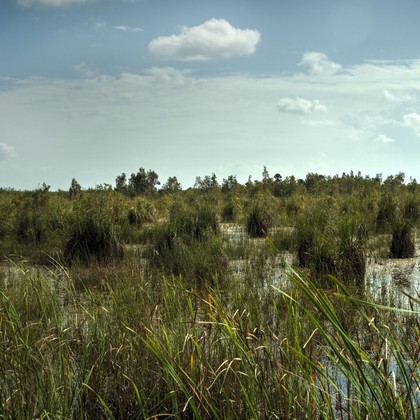
Where the bird is most at home, classified by the vegetation types of the Caribbean.

Range and movements
Passage migrant and winter visitor throughout the region: the Bahamas, the Turks and Caicos Islands, the Greater Antilles, the Cayman Islands, the Virgin Islands, the Lesser Antilles, the ABC Islands, San Andrés and Trinidad and Tobago. Most numerous during autumn migration from August to October and in spring in March and April; in winter in small numbers on most islands. Outside the region it breeds in Alaska and Canada and winters from Mexico to Argentina, with large numbers in the Amazon basin.
- Resident
- Summer visitor (c. Oct–Mar)
- Winter visitor (c. Apr–Sep)
- Passage (Mar–Apr, Oct–Nov)
- dark = core range, pale = thinly spread
How and when to look
A single dark sandpiper with a white eye-ring at a small, sheltered pool or ditch is the most likely encounter; flocks of peeps on open mud are less suitable places. When it flushes, the high call and dark rump help.
Conservation status
Not threatened. Because of its scattered habits and remote breeding range, trends are poorly known; in the Caribbean it depends on small freshwater pools, which are often drained or filled in.
Scientific name
Tringa solitaria | Wilson, 1813
Wilson described the species in 1813 and placed it straight away in the genus where it still stands. The genus Tringa was introduced in 1758 by Linnaeus. Tringa is the Neo-Latin name Aldrovandi gave to the green sandpiper, after Ancient Greek trungas, a thrush-sized, white-rumped, tail-bobbing wading bird mentioned by Aristotle. solitaria is Latin for 'solitary', from solus 'alone', after the habit of appearing singly rather than in flocks. The specimen the first description was based on came from the Pocono Mountains, Pennsylvania.