All species › Pelicans, herons and ibises › Herons and bitterns › Snowy Egret
Snowy Egret | Egretta thula
Amerikaanse kleine zilverreiger | Garceta nívea
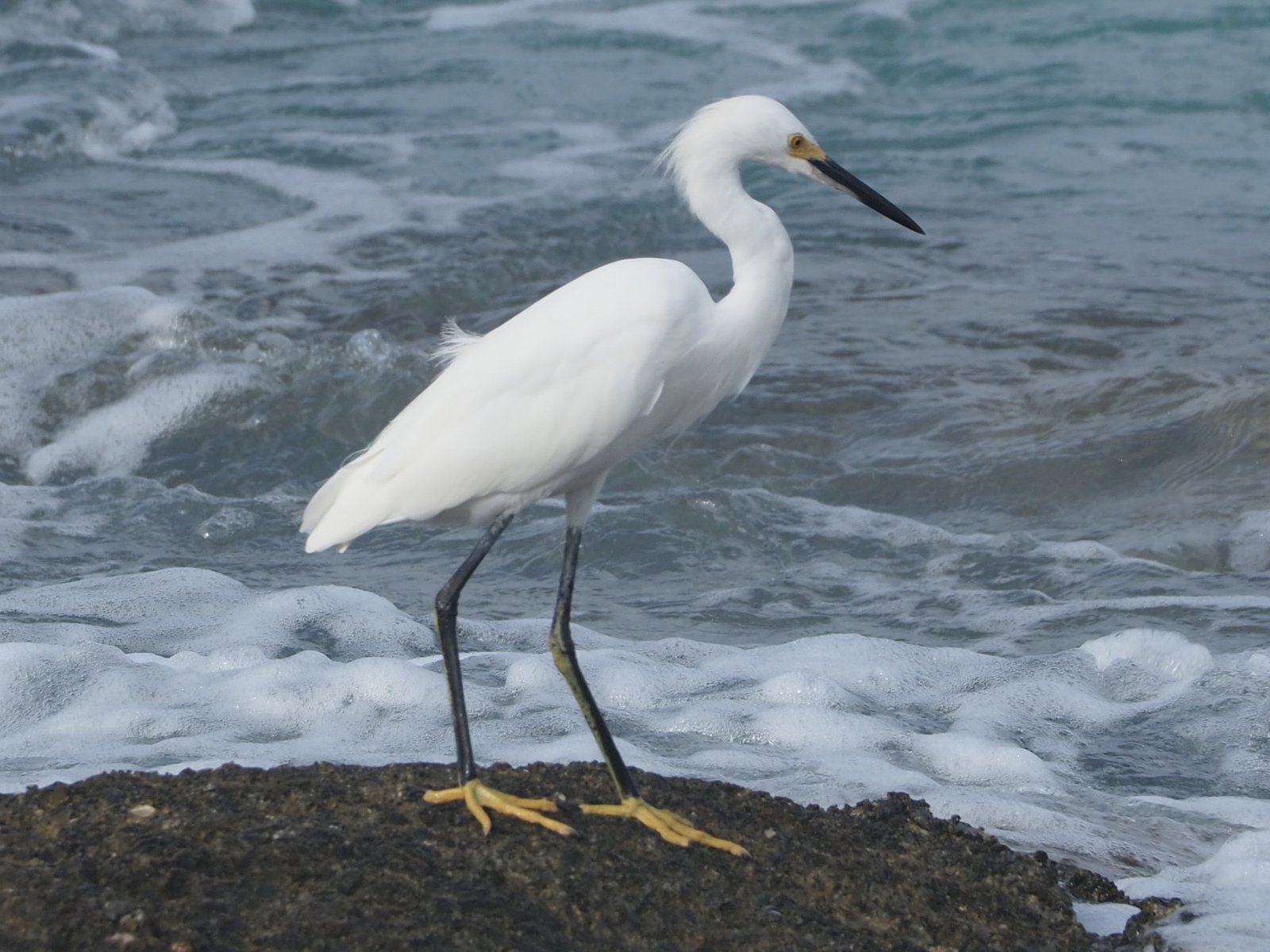
The Snowy Egret is a small, all-white heron found on almost every island in the Caribbean, from salt ponds and mangroves to ponds and ditches. It is an active hunter: it stirs the bottom with its feet, scurries through shallow water and at times flutters low over the surface. Around 1900 the species had declined sharply because of the trade in hat plumes; it has since recovered.
Voice
Mostly silent away from the colony. On take-off and at the colony a raw, rasping aarr; bubbling sounds at the colony too.
Recording: Paul Driver — CC BY-NC-SA 4.0 · converted to mono · xeno-canto
Identification
56–66 cm, slender and all white, with a thin black bill, yellow lores, black legs and yellow feet. In the breeding season it has long plumes on the back that curl up at the tips, a full, shaggy crest of many feathers on the hindhead and plumes on the breast; during courtship the lores and sometimes the feet turn orange-red. Juveniles have greenish legs with yellow on the rear and a paler bill base; the yellow feet are already present. The sexes are alike.
Confusion species
Little Egret Egretta garzetta is very similar; outside courtship it has blue-grey to green-grey lores, in the breeding season two long, narrow nape plumes rather than a full crest, and a slightly longer bill. Young Little Blue Herons Egretta caerulea are white but have a grey-blue bill with a dark tip, greenish legs and feet, and often dark wing tips. Great Egret Ardea alba is much larger, with a yellow bill and all-black legs. Western Cattle Egret Ardea ibis is smaller and stockier, with a short yellow bill.
Habitat
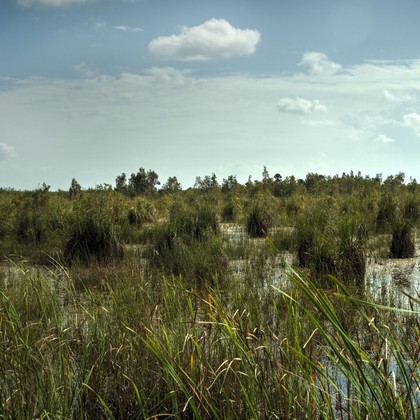
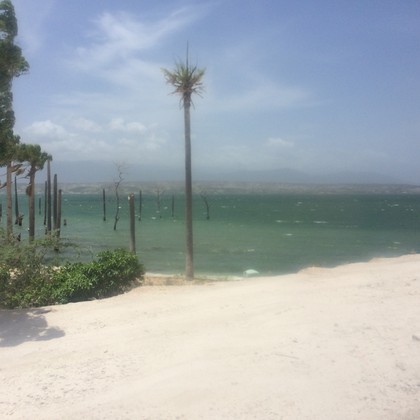
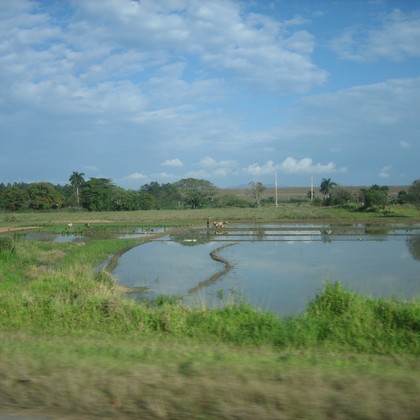
A wide range of shallow waters, salt and fresh: lagoons, salt ponds, mangroves, tidal flats, freshwater marshes, ponds, rice fields and ditches. It eats small fish, shrimps, crabs, insects and other small animals. It nests in mixed heron colonies in mangroves and other scrub, often over water.
Where the bird is most at home, classified by the vegetation types of the Caribbean.



Range and movements
Resident on almost all islands: the Bahamas, the Turks and Caicos Islands, Cuba, the Cayman Islands, Jamaica, Hispaniola (Haiti and the Dominican Republic), Puerto Rico, the Virgin Islands, the Lesser Antilles, the ABC islands, San Andrés and Trinidad and Tobago. On small islands without suitable water mainly as a visitor. Birds from North America arrive in winter. Outside the region from the United States through Mexico and Central America to Argentina and Chile.
- Resident
- Summer visitor (c. Oct–Mar)
- Winter visitor (c. Apr–Sep)
- Passage (Mar–Apr, Oct–Nov)
- dark = core range, pale = thinly spread
How and when to look
With a small white heron, the legs and feet come first: black legs with yellow feet indicate this species or Little Egret. In the Lesser Antilles, especially on Barbados and Antigua, lore colour and head plumes are then needed to separate the two.
Conservation status
Not threatened. Populations have recovered from the plume hunting of around 1900. Locally, the loss of wetlands and mangroves and disturbance of colonies cause declines.
Scientific name
Egretta thula | (Molina, 1782)
Molina described the species in 1782 as Ardea Thula; because it was later moved to another genus, the author and year stand in brackets. The genus Egretta was introduced in 1817 by Forster. Egretta comes from Provençal aigrette, the name for the little egret, a diminutive of aigron 'heron'. thula is the Mapudungun name for the black-necked swan, applied to this egret in error by the Chilean naturalist Juan Ignacio Molina (1740–1829) in 1782. The specimen the first description was based on came from Chile.